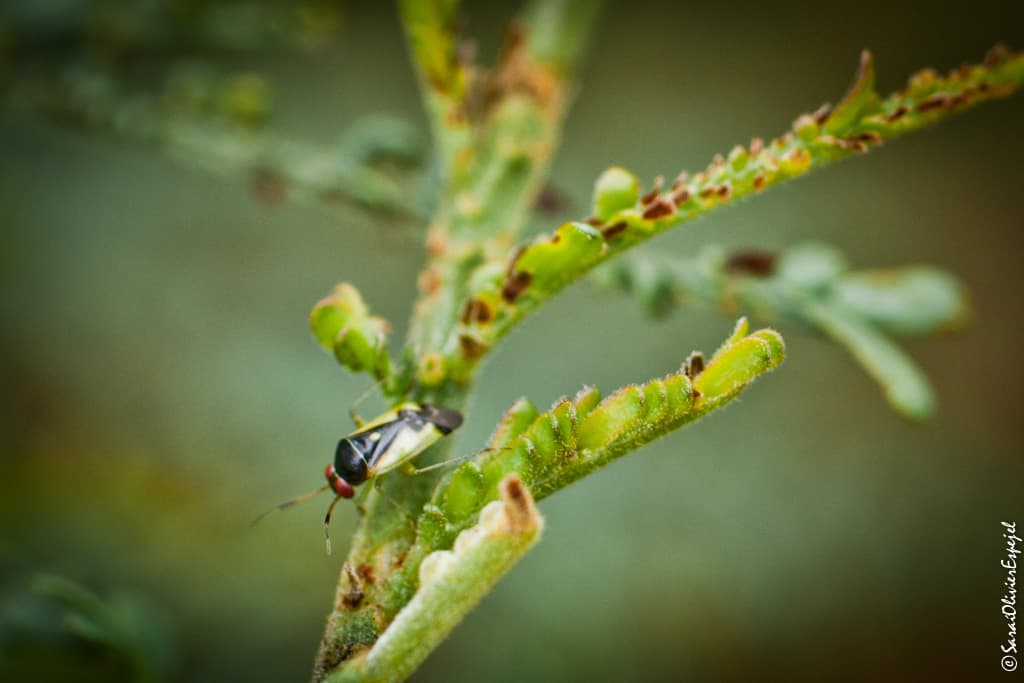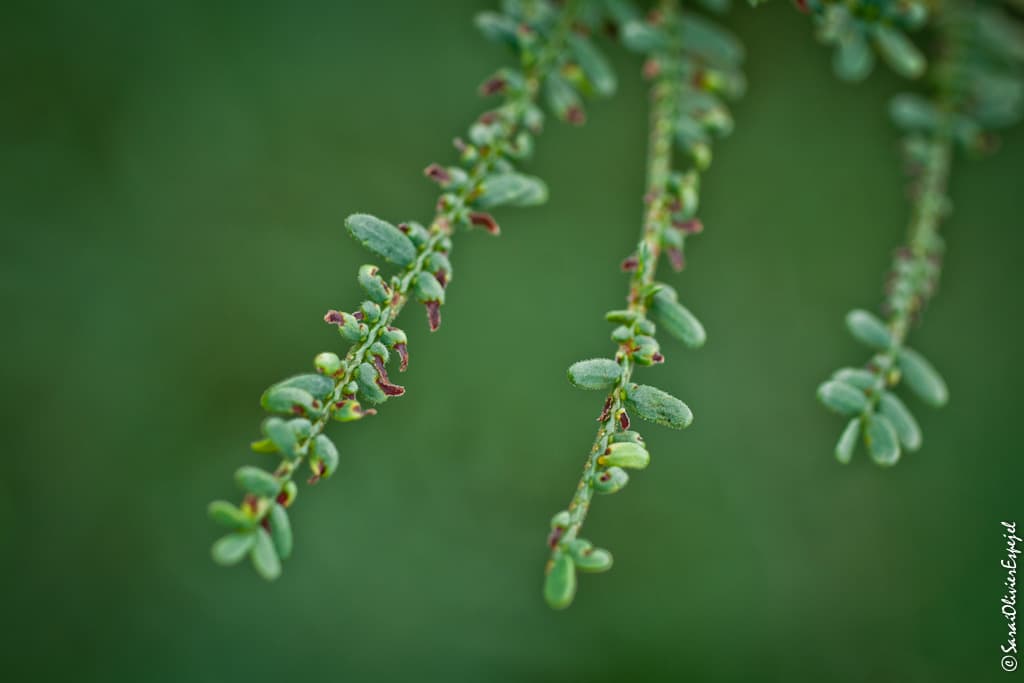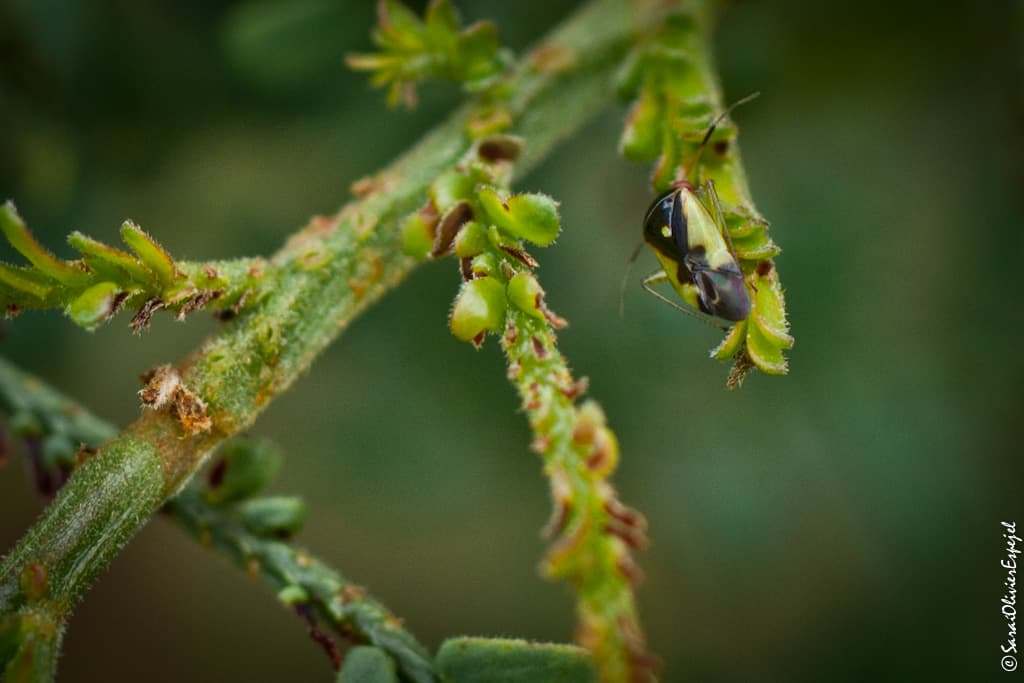
Necrotic tissue develops around punctures in the pinnules because of the apparently phytotoxic saliva injected into the plant tissue whilst feeding. The bark turns into a dull, greyish colour with dark blotches and the leaves begin to shed. Plantations become “skeletonised”. Infestation by wattle mirid can cause distorted and stunted tree growth. Following heavy infestation, multiple leaders develop on the damaged shoots resulting in the “witches’ broom” effect. It is also possible to see active small mirids on the leaves and branches.

A Mpumalanga pine and eucalyptus plantation on rolling hills, a forester from behind measuring a trunk with a diameter tape (illustration)
01/02
Click to pause
Tree Protection Co-operative Programme
Wattle Mirid / Lygidolon laevigatum
Lygidolon laevigatum
Common NameWattle Mirid / Lygidolon laevigatum
Scientific NameLygidolon laevigatum
SynonymsLygidolon flavoscutellatus (Lindberg, 1958) Lygidolon lindbergi (Ghauri, 1971)
OriginSouth Africa.
Distribution in South AfricaAll wattle growing areas in South Africa.
Symptoms
Biology
The female lays eggs approximately 9 days after mating. The female lives for 40 days and lays its eggs on young shoots and developing tissue. The eggs hatch after 6 to 14 days. The larval stage consists of five nymphal stages and lasts between 14 to 20 days. The entire life cycle lasts 4 to 5 weeks.
Management
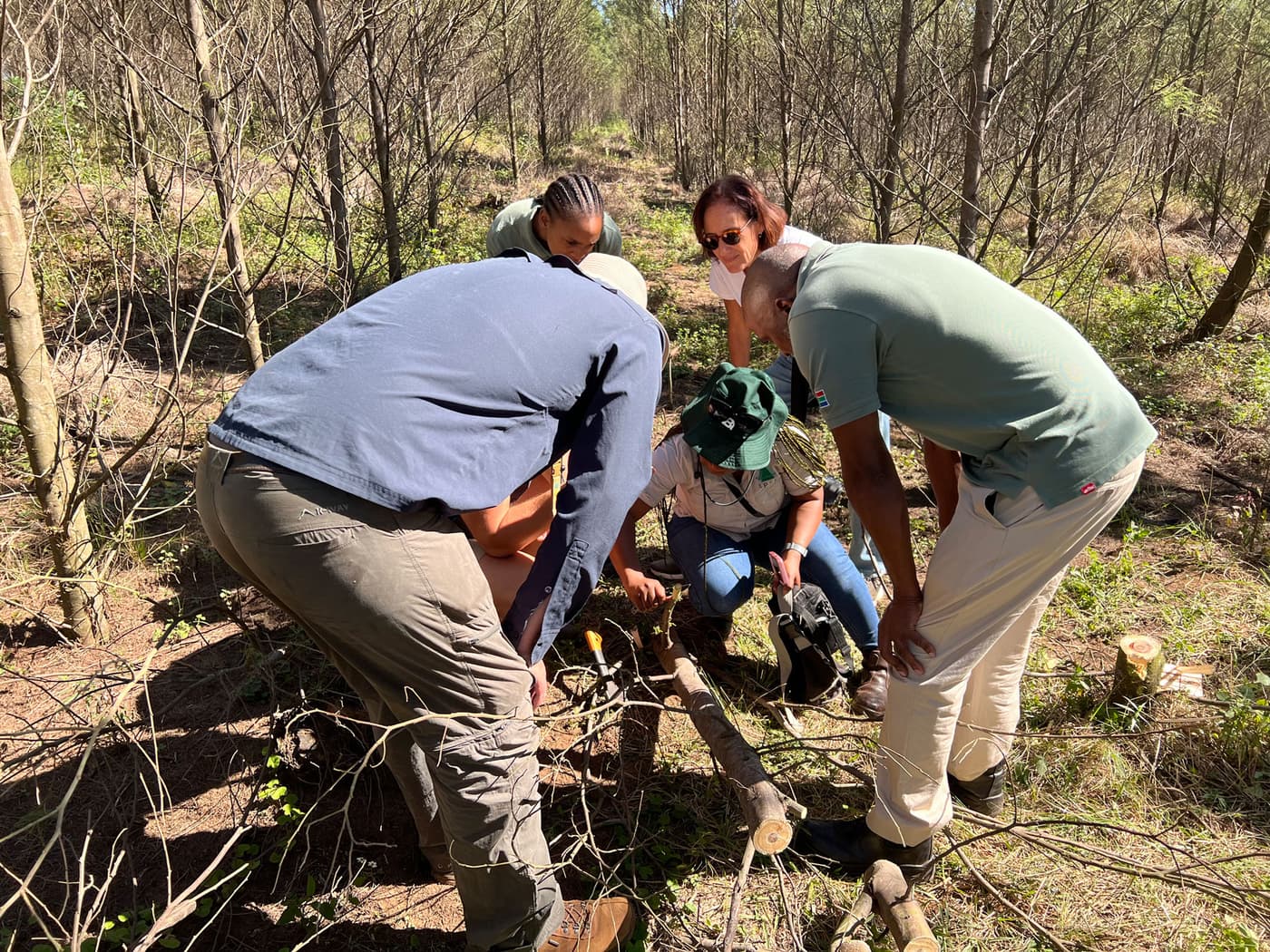
The “witches’ broom” and forking can be pruned out but this is labour intensive. The pruning should be done during the winter months. Sticky traps are used to monitor the mirids presence. Extensive surveys of the mirid and its damage should be conducted during the first two years after the tree has been planted. Chemical control is considered when mirid populations are high. Aerial and ground application (mist blowers) are commonly used.
Gallery