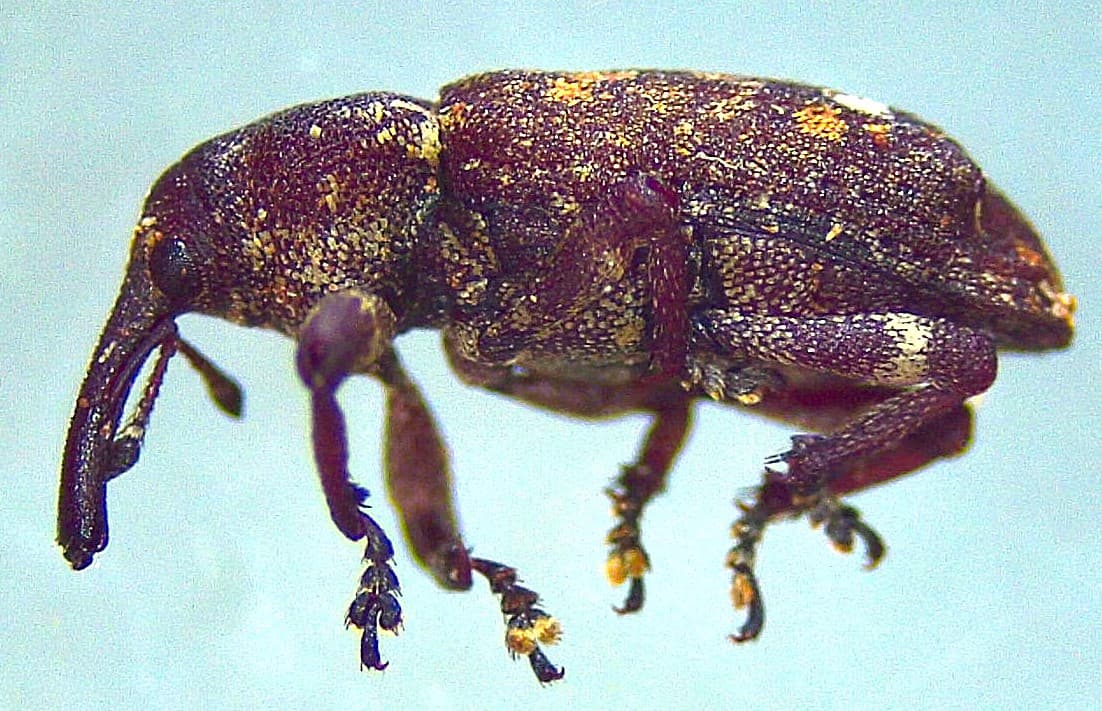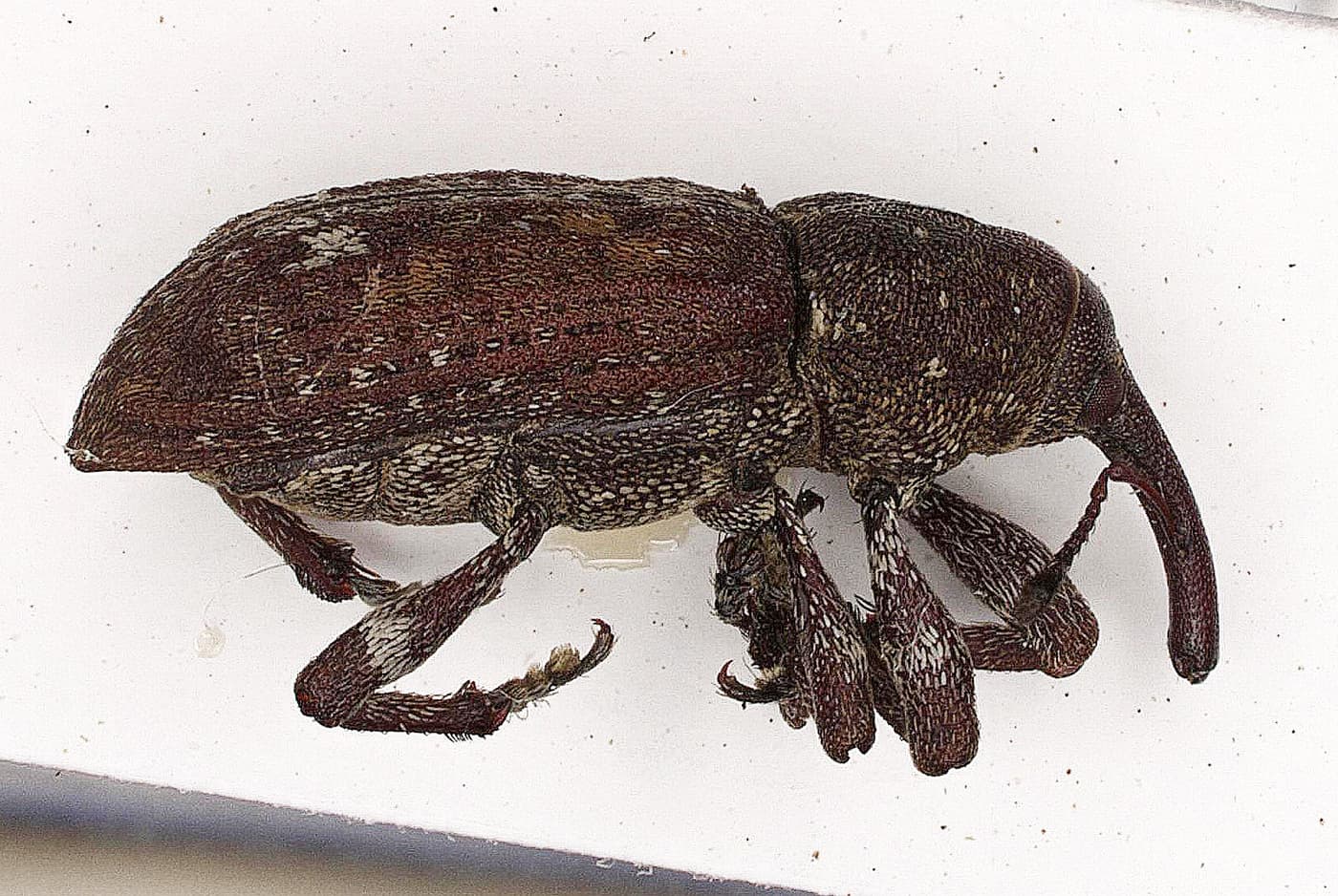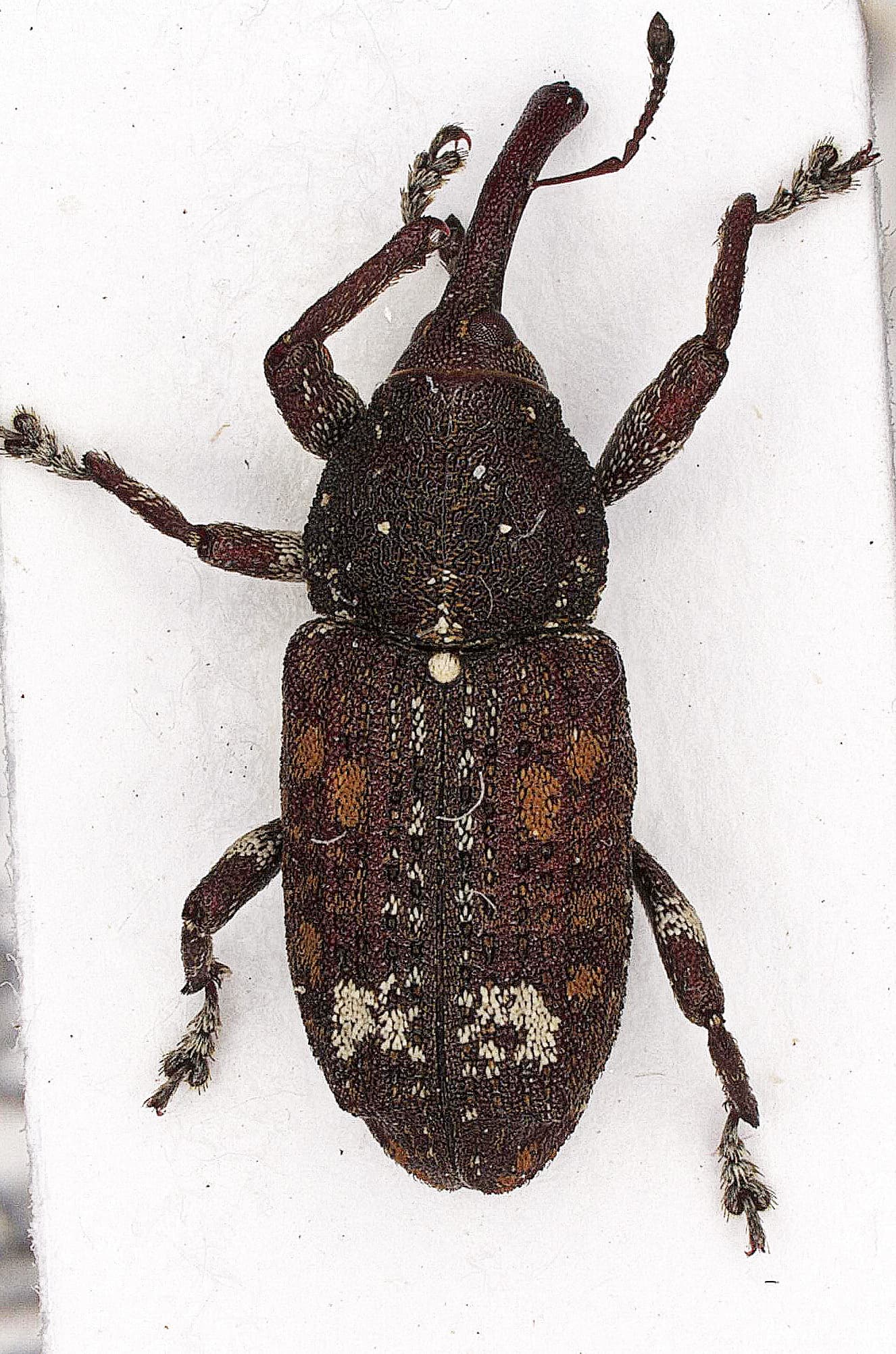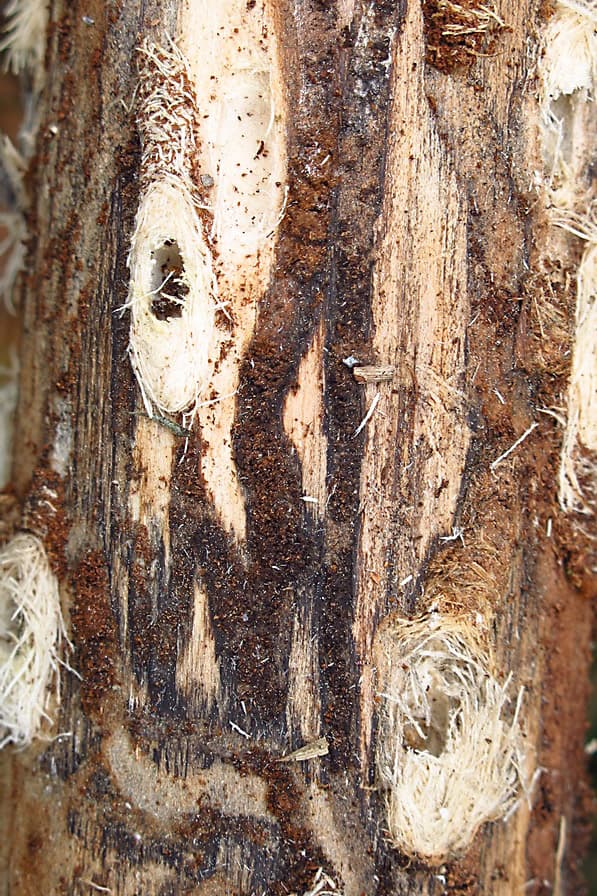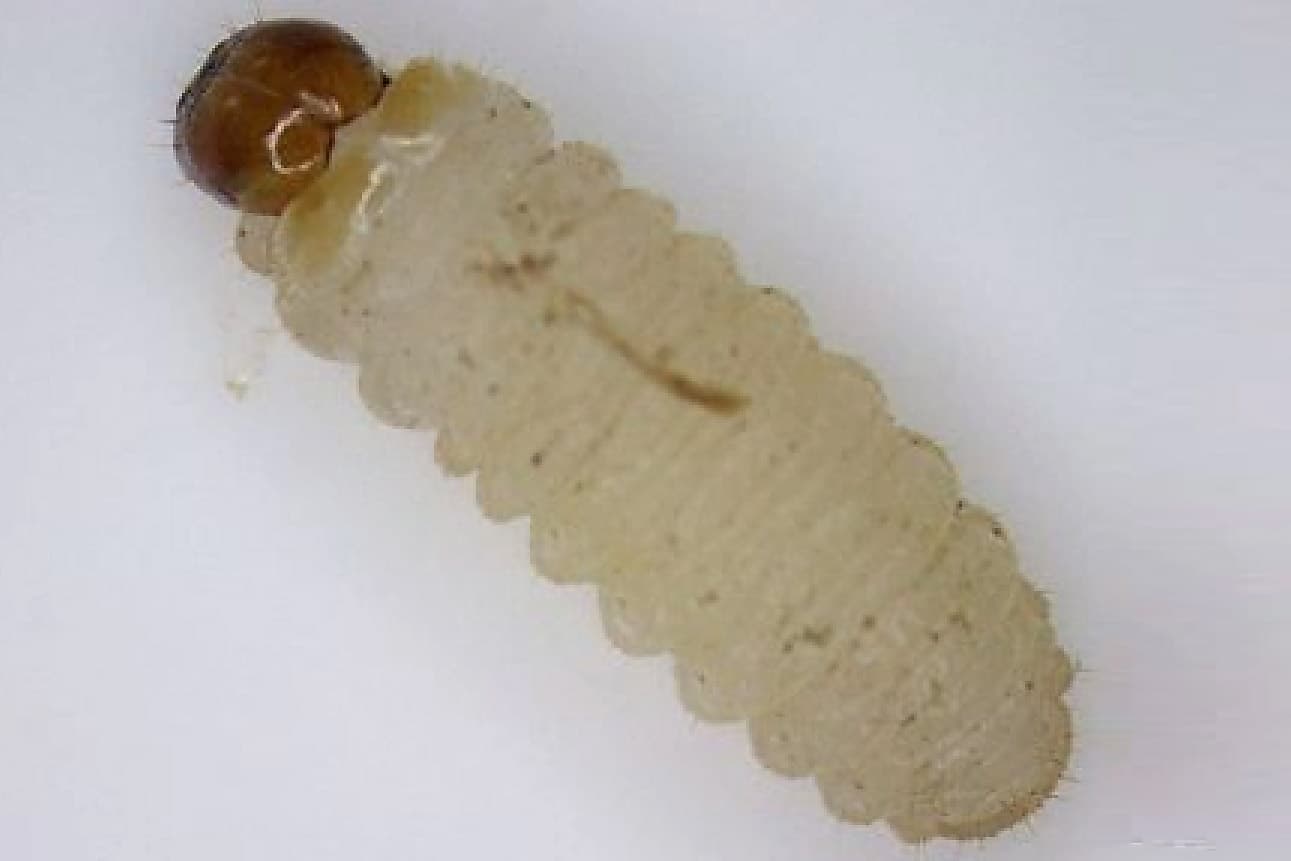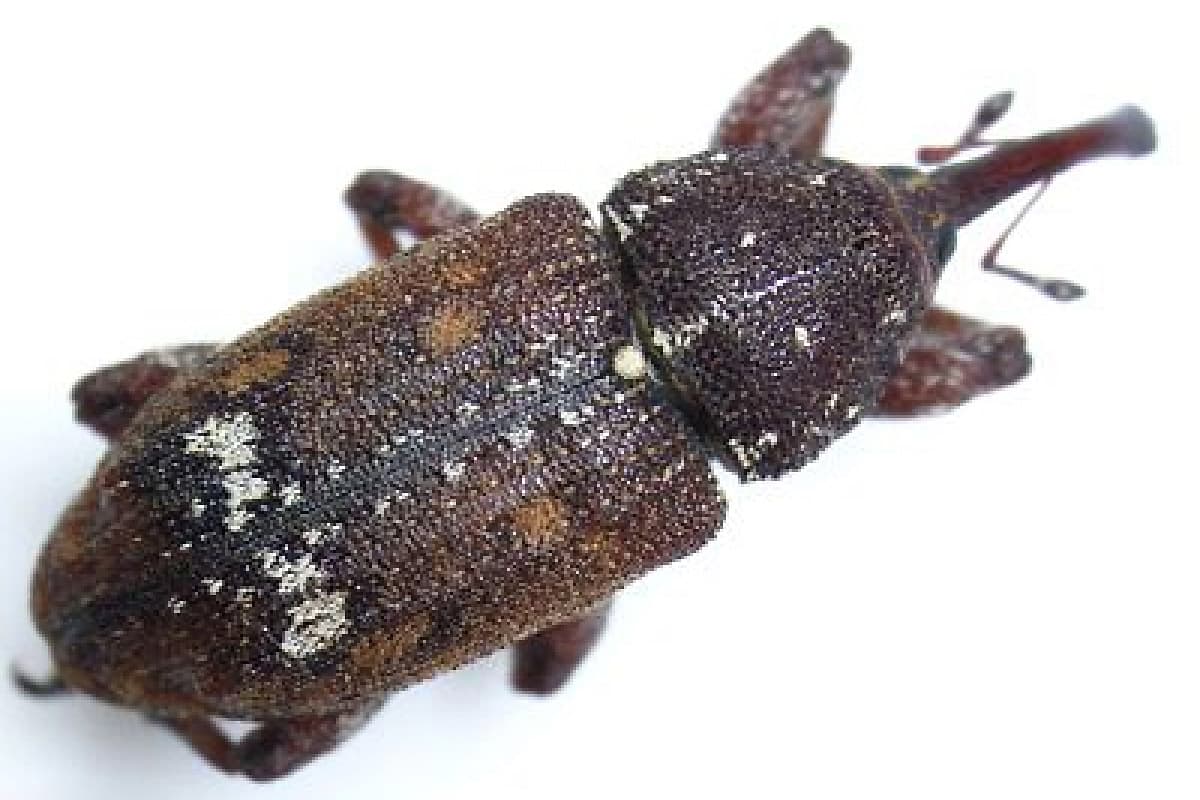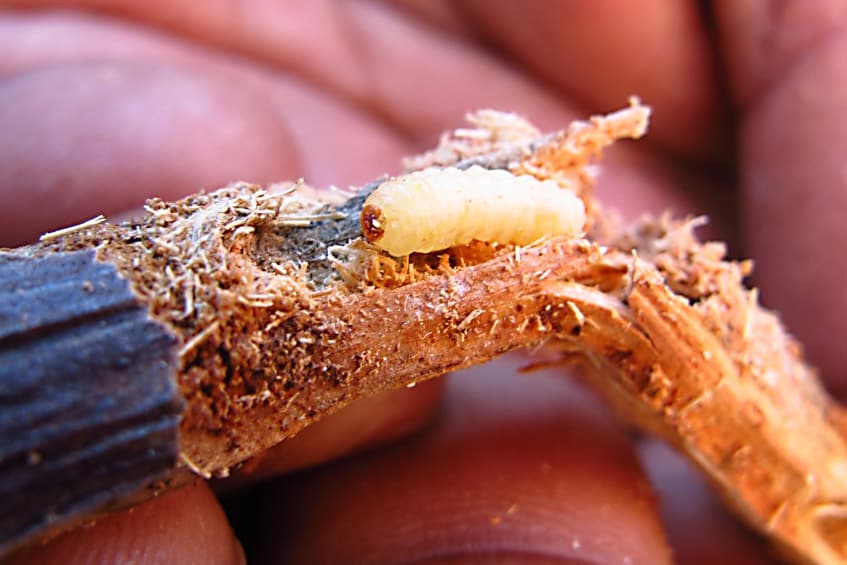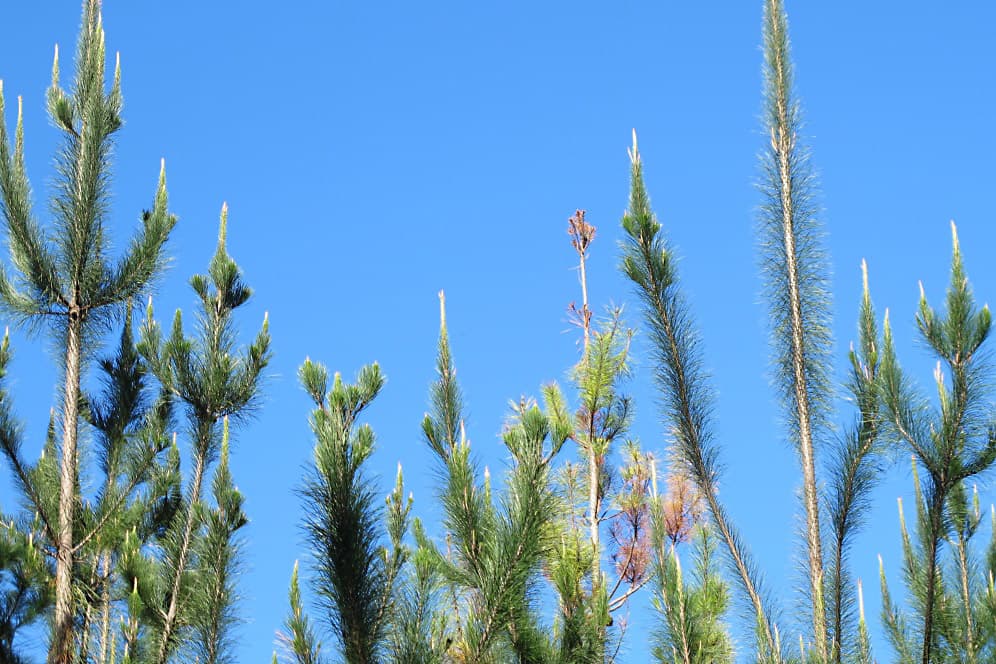
Pissodes sp. prefers young healthy trees for maturation feeding and stressed or recently dead trees for breeding (Gebeyehu & Wingfield 2003, Wondafrash et al. 2016). Tiny circular feeding punctures on the stem or branches of young trees are characteristic symptoms of maturation feeding. Damage on young healthy trees may result in forking or branching of trees. In trees selected for breeding, it is common to see larvae, pupae and adults under the bark. In addition to these symptoms, the weevil leaves circular emergence holes on the bark of the main stem that do not penetrate deep into the wood. The exit holes start from oval-shaped pupal chambers or “chip cocoons” located between the bark and the wood (Gebeyehu & Wingfield 2003). Emergence holes of the woodwasp, Sirex noctilio, are similar to those of Pissodes, but Sirex holes continue into the wood and are usually larger than those of Pissodes weevil.
A Mpumalanga pine and eucalyptus plantation on rolling hills, a forester from behind measuring a trunk with a diameter tape (illustration)
01/02
Click to pause
Tree Protection Co-operative Programme
Pine Weevil / Pissodes sp.
Pissodes sp.
Common NamePine Weevil / Pissodes sp.
Scientific NamePissodes sp.
OriginNorth America is the possible origin of this weevil as it phylogenetically belongs to the North American Pissodes strobi species complex which comprises of four other cryptic species, namely, Pissodes strobi , P. nemorensis, P. terminalis and P. schwarzi (Wondafrash et al 2016).
Distribution in South AfricaEastern Cape, KwaZulu-Natal, Mpumalanga, Western Cape
Symptoms
Biology
Pissodes sp. undergoes complete metamorphosis. Males and females fly, undertake maturation feeding and mate. The female begins laying eggs soon after mating in feeding punctures on the bark. The newly hatched larvae bore into the inner bark, where they construct winding galleries and feed on the phloem. Pupation takes place between the bark and the wood in chambers excavated in the xylem and covered with wood fibers, commonly known as “chip cocoons”. The adult emerges leaving a circular emergence hole on the bark (Gebeyehu & Wingfield 2003).
Management
Remove dying and dead trees as these provide material for the population of the beetle to increase. Parasitoids are present but recorded levels of parasitism are low.
Gallery