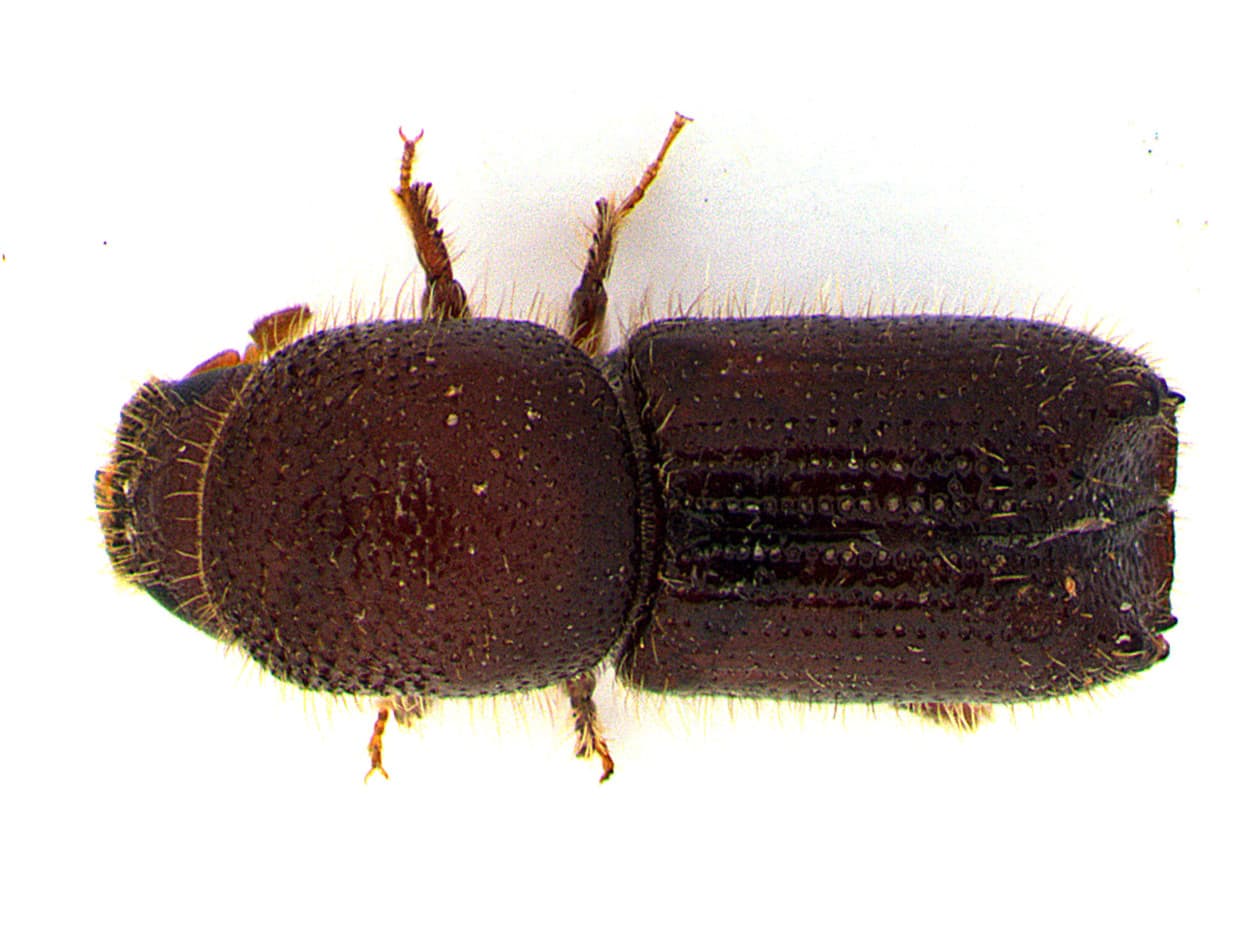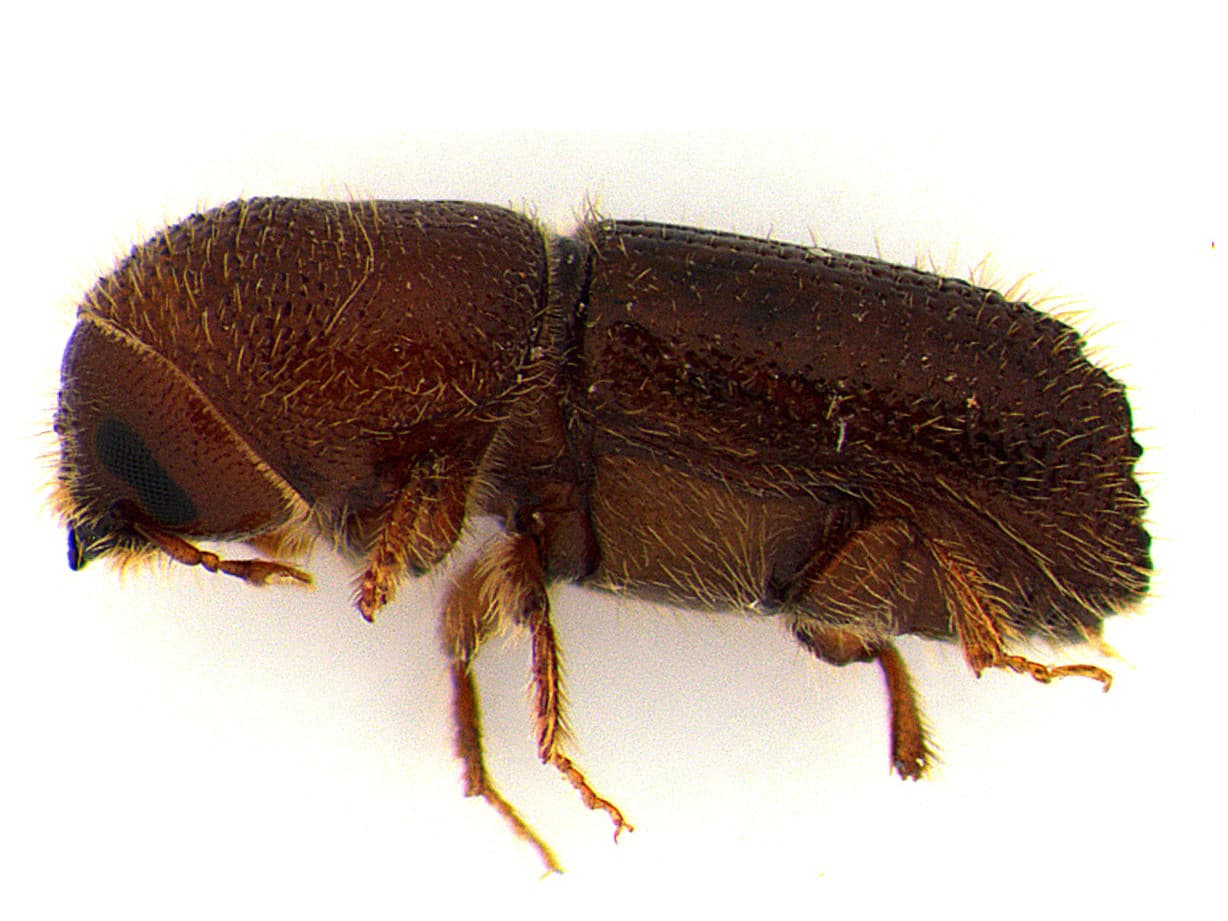

Orthotomicus erosus is a secondary pest of coniferous species and generally infests stressed and recently felled trees, as well as broken branches (Tribe 1992, Haack 2004). Under rare instances beetles can be found infesting healthy trees. High levels of infestation can cause dieback and tree death, especially in stressed trees.
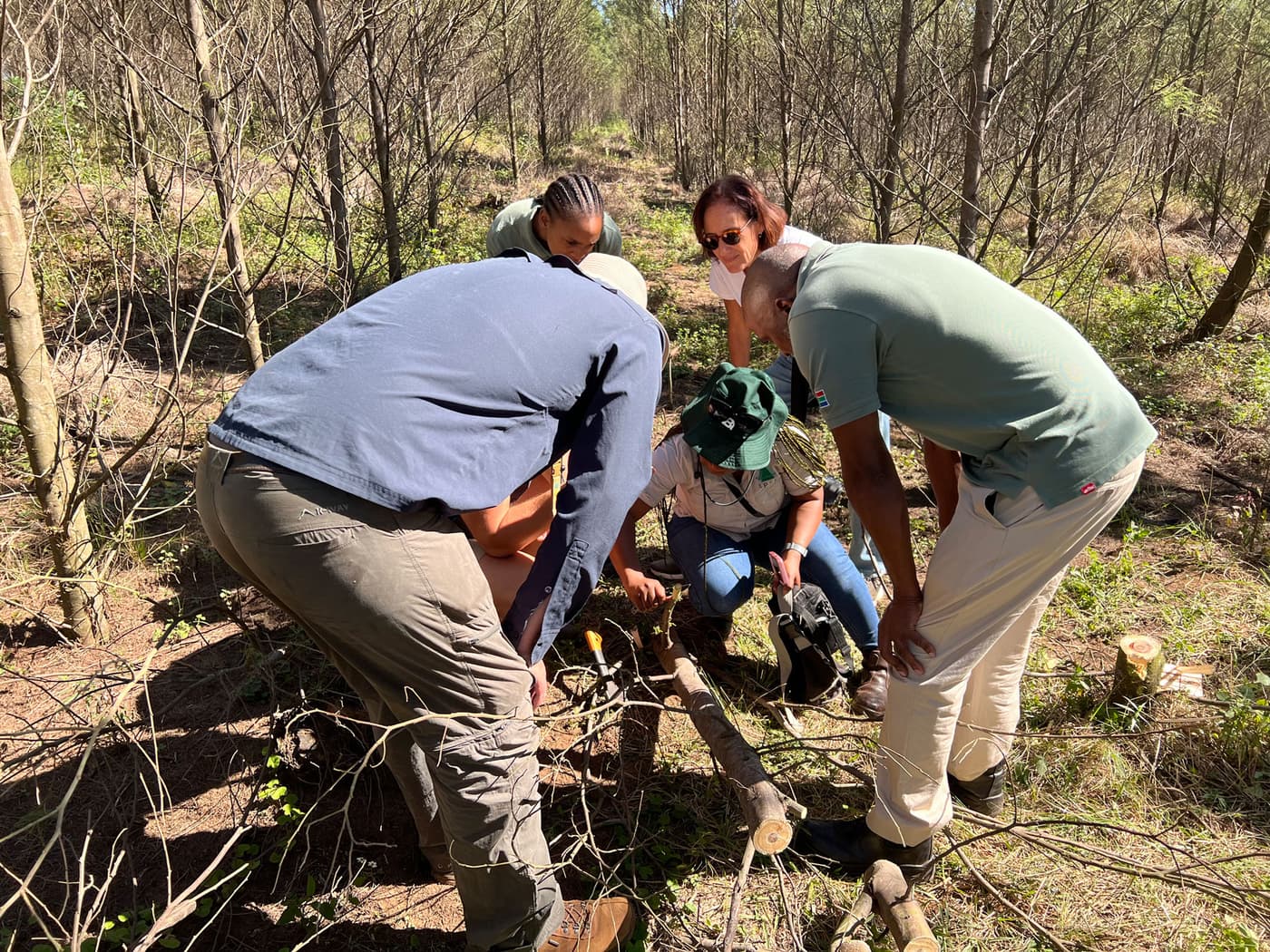
During initial boring of the beetles, frass can be present, and this can later resemble a reddish-brown dust covering on the bark of trees and logs as boring activities continue. Pitch tubes, gum and resin might also be present in bark crevasses at beetle entrance holes. When the bark is stripped back from an infested tree, engravings from the beetle boring can be seen left in the cambial region. The gallery pattern typically consists of a nuptial chamber with one to five longitudinal tunnels concluding in egg galleries.
Like many other bark beetles, O. erosus associates with blue-stain fungi. Cross sections of logs and freshly cut lumber may present with discoloured bark typical of sapstain induced fungi. Additionally, the fungi and damage caused by the boring activities of the beetles can compromise water transport by the tree resulting in wilting and discolouration of the pine needles.