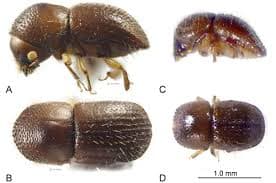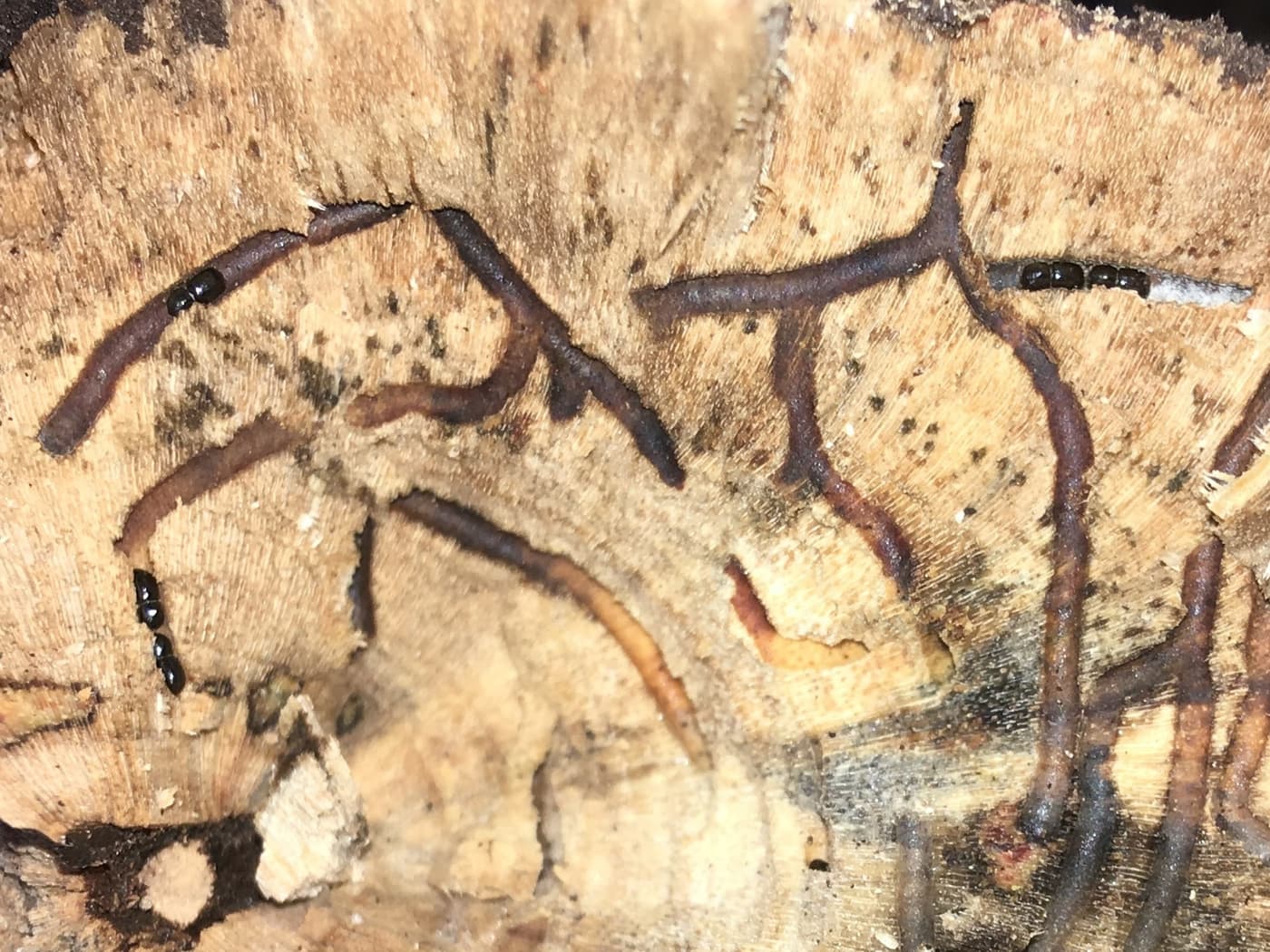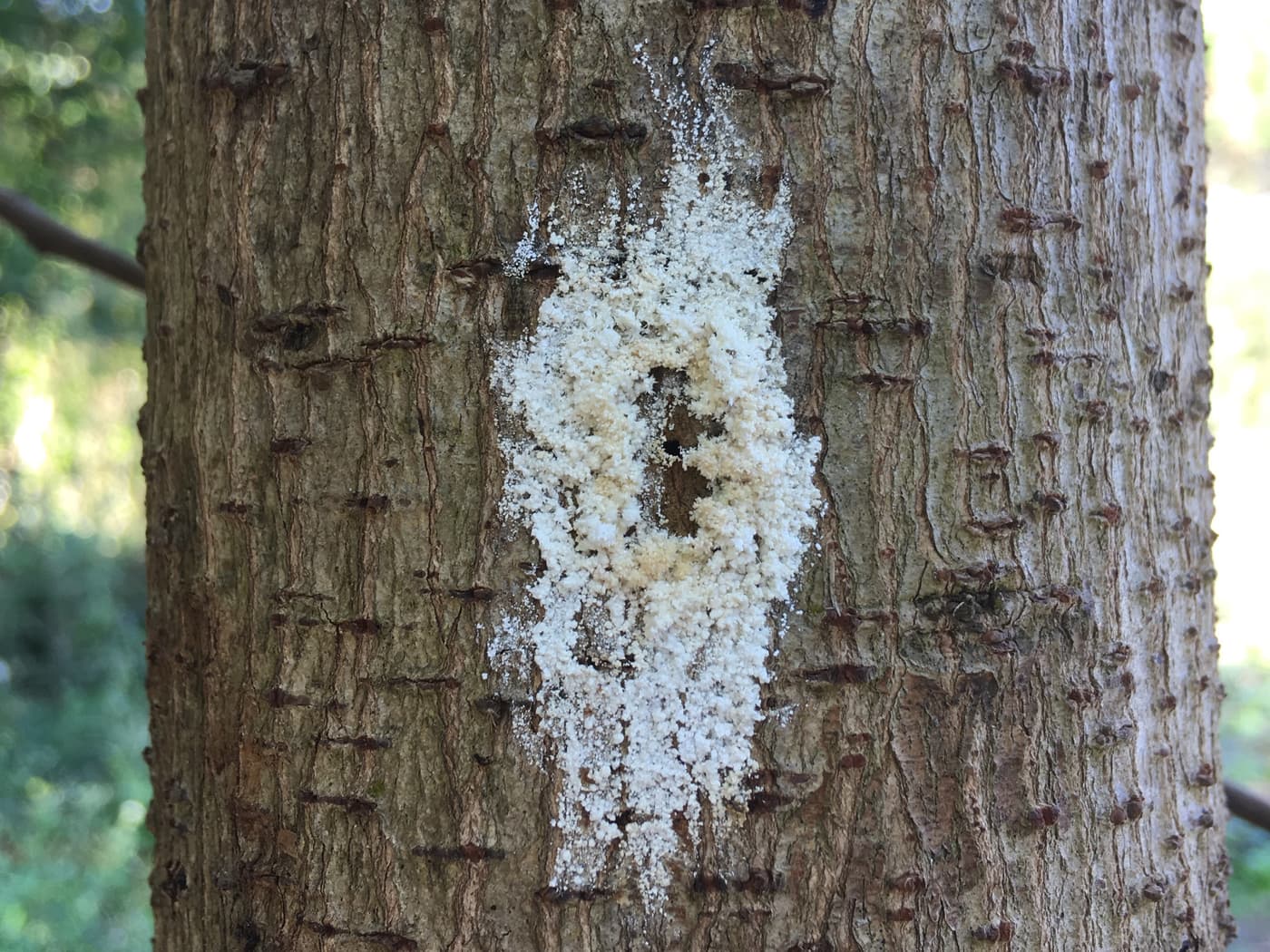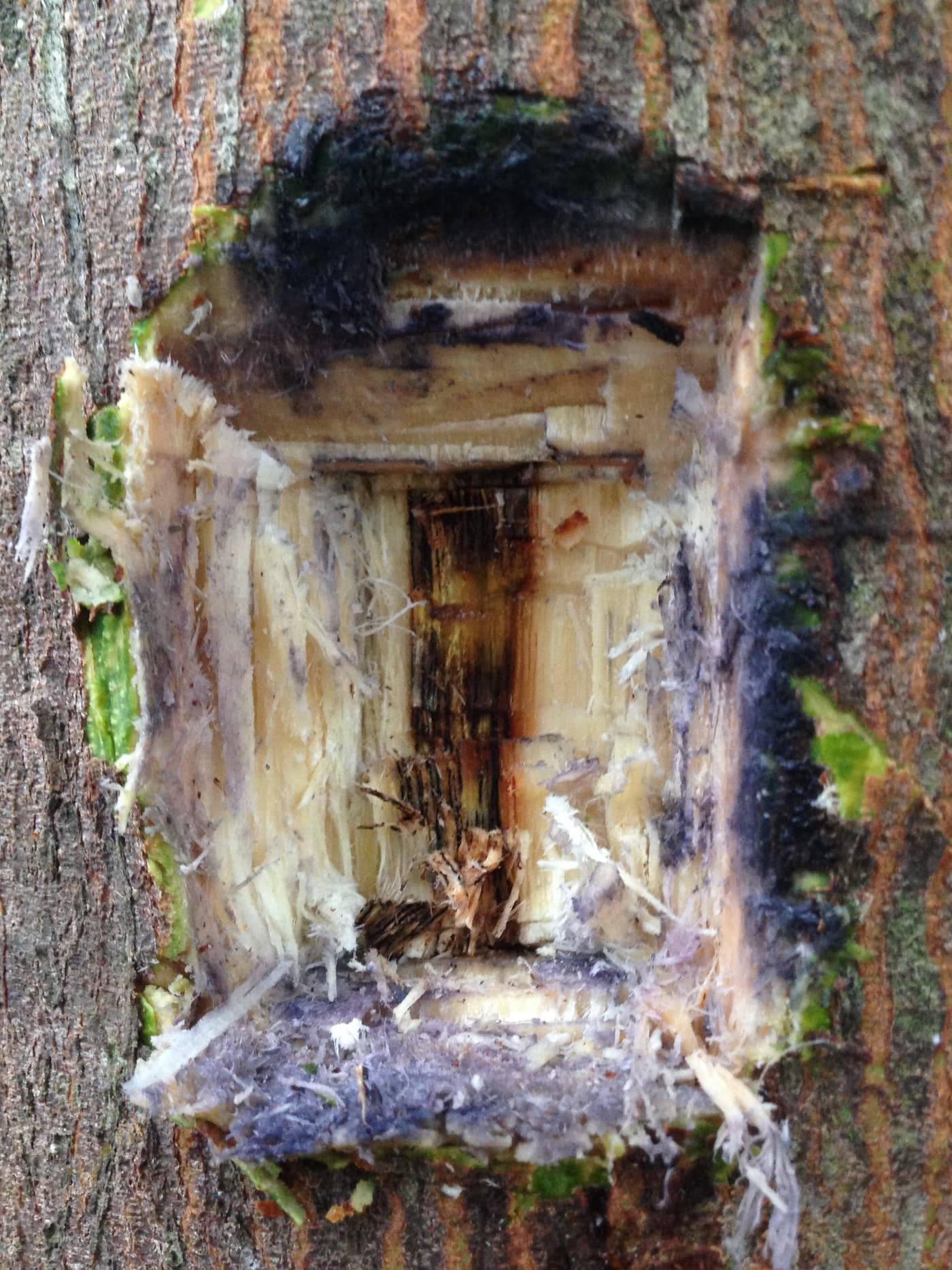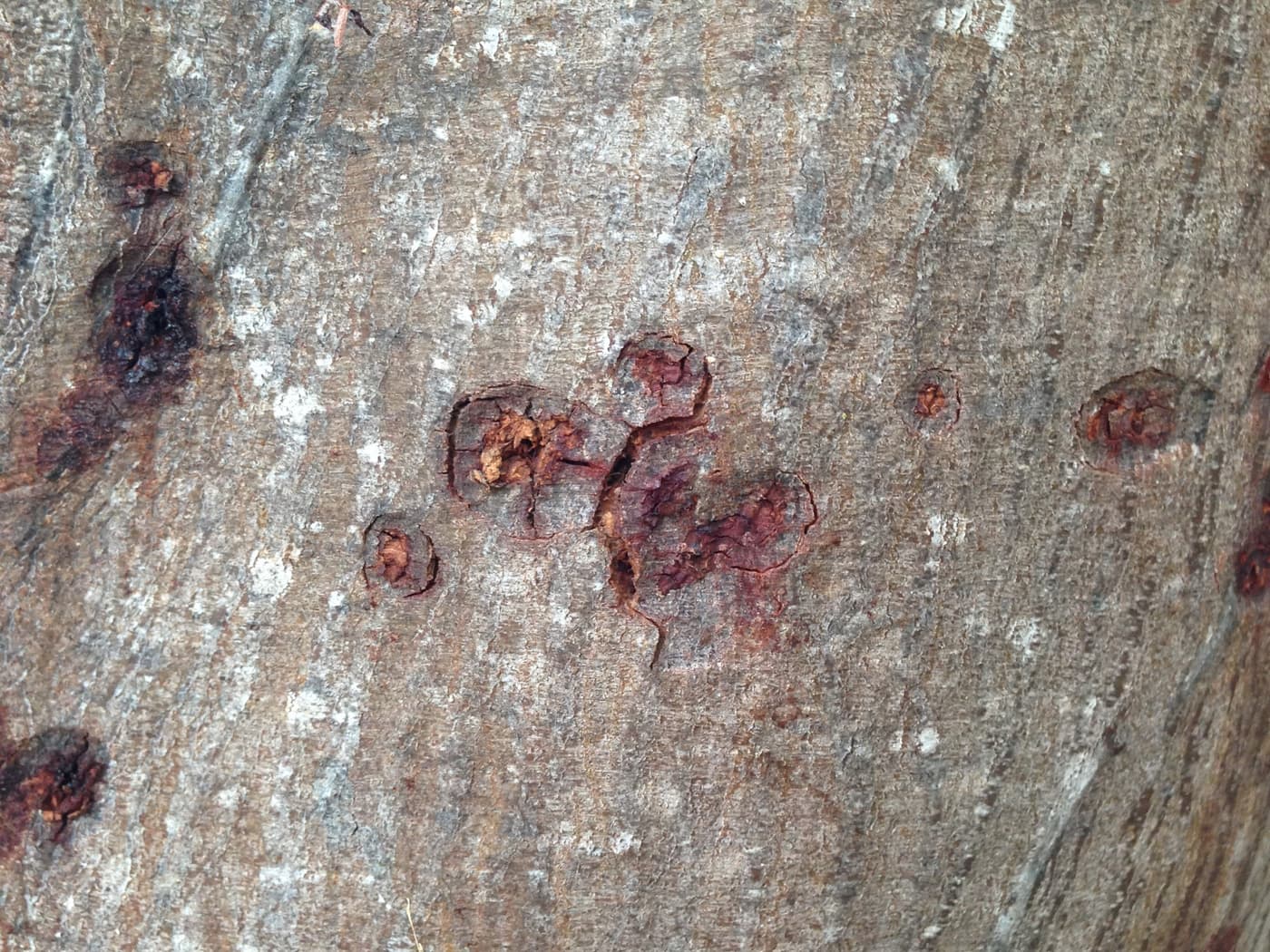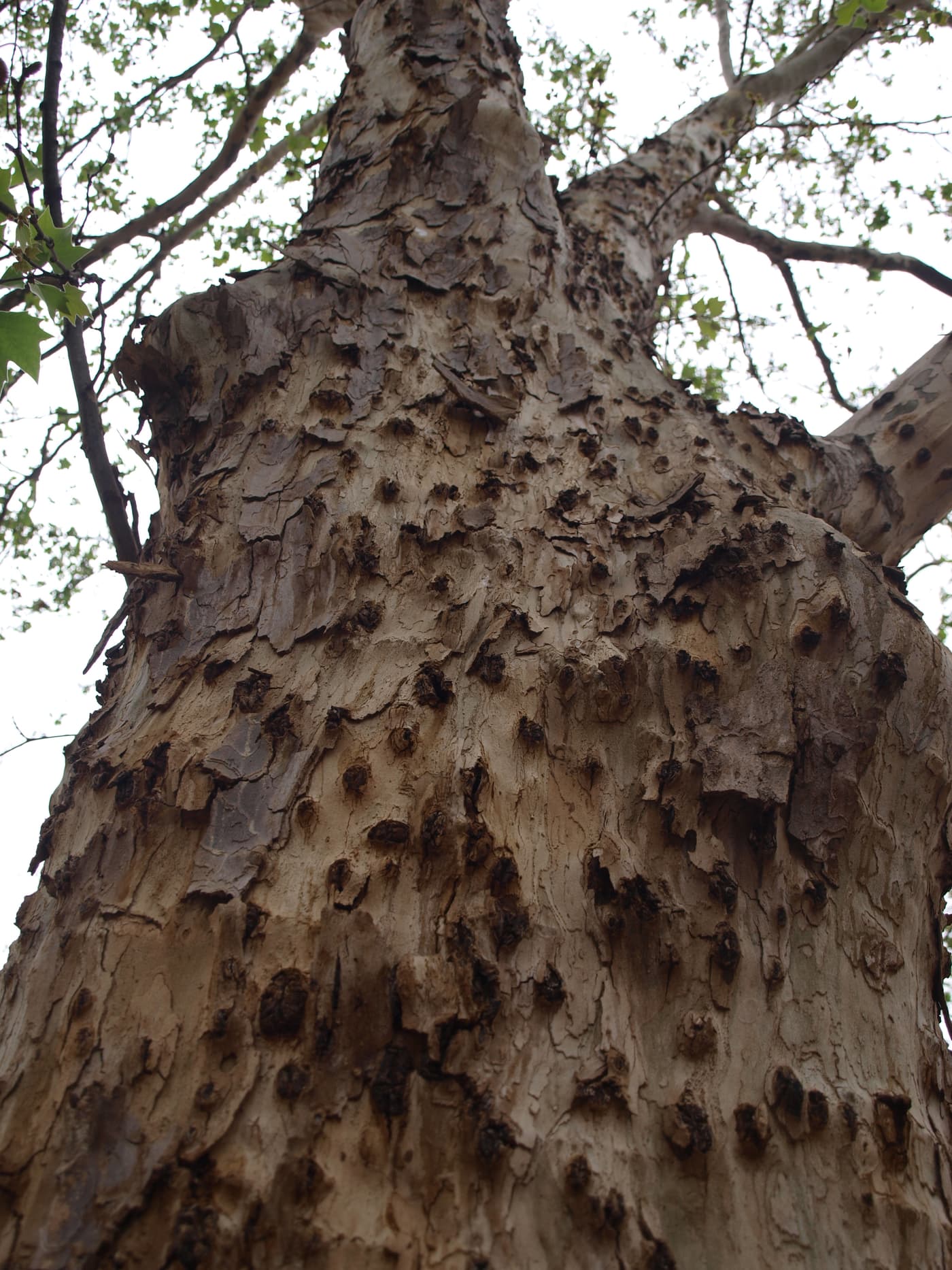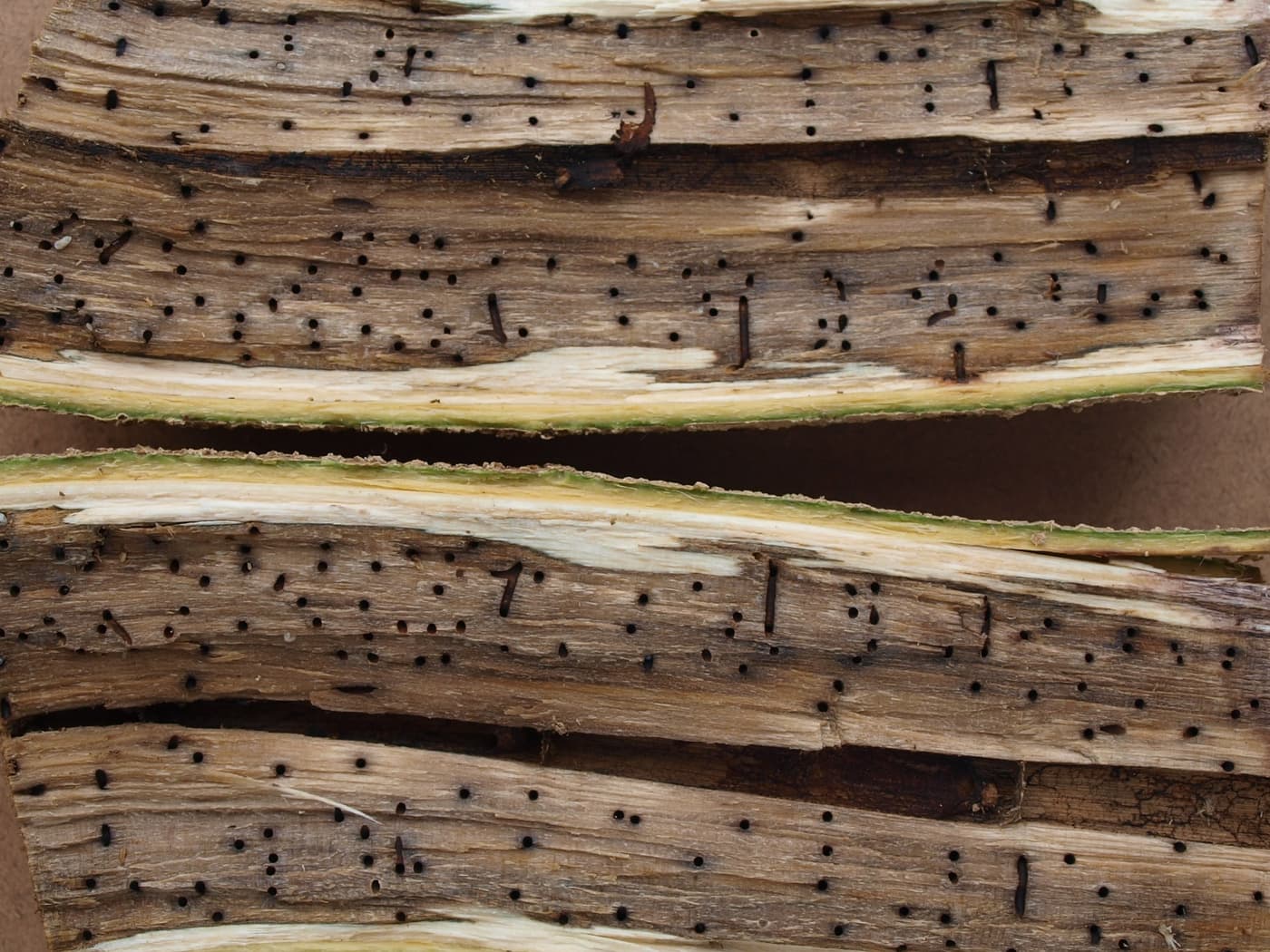
The female beetles bore holes into the trunk and/or branches of a tree, the holes are perfectly round and about 1 mm in diameter. Symptoms of beetle infestation vary between tree species but external symptoms of infestations may include wet patches and resin exudates, sugar fountains, or accumulation of frass (mixture of sawdust and excreta) and noodles (compacted frass) at the entrance holes and around the base of the tree, as well as “shotgun” like lesions. Removal of the bark around the entrance holes may reveal a brown- to pinkish stain formed by the fungal symbiont, Fusarium euwallaceae, spreading from the gallery into the vascular tissues in a streaking fashion below the bark. Additional symptoms such as branch dieback and tree decline can be observed later as F. euwallaceae colonises and blocks the xylem vessels of the tree, preventing water flow. Removal of affected limbs or whole trees reveal staining of the fungal symbiont and tunnel systems of the beetles throughout the tree.

Tree Protection Co-operative Programme
Polyphagous Shothole Borer / Euwallacea fornicatus
Euwallacea fornicatus
Symptoms
Biology
The word polyphagous in the common name refers to the ability of PSHB to infest many different host tree species. Trees in which the beetle can fully complete its lifecycle are known as reproductive hosts. When an adult female beetle locates a suitable reproductive host, she will tunnel into the sapwood, inoculating the fungal symbionts, including F. euwallaceae, and establish a brood gallery in which to lay her eggs. Within this gallery the larvae will develop and fully mature, feeding primarily on the structures produced by F. euwallaceae. Male beetles usually remain in natal galleries and are rarely found to venture outside of the host.
The PSHB has a haplodiploid mating system in which haploid males develop from unfertilized eggs. If a mated female initiates a colony then both male and female offspring may be produced (ca. 7% of beetles may be male). These male and female offspring (brothers and sisters) can mate within the galleries, resulting in mated female progeny that can leave the natal gallery and start new colonies. However, virgin females that construct galleries can lay haploid eggs that will result in all-male offspring. The female can then mate with her male offspring to produce diploid eggs in subsequent generations. The result is that a single female beetle, whether mated or not, can start new infestations with no indication that the populations will suffer from inbreeding. Under optimal conditions, the life cycle can be completed in 22 days.
In non-reproductive hosts, PSHB will “test” the tree to determine if it is a suitable host but will not establish a gallery.
Gallery