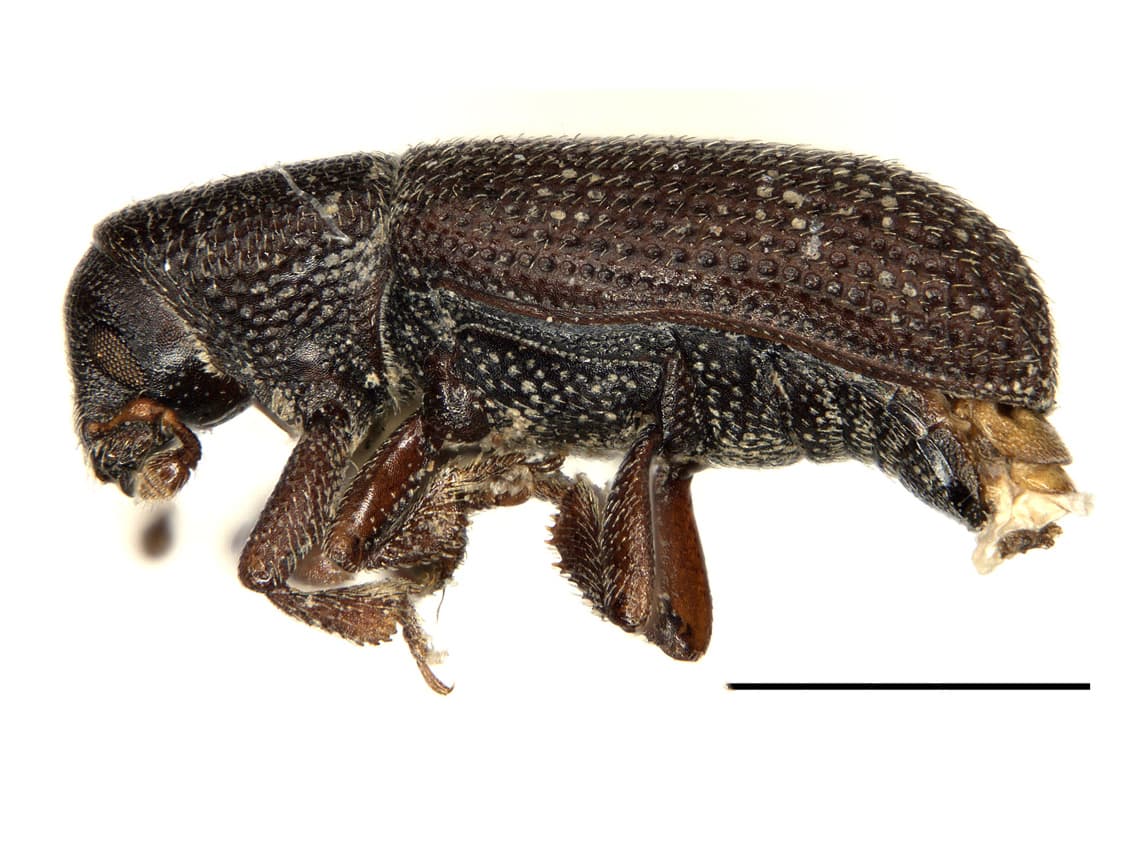
Of the three pine infesting bark beetles introduced into South Africa, Hylastes angustatus tends to be the most problematic. Severe infestations of this species in newly planted plantations can result in up to 50% seedlings loss due to girdling caused by the under bark boring activities of the beetles and their larvae (Tribe 1992).
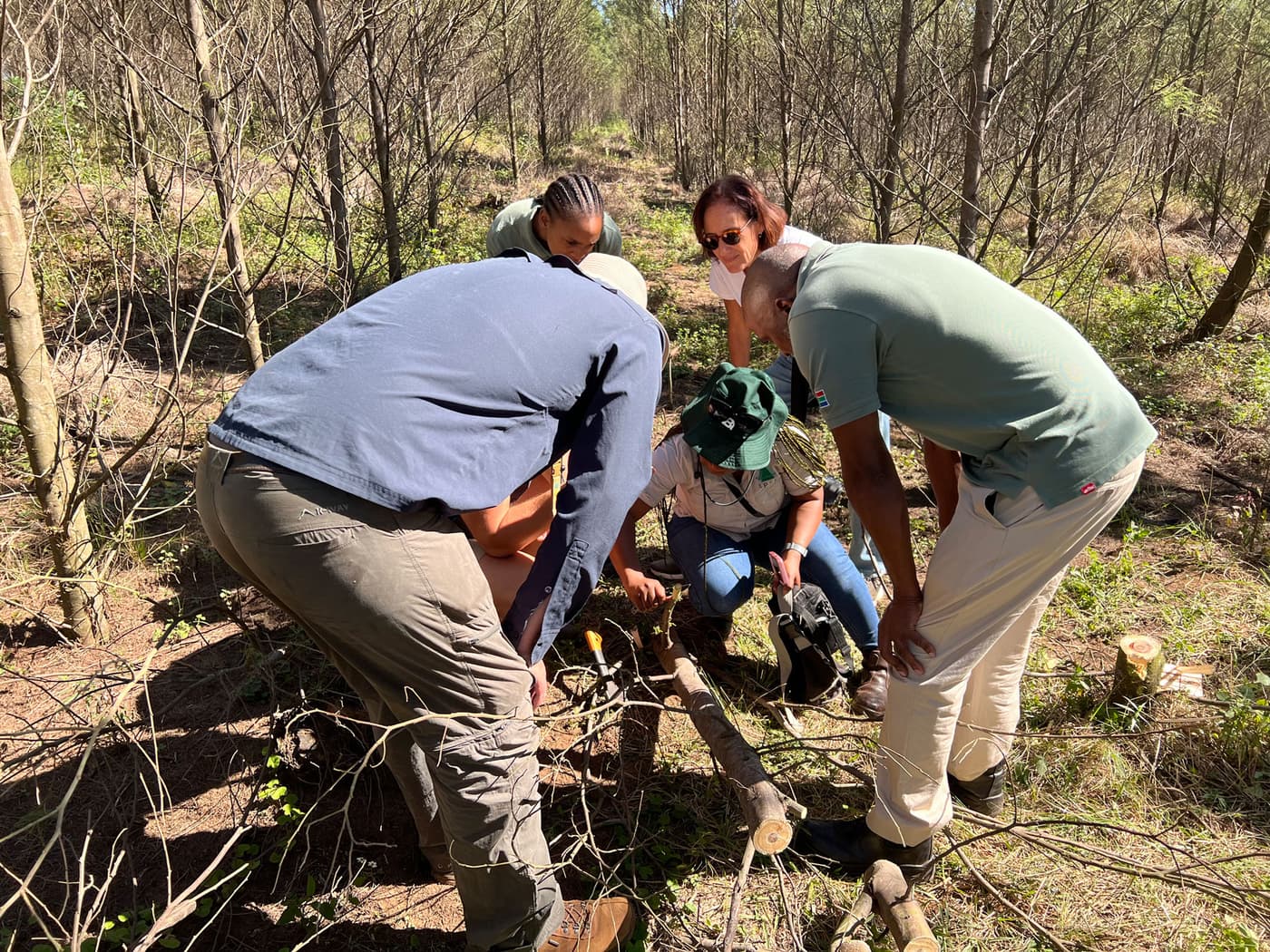
Attracted by the volatiles produced by damaged pine, H. angustatus is typically found boring in felled logs or discarded branches within the plantation and is considered a secondary bark beetle of stressed trees. Additionally, in some instances, the beetles can also be found infesting the lateral roots of growing pines and are known to infest trees below ground level. This indiscriminate boring and breeding of the beetles in discarded material within the plantation leads to population booms, from where the beetles spread into newly planted plantations, attracted by volatile cues produced by the seedlings due to post planting stress (Erasmus & Chown 1994).