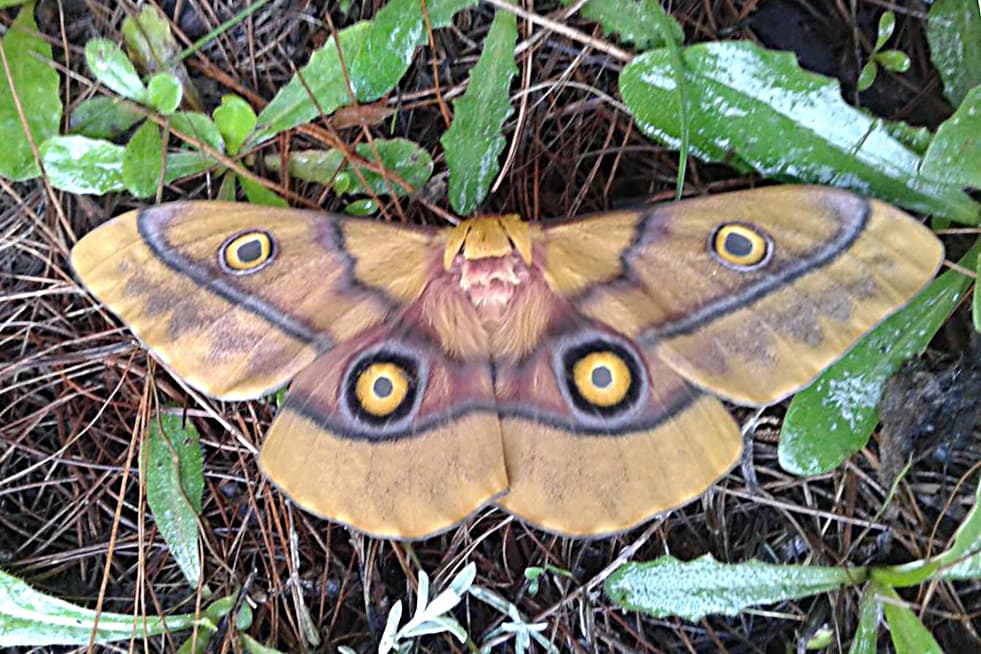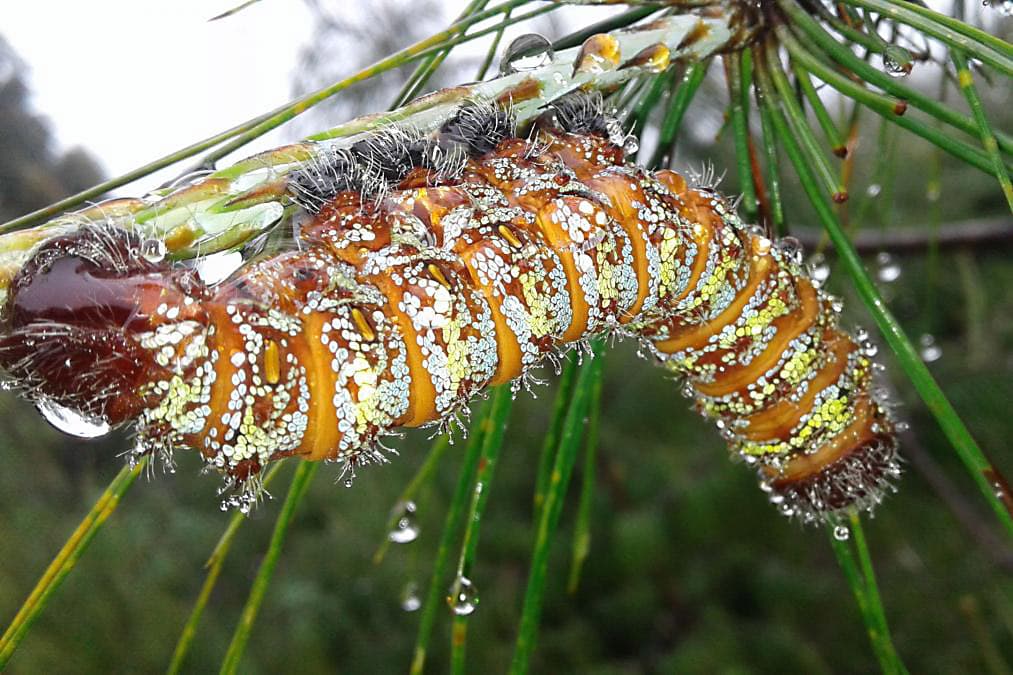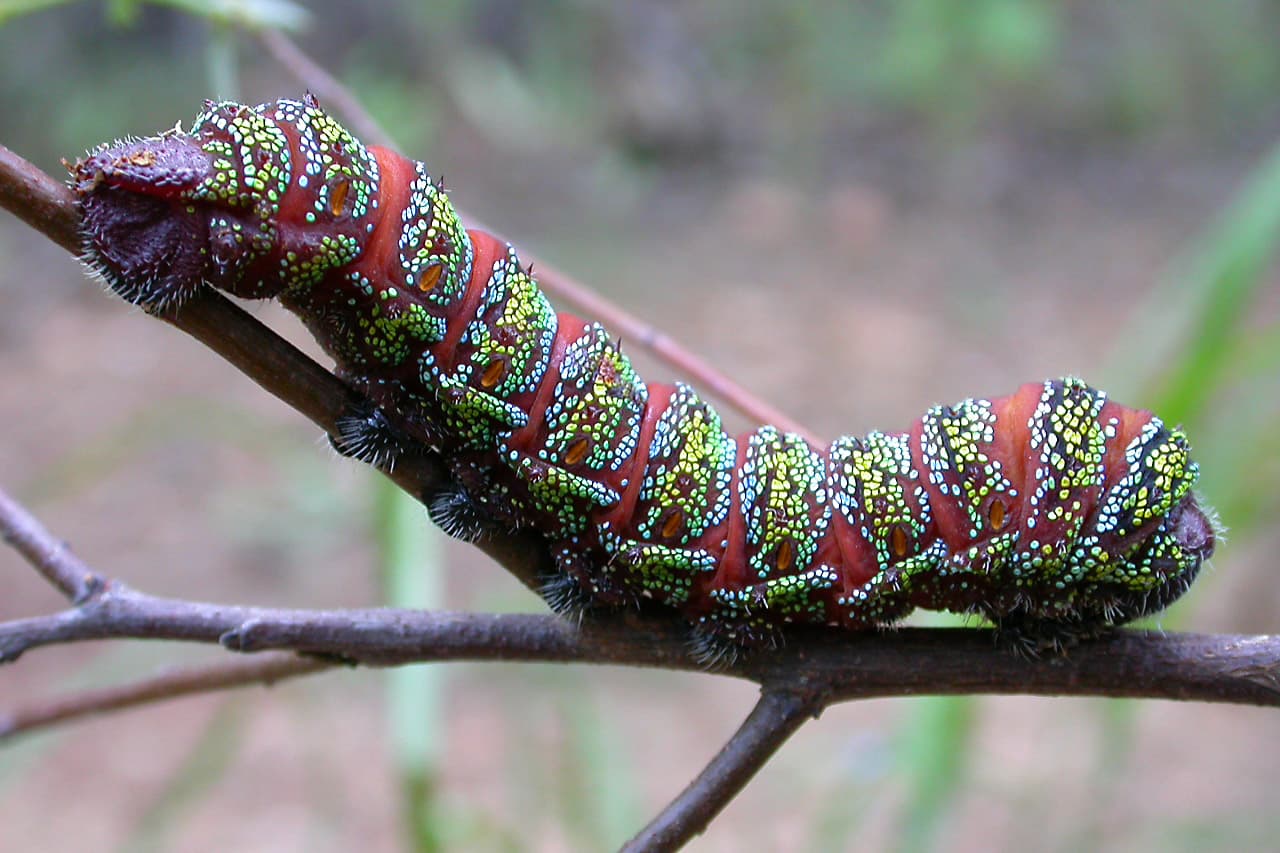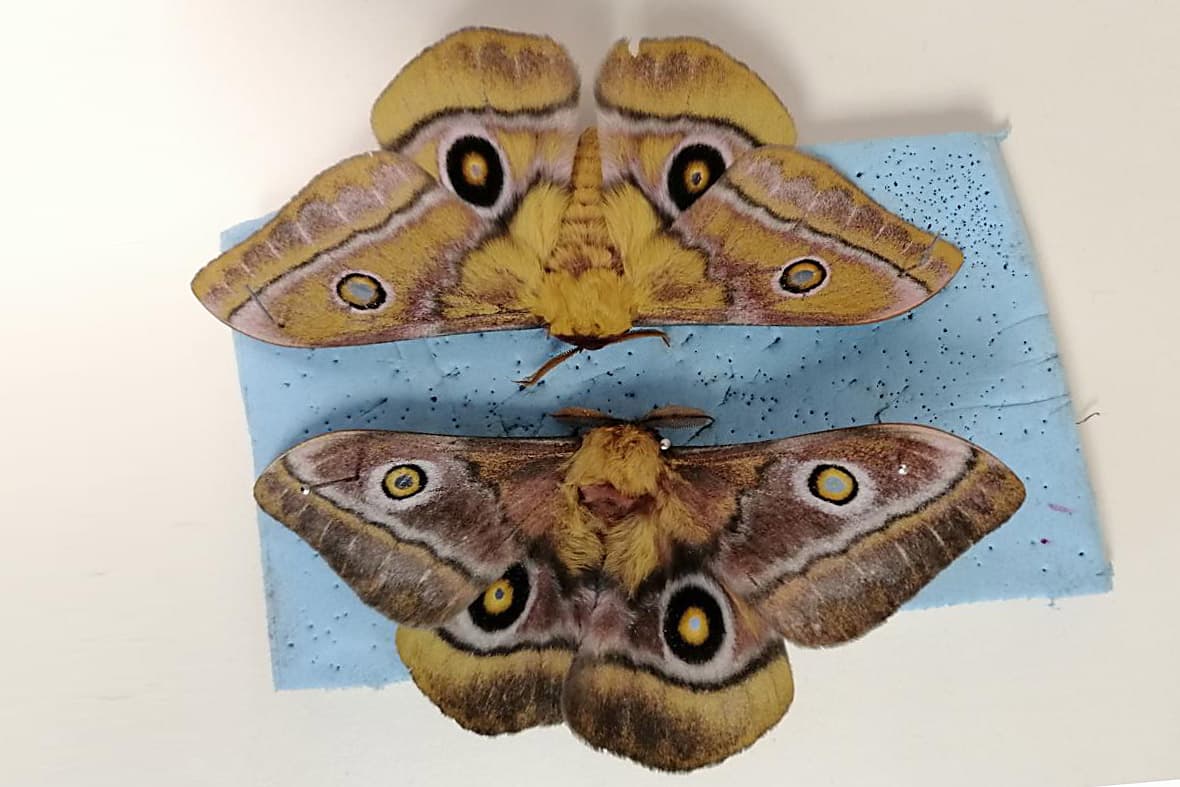
Larvae defoliate pine trees.


A Mpumalanga pine and eucalyptus plantation on rolling hills, a forester from behind measuring a trunk with a diameter tape (illustration)
01/02
Click to pause
Tree Protection Co-operative Programme
Pine emperor moth
Nudaurelia clarki and Nudaurelia cytherea
Common NamePine emperor moth
Scientific NameNudaurelia clarki and Nudaurelia cytherea
OriginAfrica, Southern Africa, Western Cape, Mpumalanga, KwaZulu-Natal, Swaziland (Geertsema and Van den Berg 1973)
Distribution in South AfricaEastern Cape, KwaZulu-Natal, Mpumalanga, Western Cape
Symptoms
Biology
Different strains of the pine emperor are known, and they have variation with regards to their life cycles and where they are found. For the strain feeding on pine in the Kwazulu-Natal and Mpumalanga provinces, the lifecycle can be described as follows. The pupal phase lasts up to 6 months and these can be found in the soil from June through to February. Adult moths emerge in February and fly around until May. The adult can live for up to 10 days and females lay between 150 to 200 eggs singly or in clusters of varying sizes. Females have been recorded to fly as far as 1.8 km and males 5.2 km (Van Den Berg 1974). Eggs can be found from February through to April and larvae are found from March to August. Depending on the environment the eggs last from 26 up to 84 days before hatching (Tooke and Hubbard 1941; Geertsema and Van den Berg 1973).
Management
Natural enemies are present but chemical control may be needed to manage infestations.
Gallery