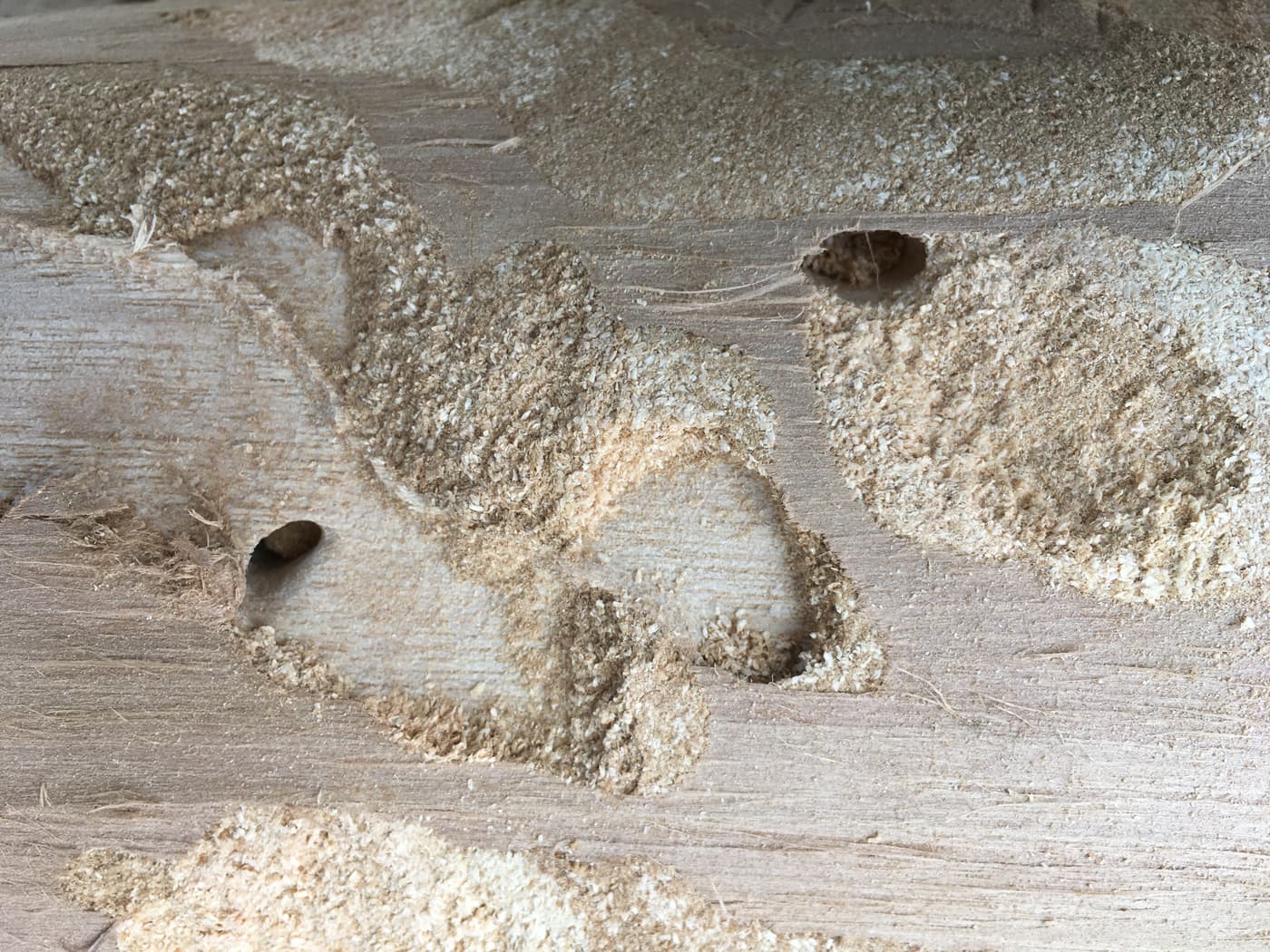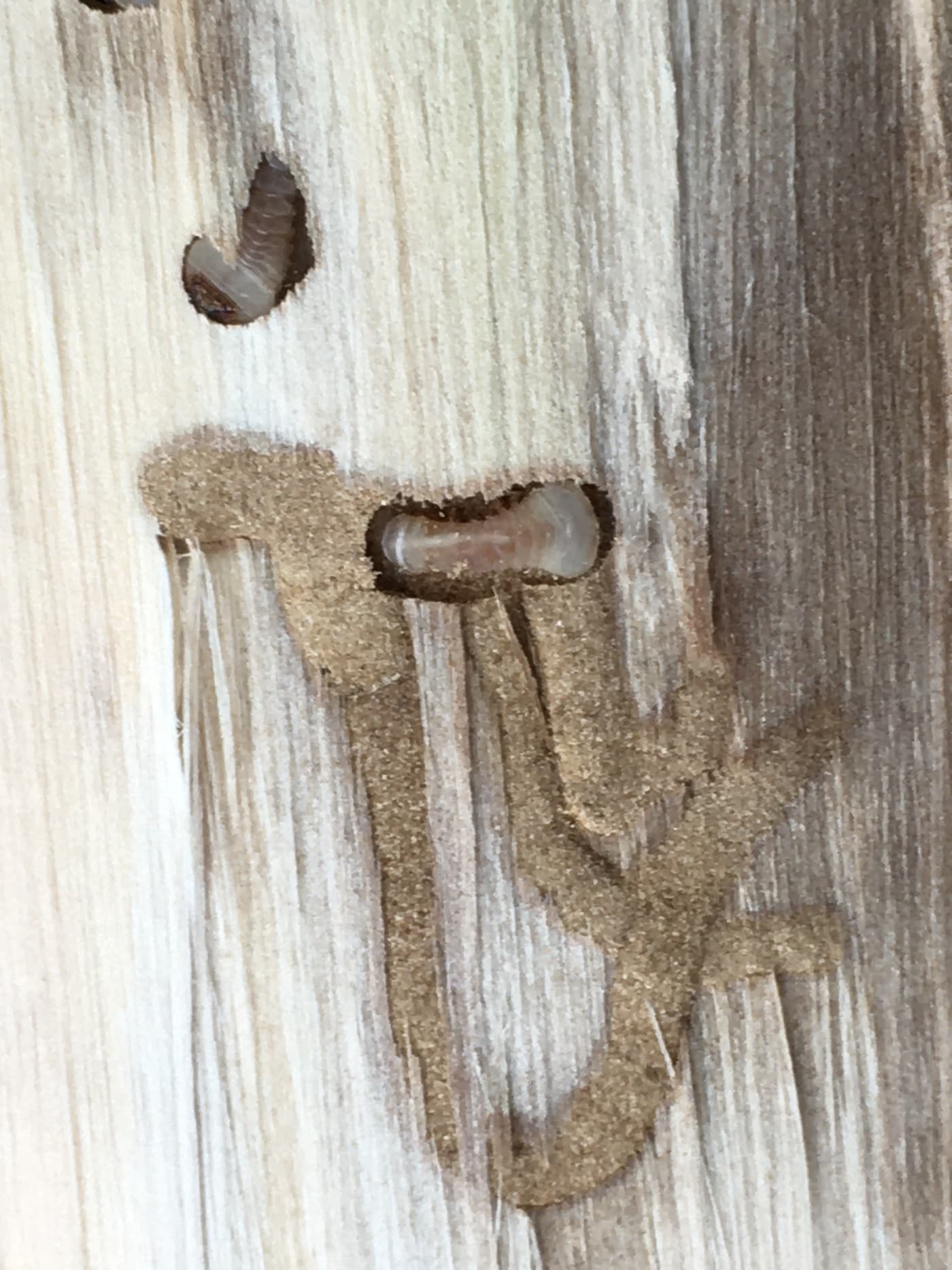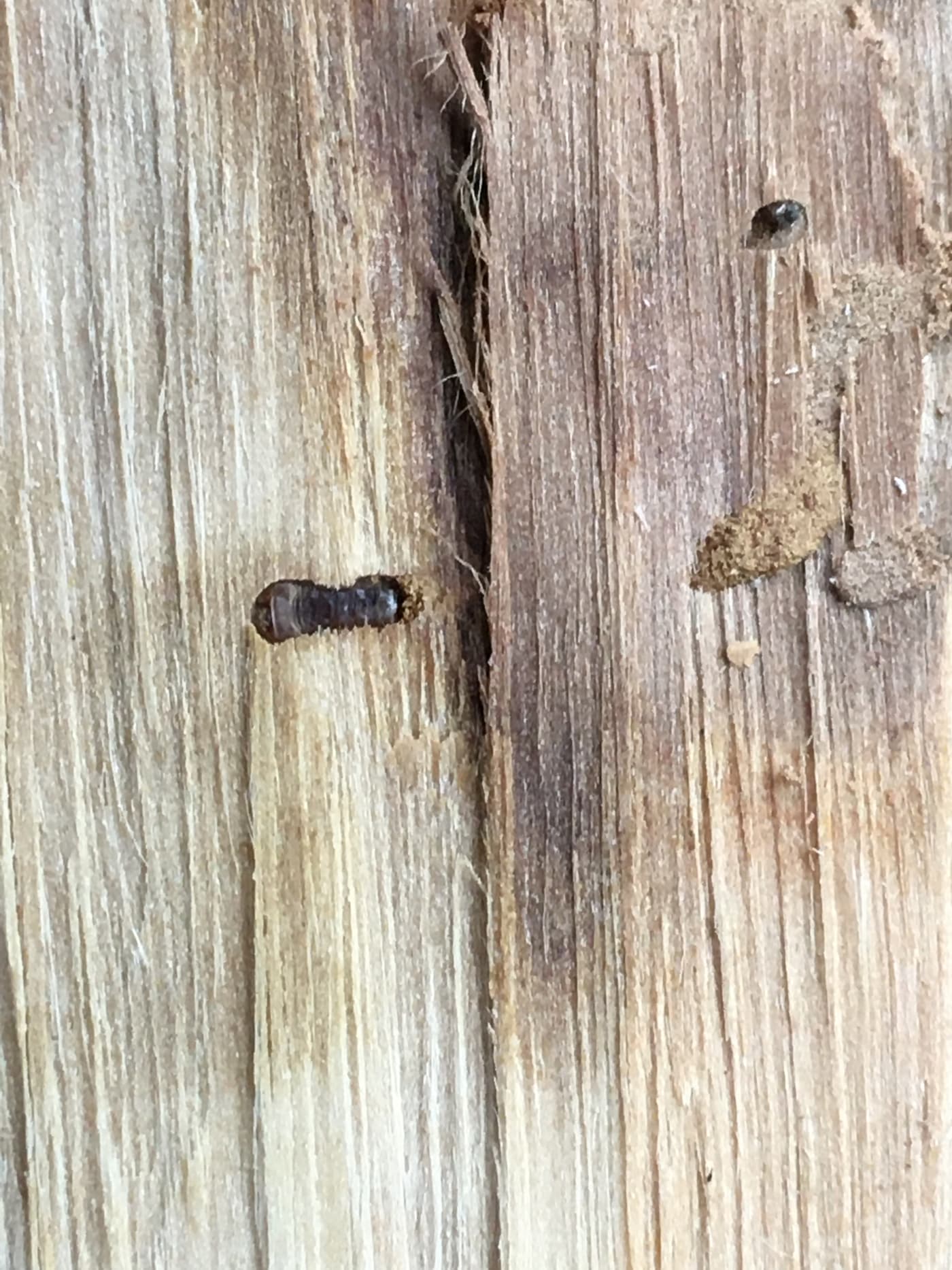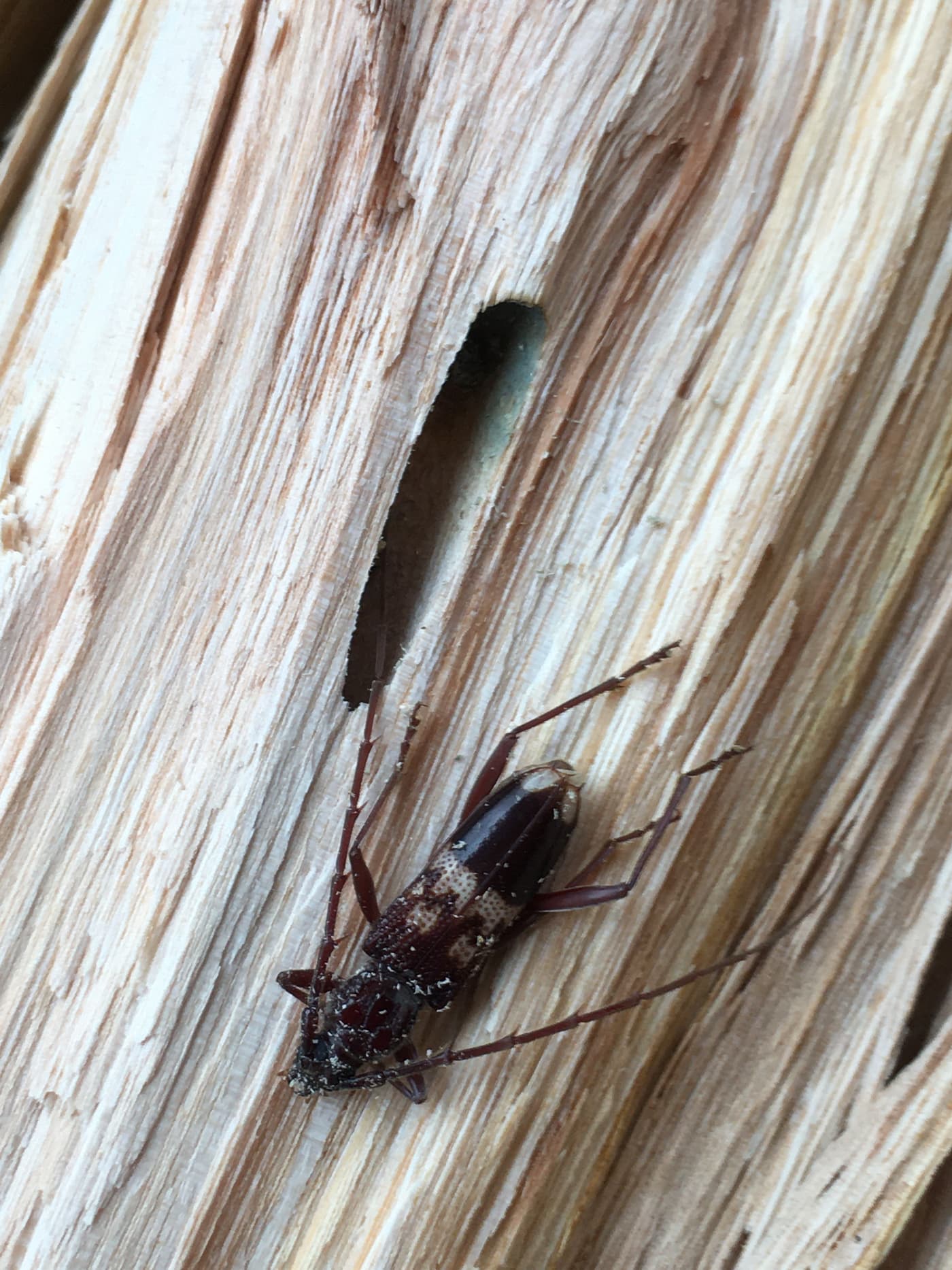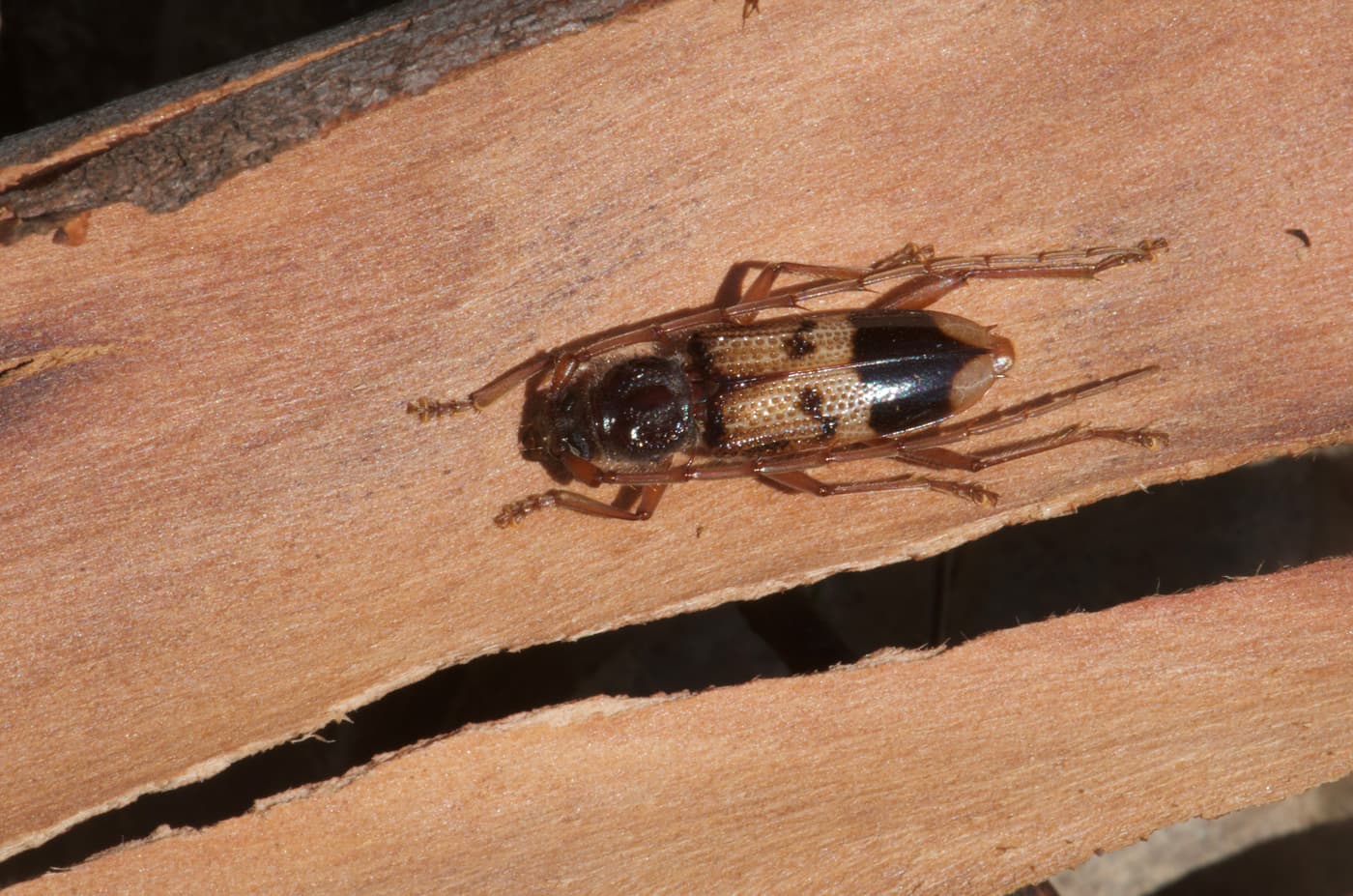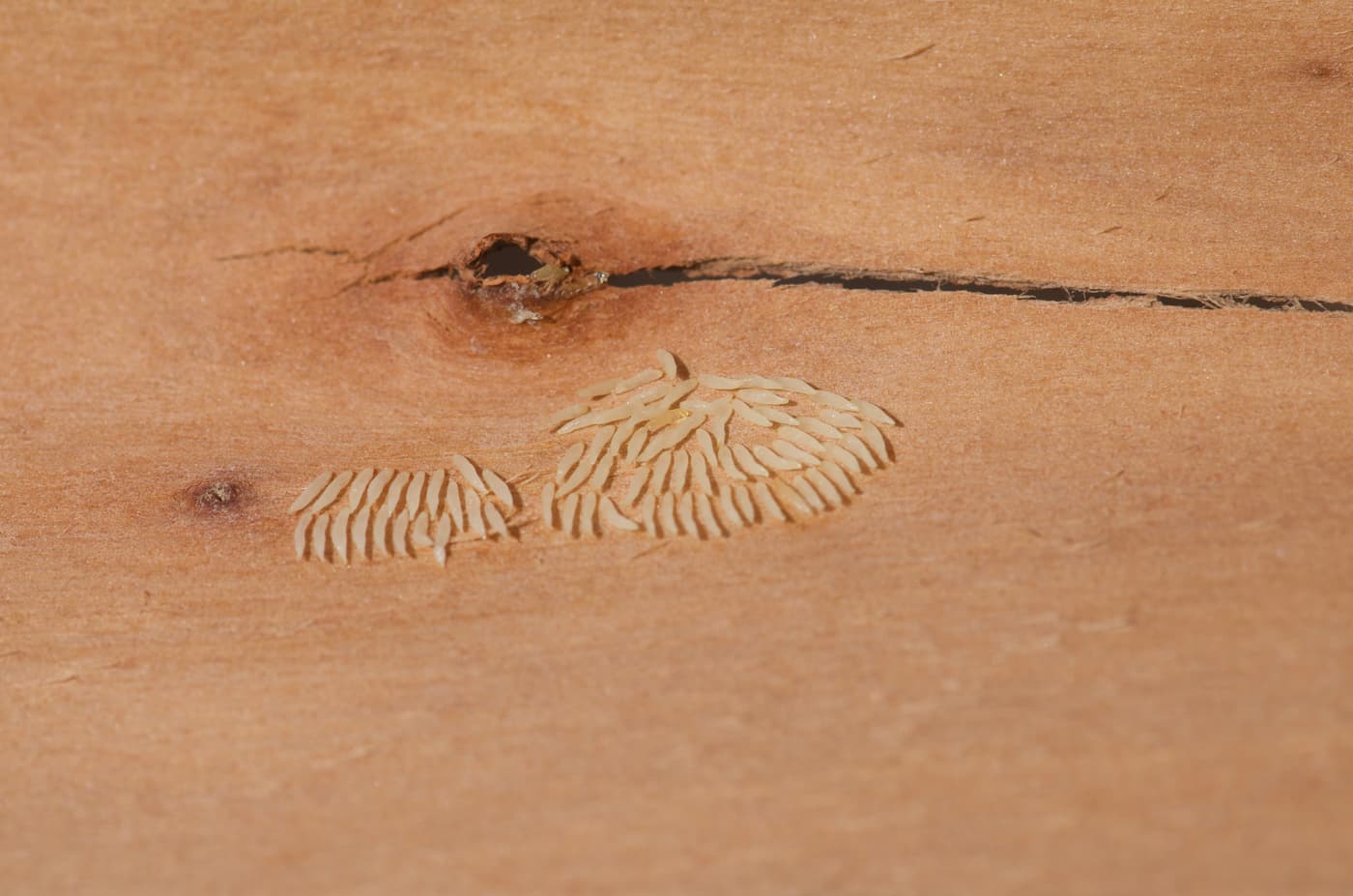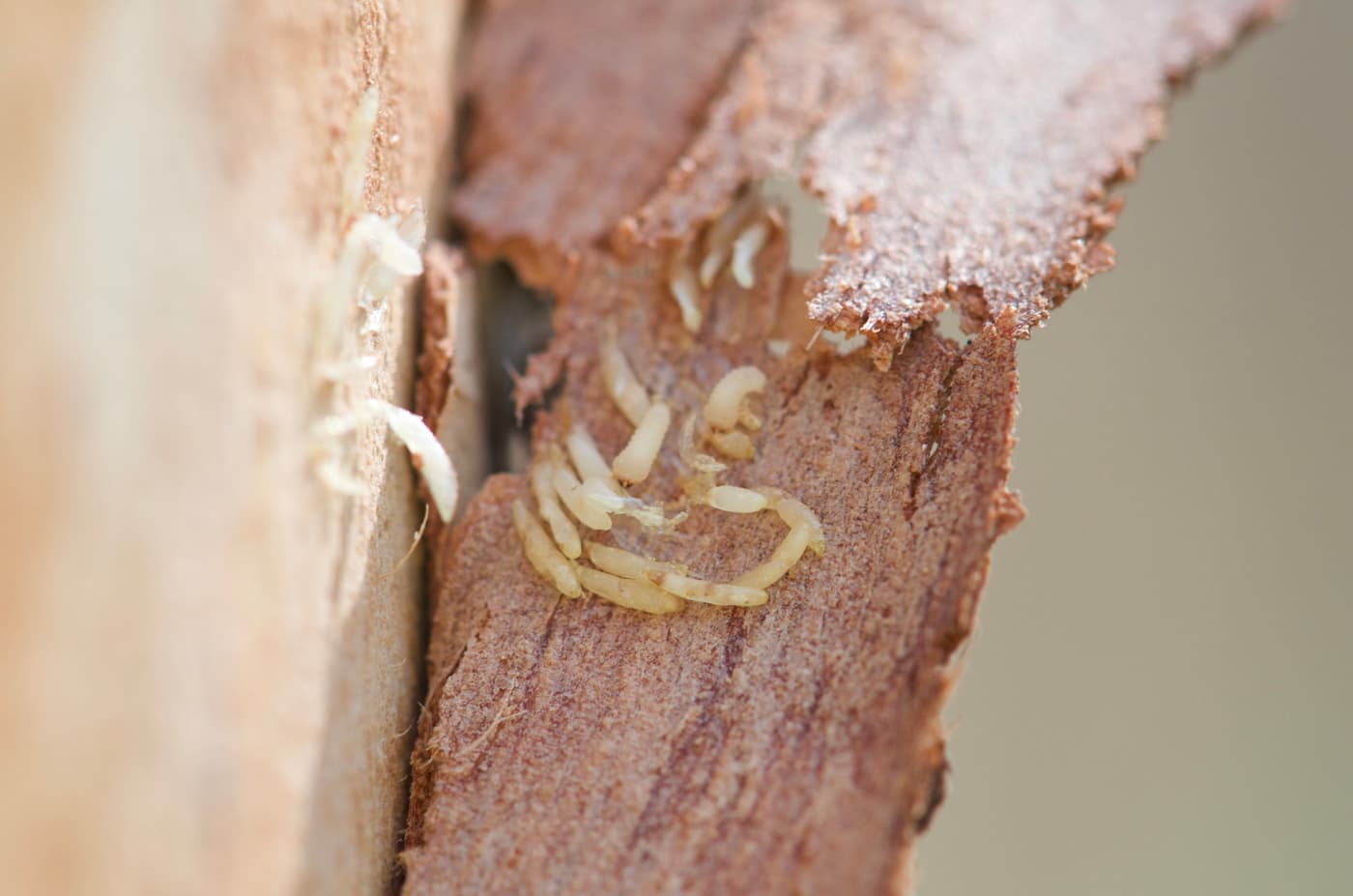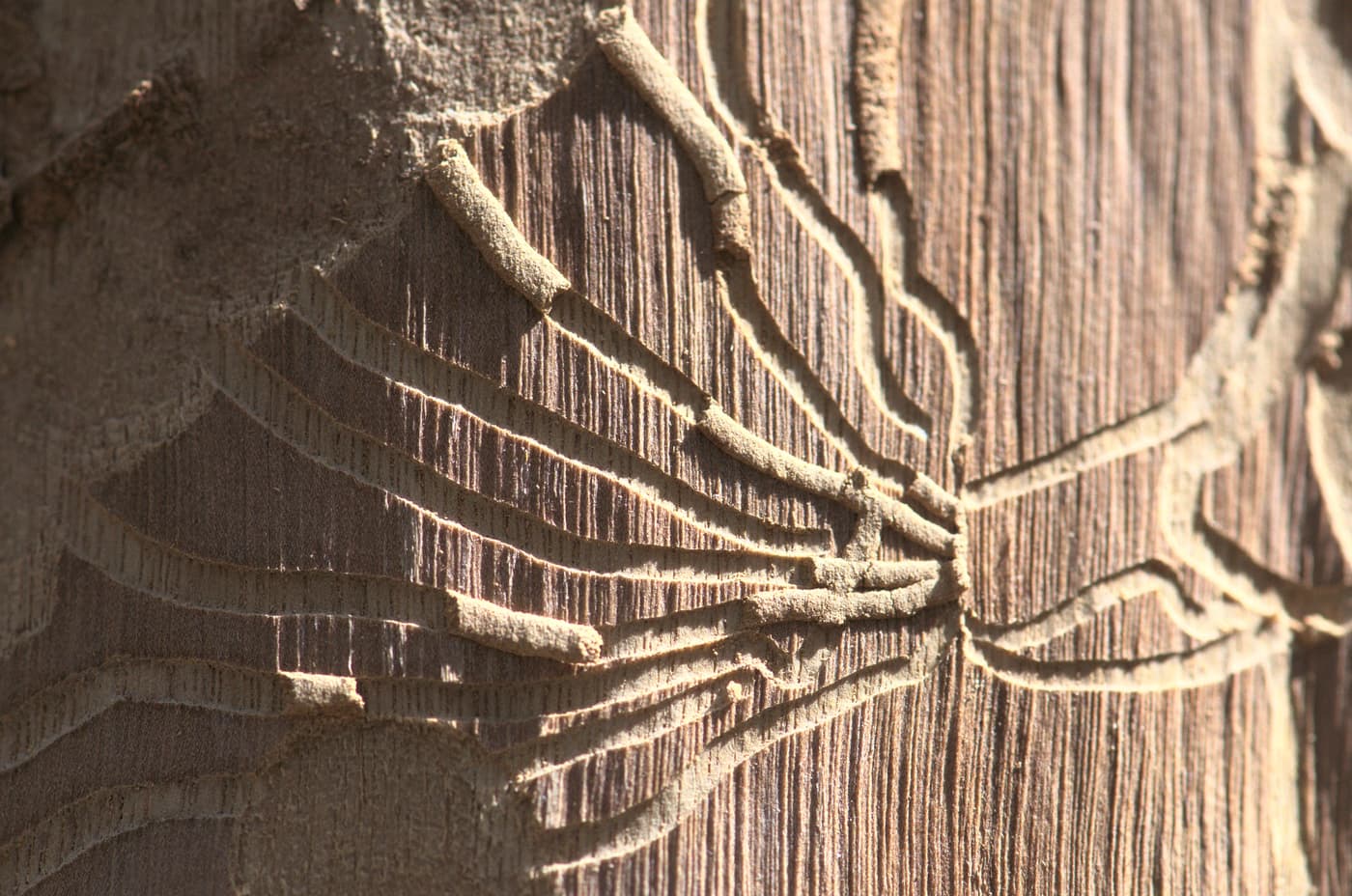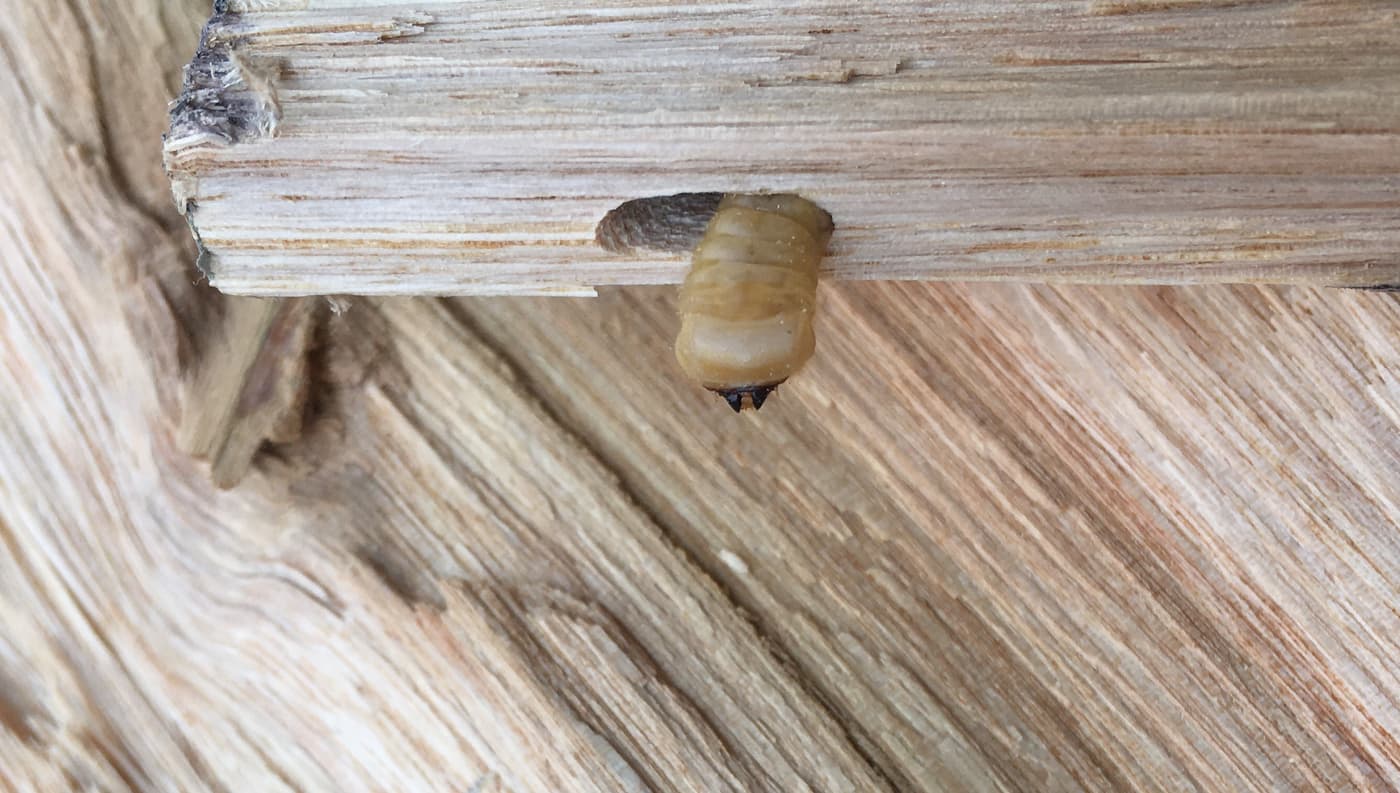
The beetles tend to attack damaged and stressed trees. Emergence holes are visble on the bark of infested trees. Stains or gum exudates are common symptoms found on the limbs or trunks of trees. Foliage can become discoloured and wilted. The feeding of larvae results in galleries beneath the bark. Heavily infested trees exhibit a thin canopy with wilted leaves. The bark is cracked and contains frass.

A Mpumalanga pine and eucalyptus plantation on rolling hills, a forester from behind measuring a trunk with a diameter tape (illustration)
01/02
Click to pause
Tree Protection Co-operative Programme
Eucalyptus long horn beetles \ Phoracantha spp.
Phoracantha recurva (Newman) and Phoracantha semipunctata (Fabricius)
Common NameEucalyptus long horn beetles \ Phoracantha spp.
Scientific NamePhoracantha recurva (Newman) and Phoracantha semipunctata (Fabricius)
SynonymsPhoracantha recurva (Newman); Phoracantha recurva papua (Gressit, 1959). Phoracantha semipunctata (Fabricius); Phoracantha inscripta (Germar, 1848) and Phoracantha hospita (Pascoe, 1864).
OriginAustralia
Distribution in South AfricaWidespread.
Symptoms
Biology
Both species attack stems and branches that are stressed or dying, or newly felled trees (Ivory 1997, Paine & Millar 2002).
The female P. semipunctata lays approximately 40 eggs below detached bark of stressed trees. The eggs hatch from 1 to 2 weeks later depending on the weather. After the larvae hatch, they acquire nutrients from the cambium and phloem to assist its development. Larvae nearing development will move to the external layer of the sapwood and establish pupal chambers; the larvae will then pupate. It takes approximately 180 days to develop to an adult (Paine et al. 2019). The adult starts to dig itself out the pupal chamber, creating an emergence hole approximately 8 to 10 cm.
In South Africa there are two partially overlapping generations. The adults are present between September and November, and February and March (Kliejunas et al. 2001).
The female P. reurva lay approximately 40 eggs in bark crevices and branch stubs (Wang et al; Paine et al. 2000). The larvae hatch approximately 6 to 15 days later (Ivory 1977). The larvae bore under the bark and make irregular galleries containing frass. The larvae reach maturity between 4 to 6 months. When it reaches maturity it constructs a vertical pupal chamber and an exit plugged with frass. Adults emerge approximately 10 days later and can live for approximately 96 days. The beetles are nocturnal and hide under the lose bark during the day. In South Africa, the complete life cycle lasts between 208 to 355 days and contains between one to three generations depending on temperature (Ivory 1997; Paine et al. 2000; Farrow et al. 1996).
Management
Chemical control: Chemical control is not efficient in the management of Eucalyptus borers (Paine et al. 2000).
Cultural Control: Avoid / minimize tree stress and remove infected trees (Paine et al. 2000).
Biological Control: Avetianella longoi, an egg parasitoid that is native to Australia, is one of the most important parasitoids used to control P. semipunctata. This parasitoid was intentionally introduced into South Africa, USA and Chile to control both species. It was noted to be more effective against P. semipuncata in California (Paine et al 2000). Tribe (2003), provided details on the introduction of A. longoi to South Africa and noted that it is more effective against P. semipunctata than P. recurva, as reported in California.
The larval parasitoids, including Syngaster lepidus, Jarra phoracantha and Jarra maculipennis, were introduced from Australia to California for the biological control of Phoracantha spp. (Paine et al. 1995, Paine et al. 2000). Syngster lepidus, Jarra phoracantha and J. maculipennis were introduced into South Africa from California, but J. maculipennis did not established (Moore 2003). The braconid, Iphiaulax sp. has been recorded in South Africa but in very low densities (Ivory, 1977). The Pteromalid, Oxysvhus genualis, native to South Africa, has also been reported to attack Phoracantha sp. in South Africa (Moore 2003, Prinsloo 2004).
Megalyra fasciipennis is a pupal parasitoid that was introduced to South Africa in 1910 from Australia, reported to have established in the Western Cape in 1962 and rediscovered in 1993 when parasitism reached 50% (Moore, 1993).
Gallery