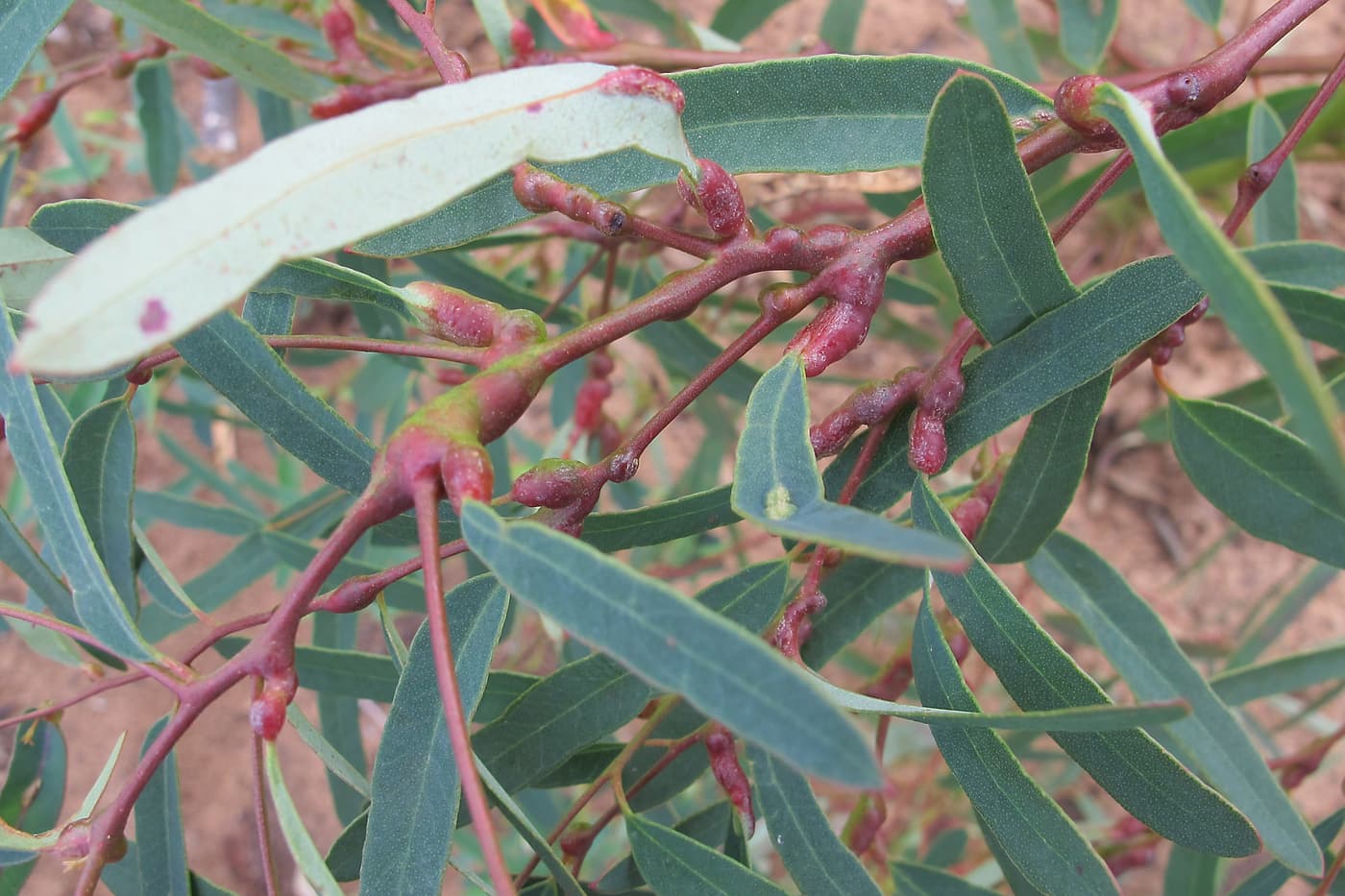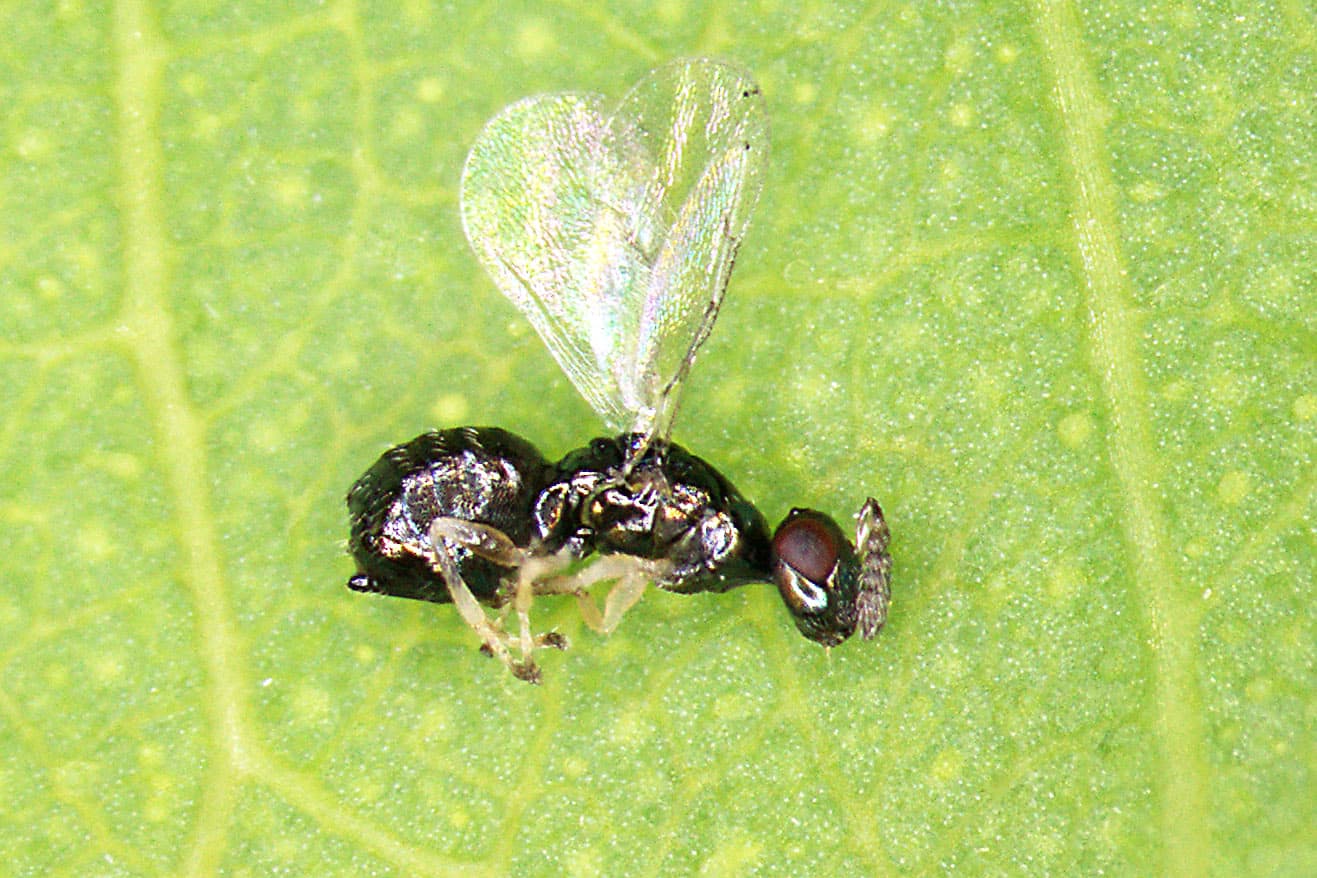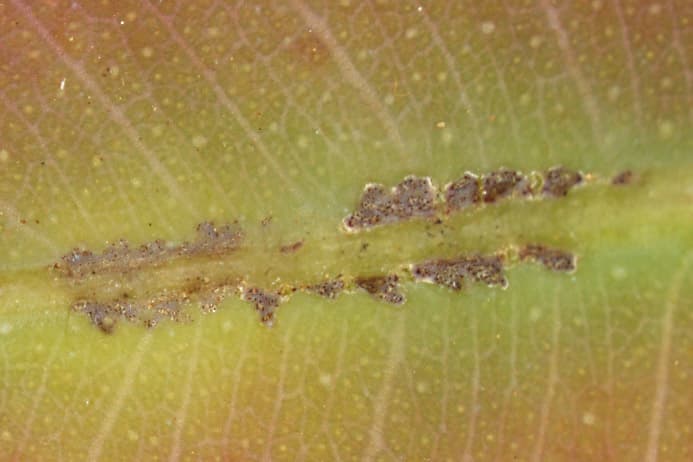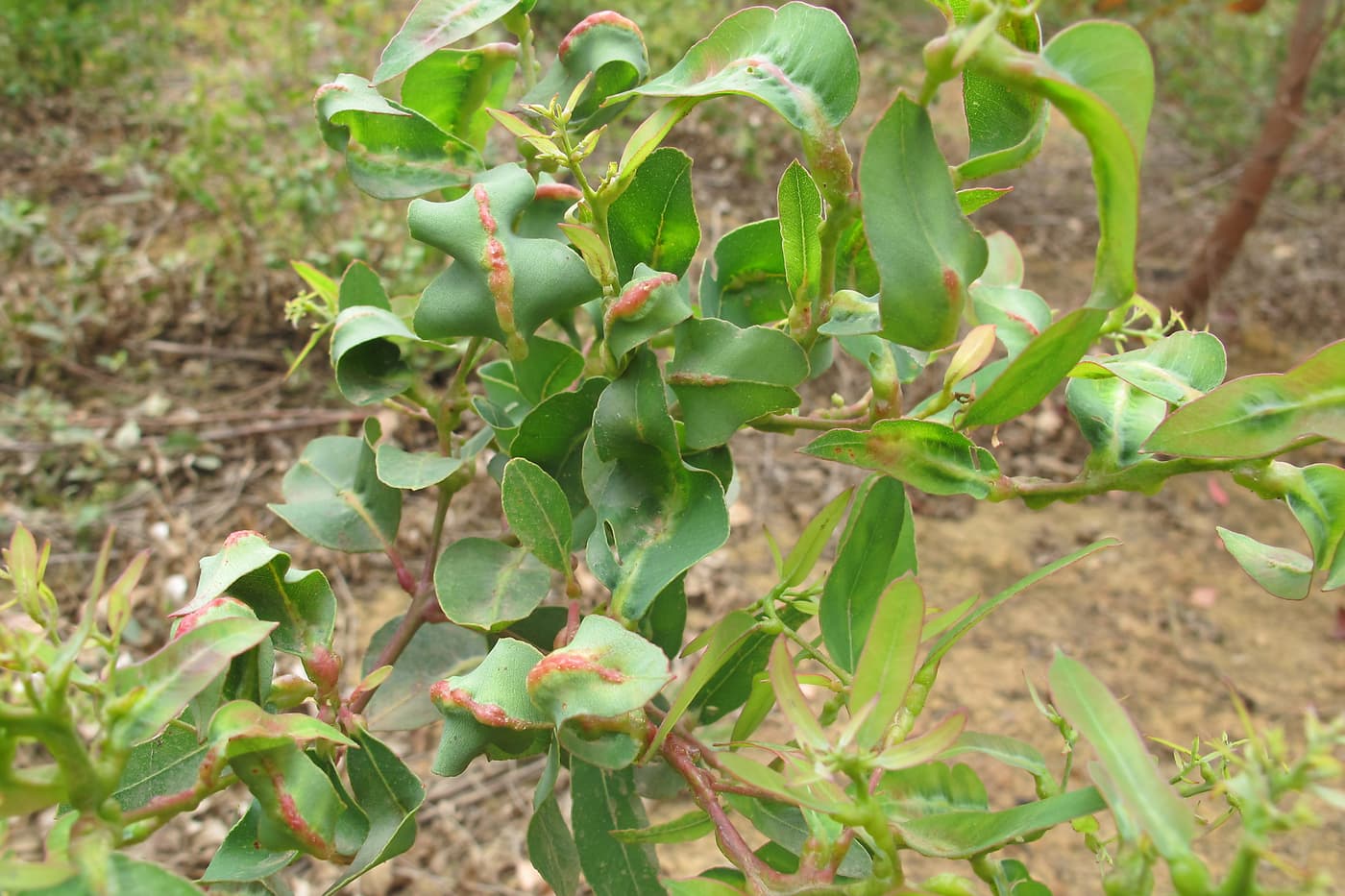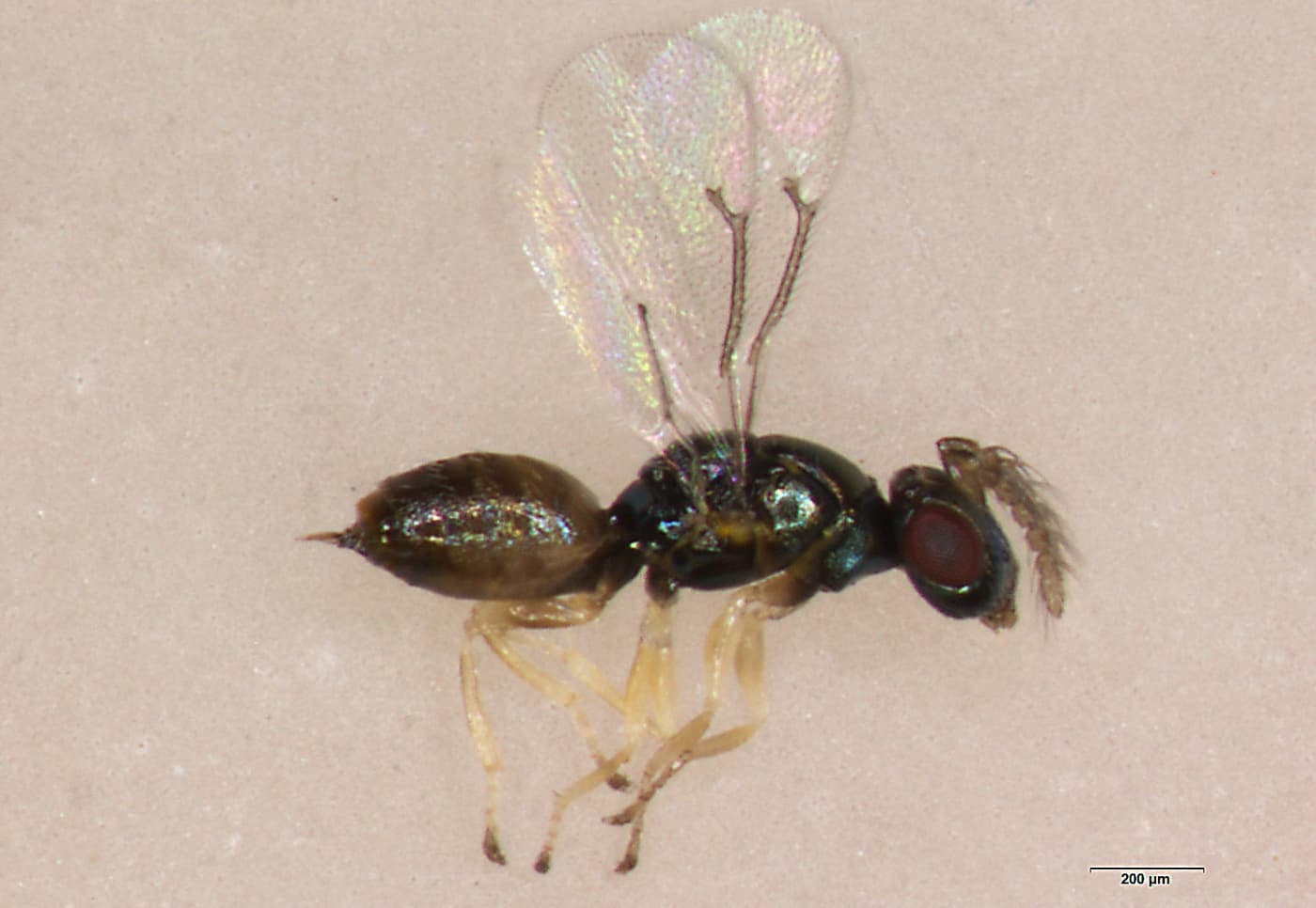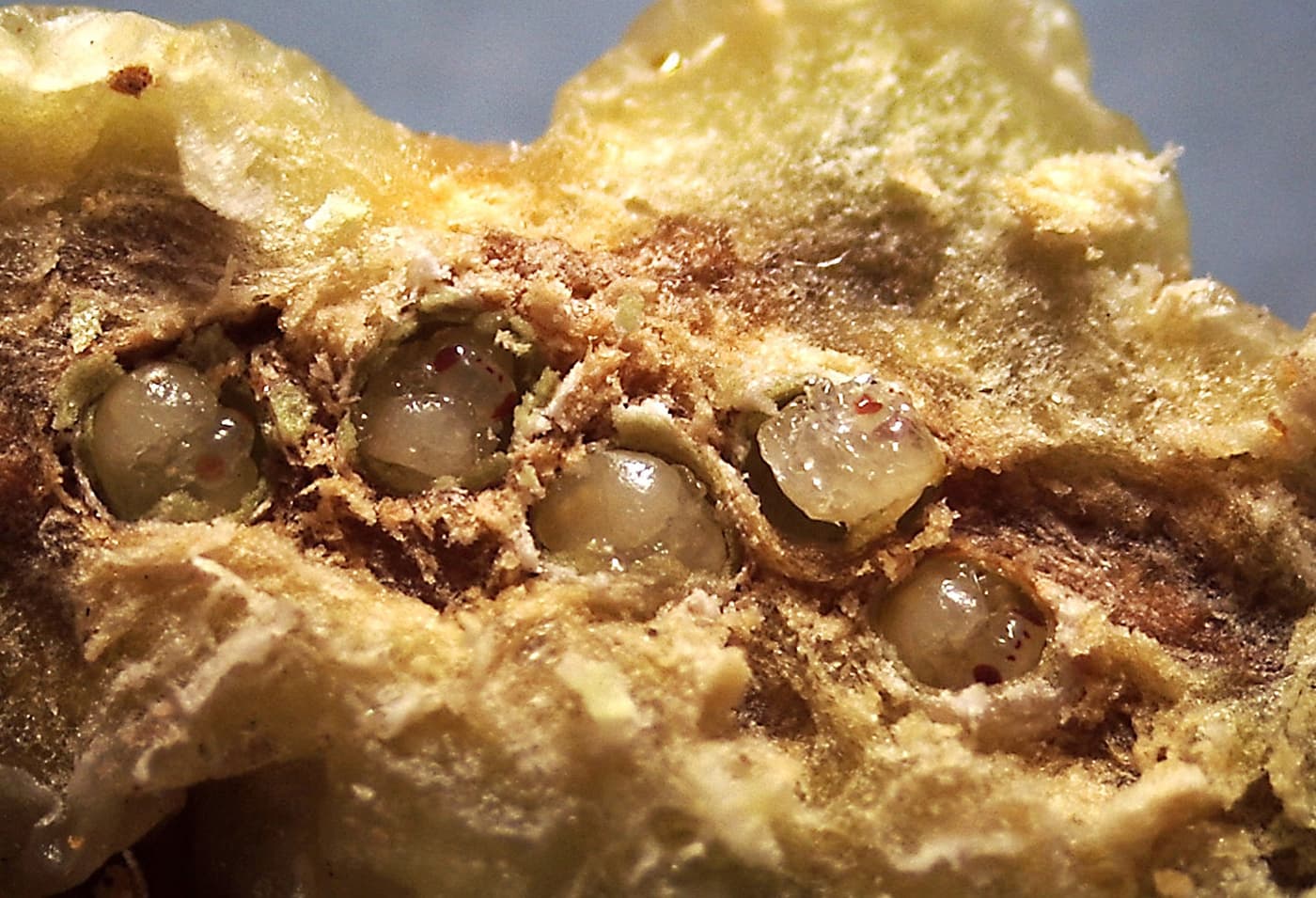
Leptocybe invasa is a gall-forming wasp of various Eucalyptus species. Gall-formation occurs on the leaves, petioles and stems of the young growing plant part. Area of gall-formation (i.e. leaves, petiole, stem) on the host is dependent on the host species. Large numbers of the wasp result in a high frequency of oviposition which may results in stunted growth or even tree death. Seedlings, coppice growth and young developing leaves are at highest risk (Mendel et al. 2004).
A Mpumalanga pine and eucalyptus plantation on rolling hills, a forester from behind measuring a trunk with a diameter tape (illustration)
01/02
Click to pause
Tree Protection Co-operative Programme
Blue gum chalcid / Leptocybe invasa
Leptocybe invasa
Common NameBlue gum chalcid / Leptocybe invasa
Scientific NameLeptocybe invasa
OriginAustralia
Distribution in South AfricaAll provinces
Symptoms
Biology
Leptocybe invasa has a thelytokous reproductive system, where all offspring are female and are produced parthenogenetically. Male specimens are absent or very rare. Oviposition occurrs on young plant tissue of the stem, petiole and leaves as early as 1-2 weeks after bud break out. Eggs are laid in a line on the young plant tissue and are often visible as minute black scarring or dots, especially along the leaf midrib. Average developmental time from oviposition to wasp emergence is approximately 4.5 months.
Wasps are most active in the early morning and late afternoon and may survive to 6 days if provided with sources of honey and water. Oviposition occurs in the summer months with a single female being able to lay up 250 eggs.
Management
As there are differences in susceptibility between Eucalyptus varieties, selection of more resistant planting material is a possible management strategy. In addition, a biological control agent, Selitrichodes neseri, was released in South Africa in 2012 (Dittrich-Schroder et al. 2014) and is now widely established throughout the country. Other parasitic wasps have also been found associated with galls of Leptocybe invasa, adding to the suppression of this pest. Host selection and biological control should preferably be used in combination.
Gallery