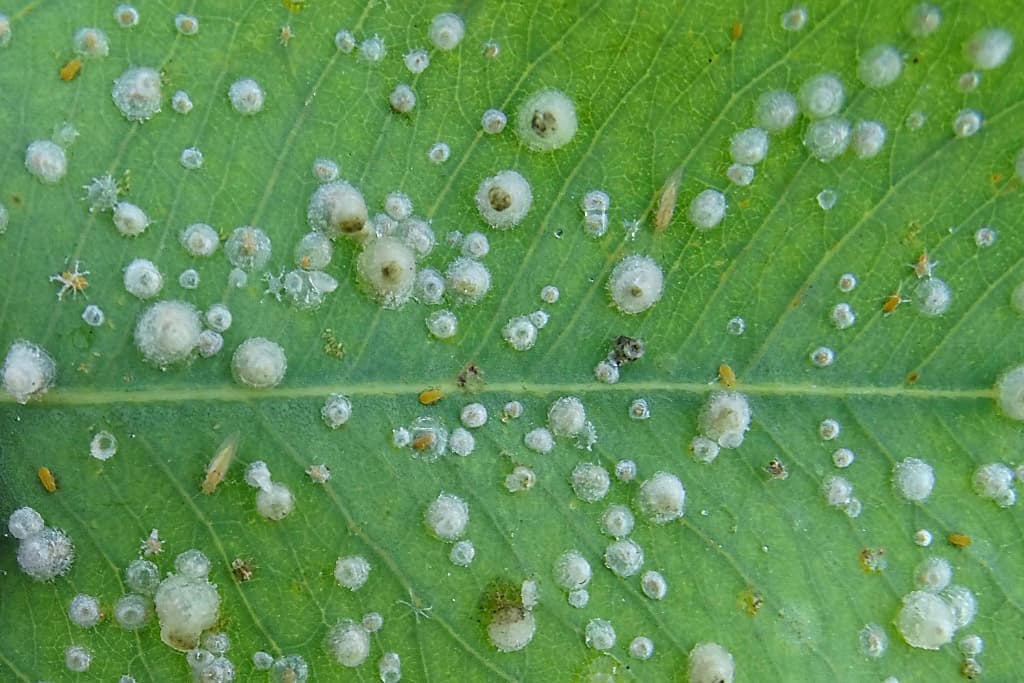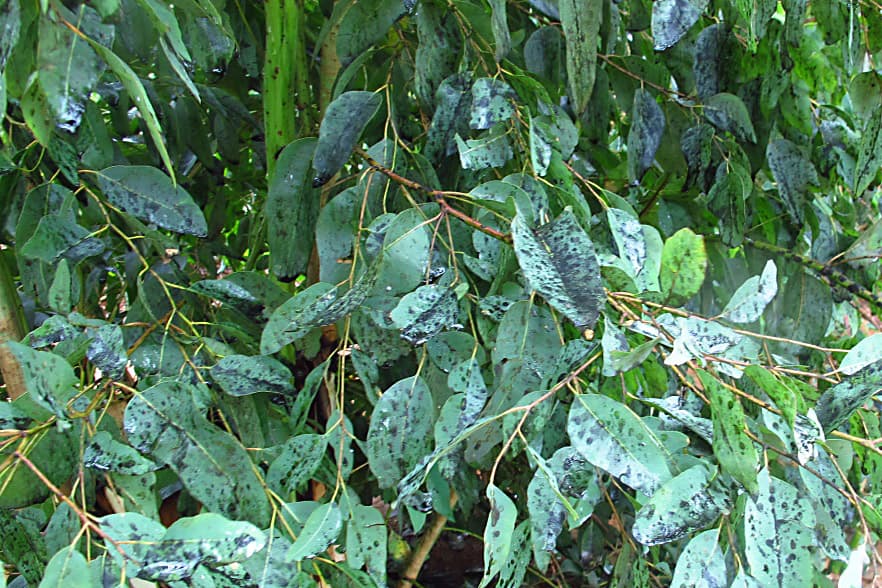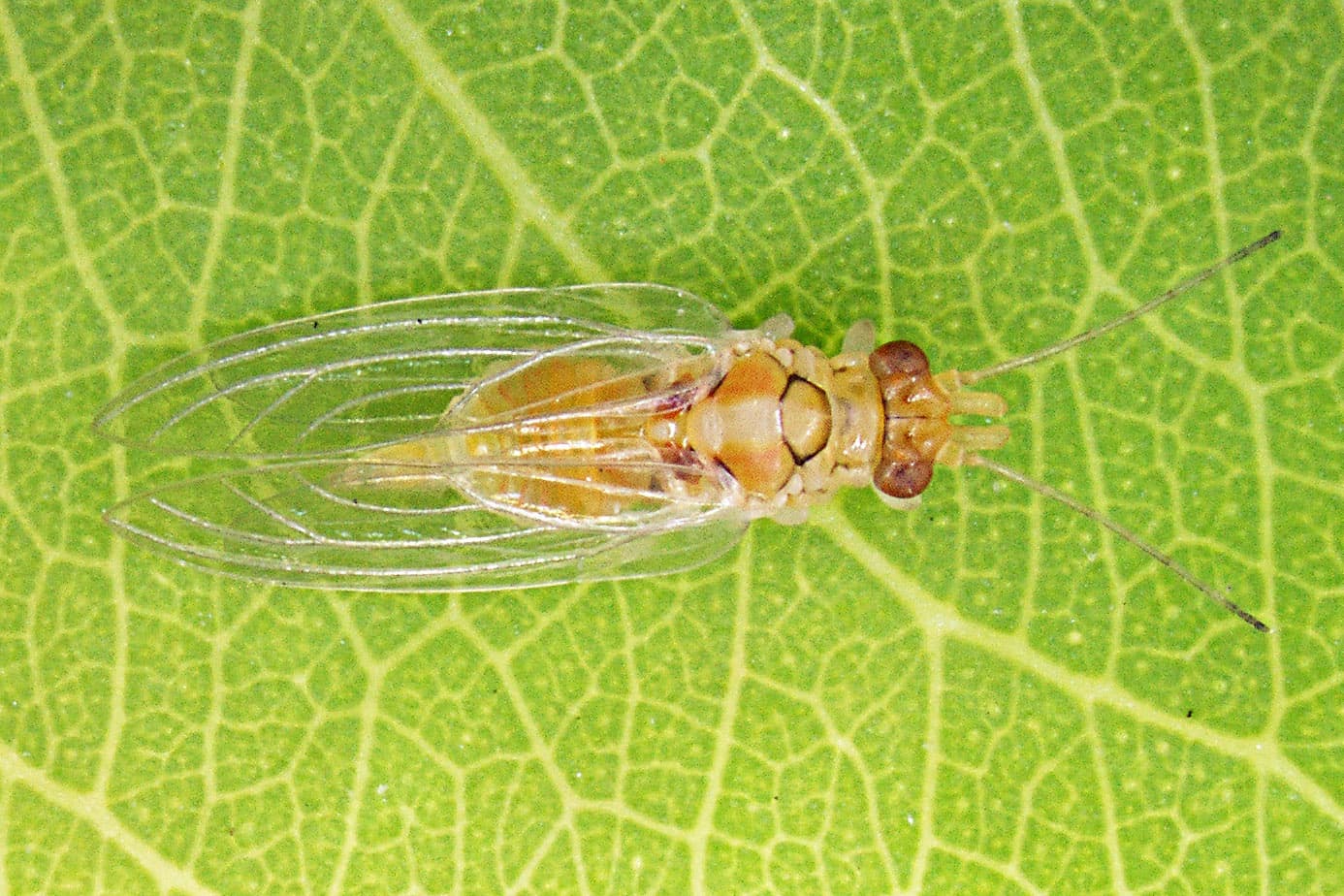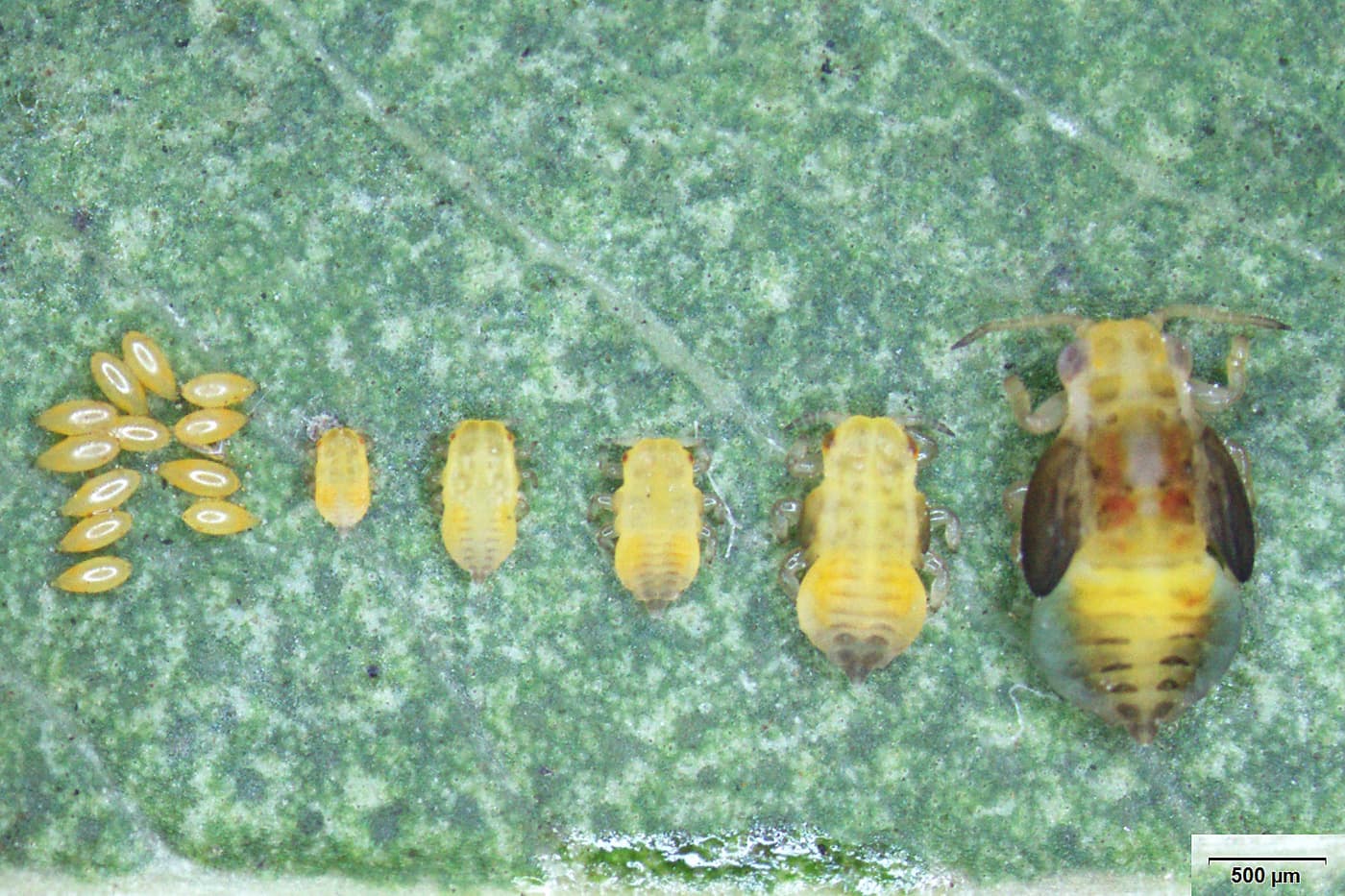
Low infestations result in leaf wilt and abscission. Heavy infestations may result in leaf drop, branch dieback and tree death. Infested leaves are covered with waxy secretions and honeydew, on which sooty mould grows.
A Mpumalanga pine and eucalyptus plantation on rolling hills, a forester from behind measuring a trunk with a diameter tape (illustration)
01/02
Click to pause
Tree Protection Co-operative Programme
Red gum lerp psyllid / Glycaspis brimblecombei
Glycaspis brimblecombei
Common NameRed gum lerp psyllid / Glycaspis brimblecombei
Scientific NameGlycaspis brimblecombei
OriginAustralia
Distribution in South AfricaEastern Cape, Free State, Gauteng, KwaZulu-Natal, Limpopo, Mpumalanga, North West
Symptoms
Biology
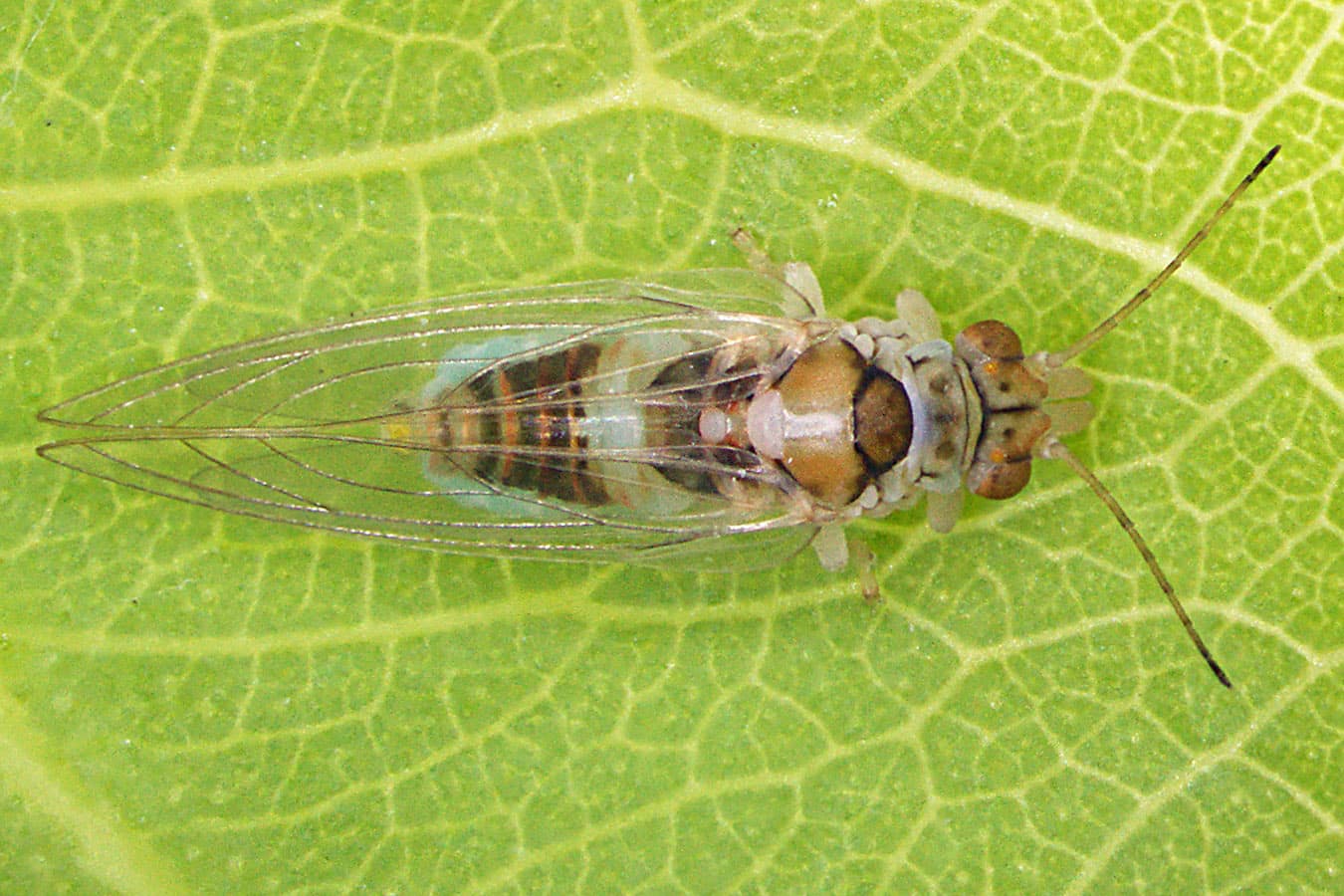
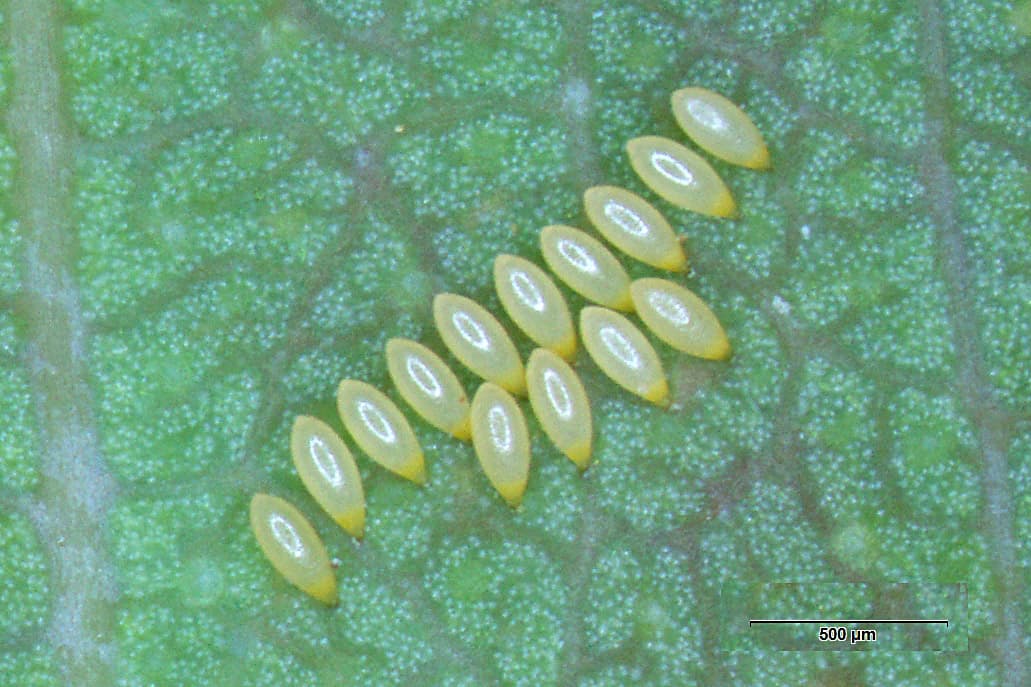
Adults are mobile and females are reported to lay up to 700 eggs. The eggs hatch in 10-20 days and the nymphs will pierce the plant tissue with their stylet (mouthparts), feeding on the xylem. The nymphs develop under white, conical structures called lerps which they build from exuded sugars and wax. In Australia there are two to four generations per year.
Management
The parasitic wasp, Psyllaephagus bliteus, was reported in South Africa in 2015. Planting of resistant material is also a possible management strategy.
Gallery