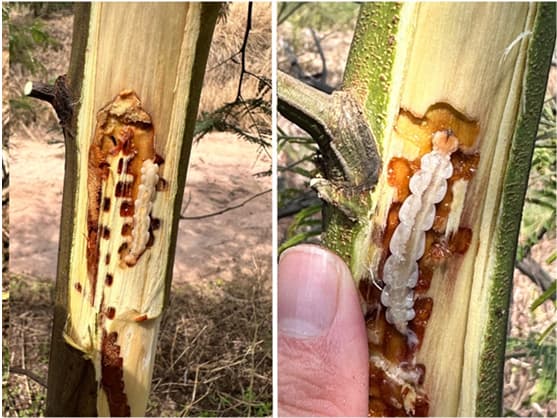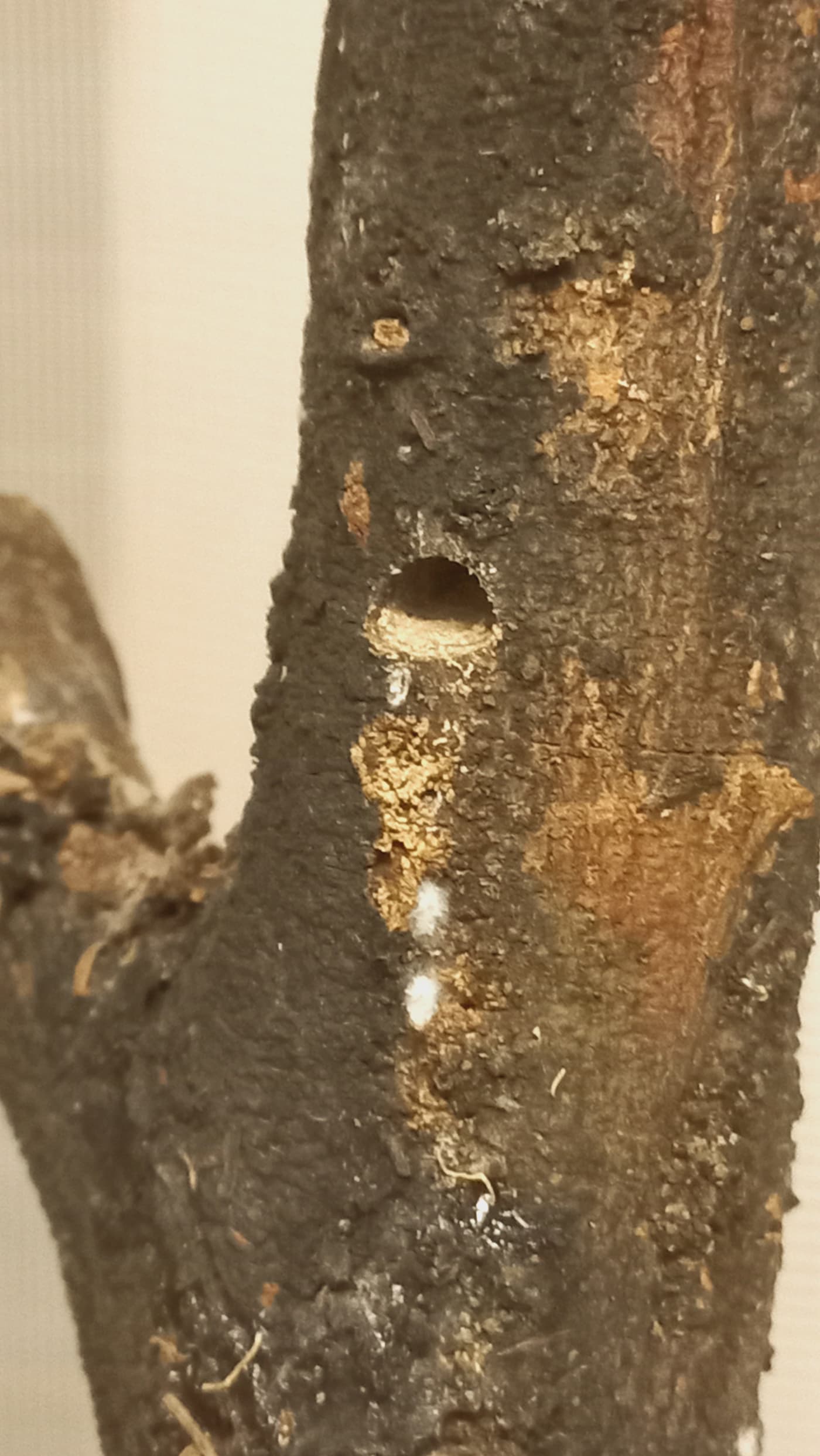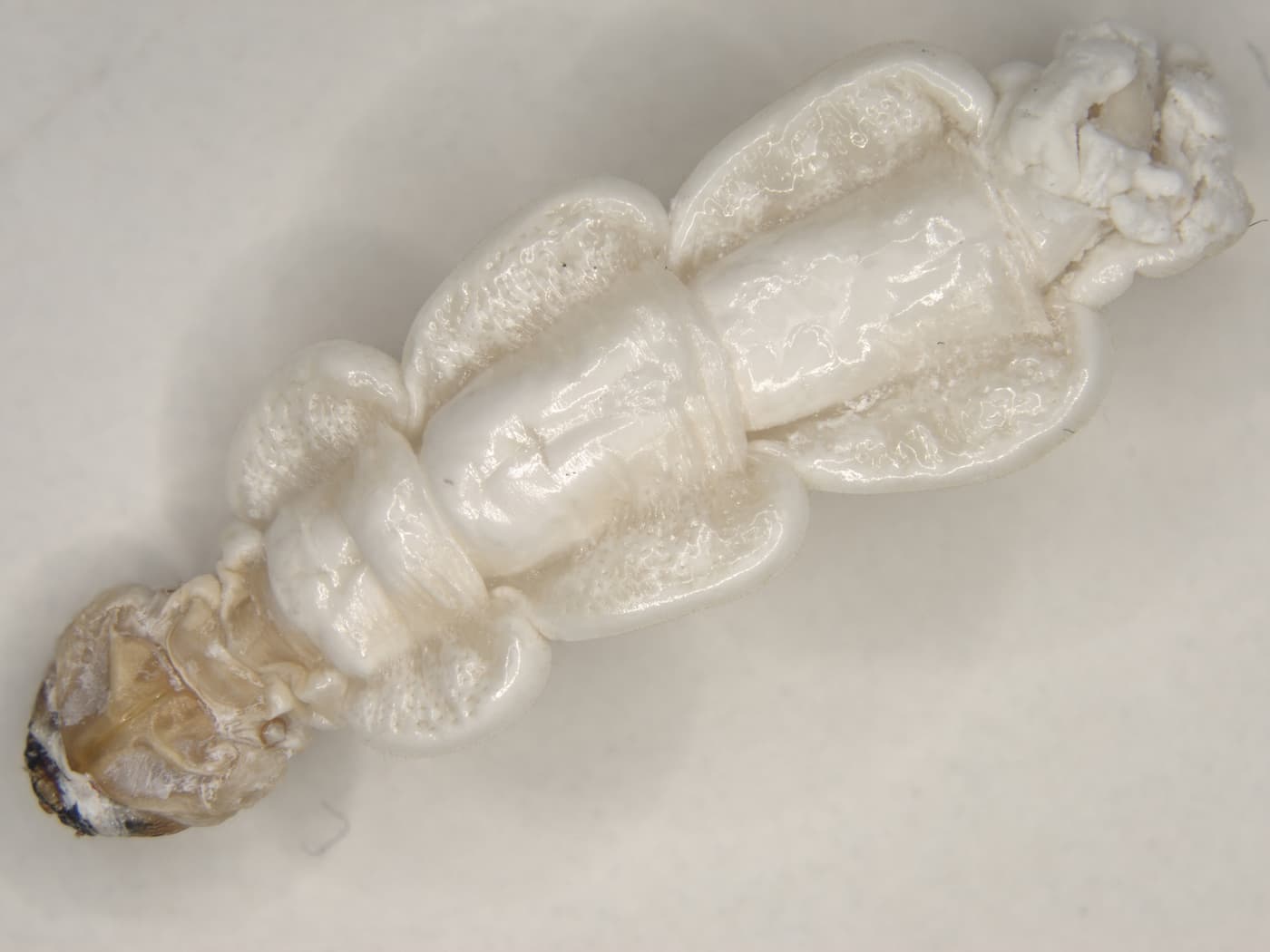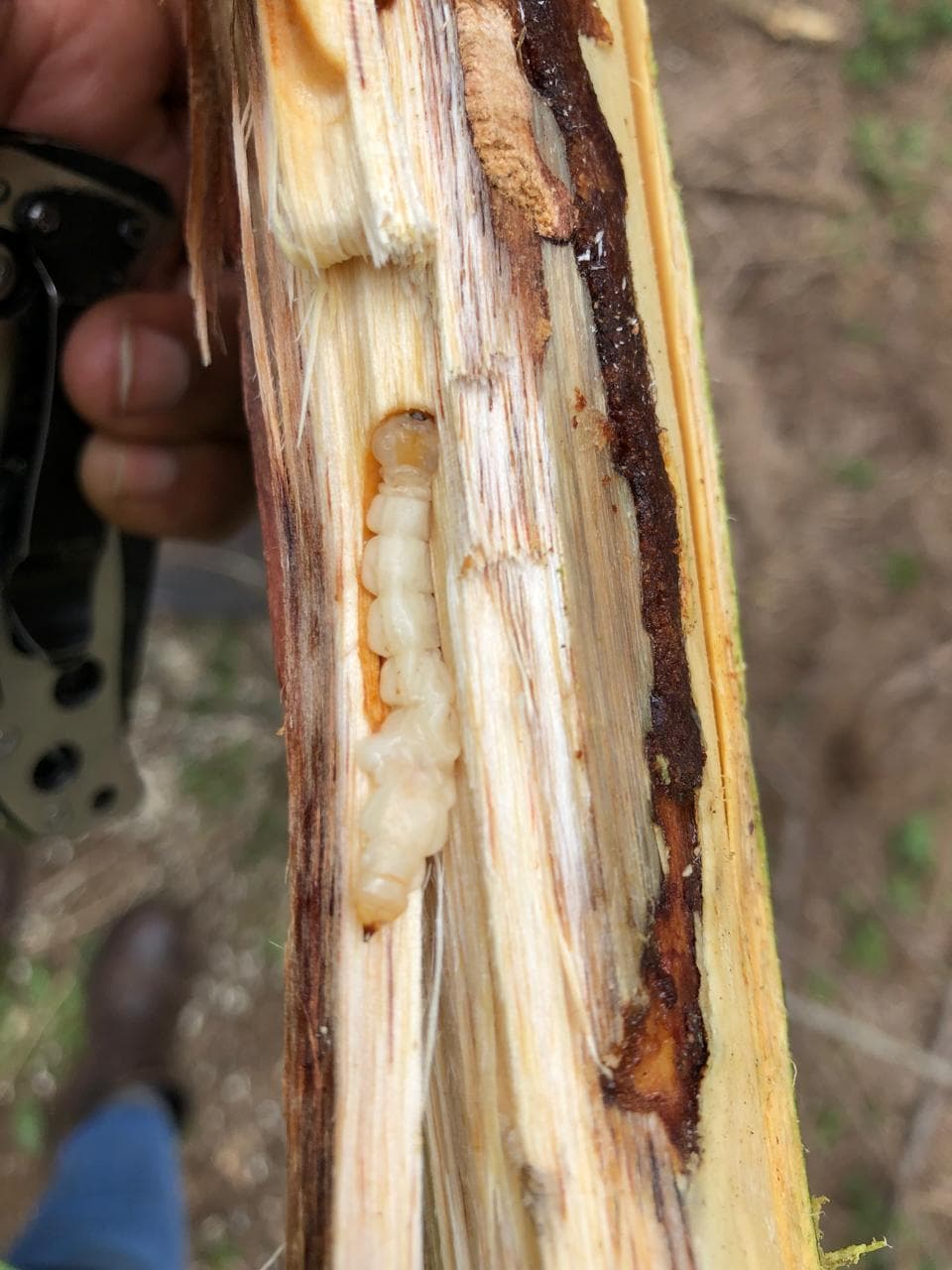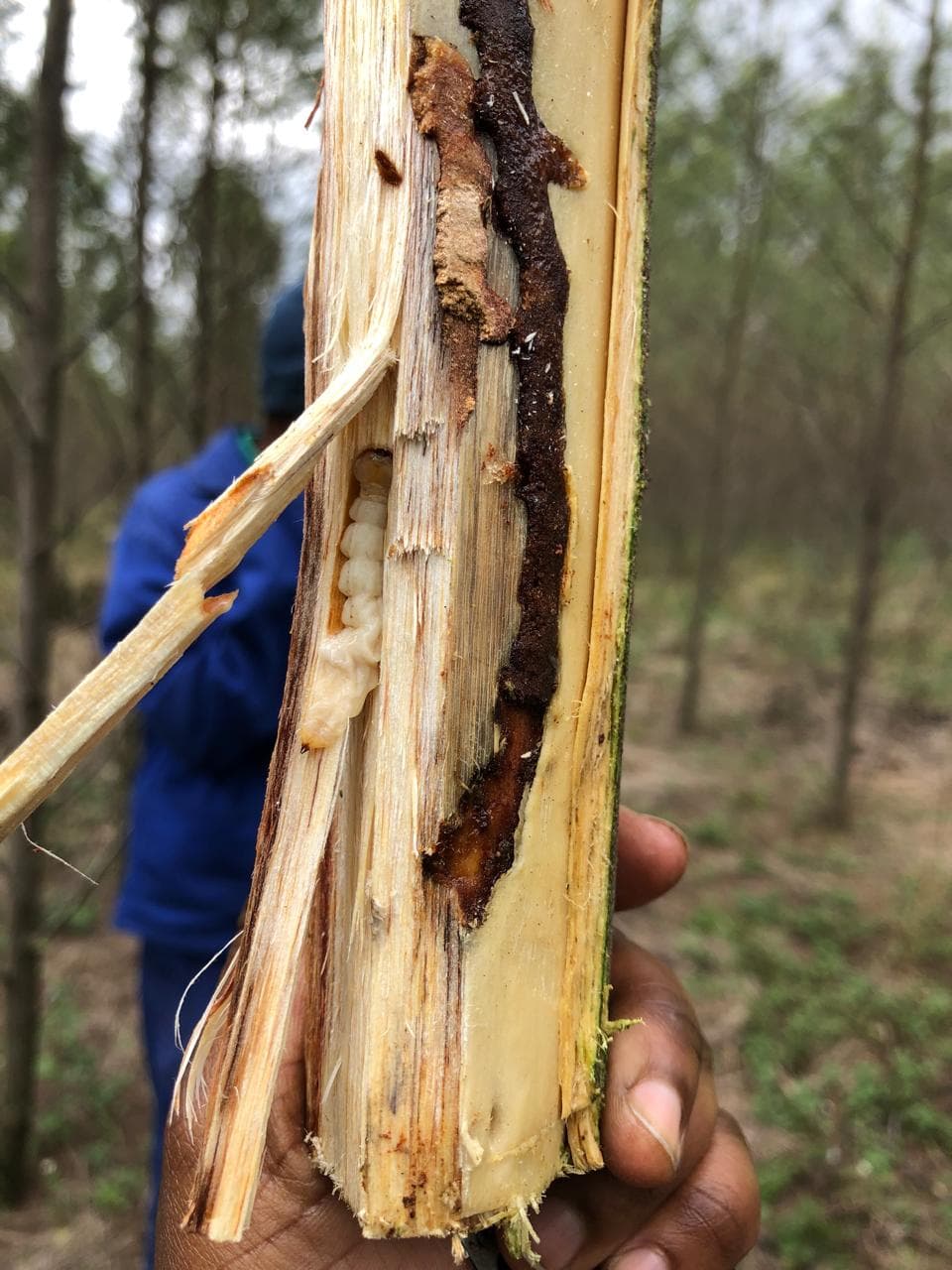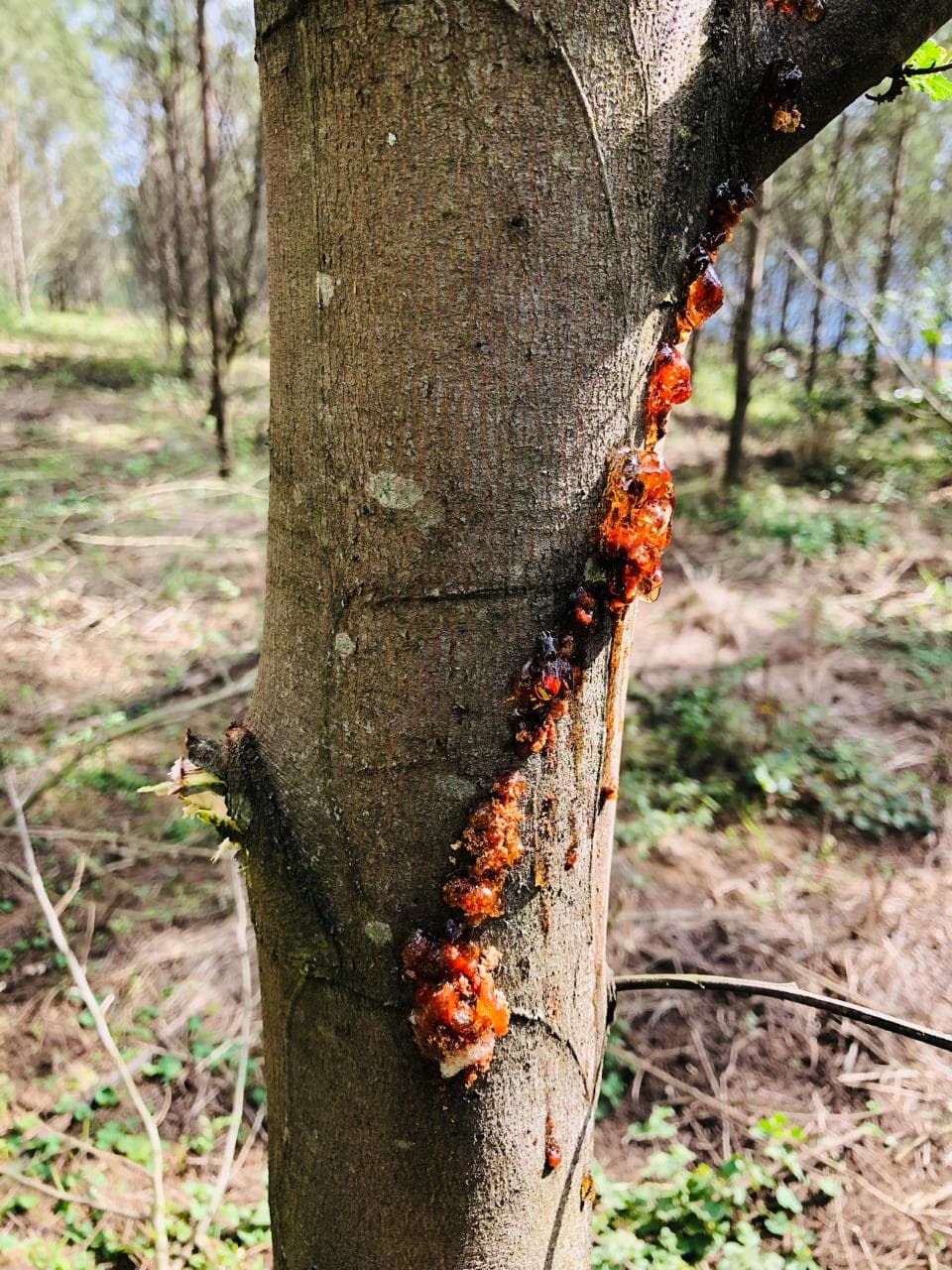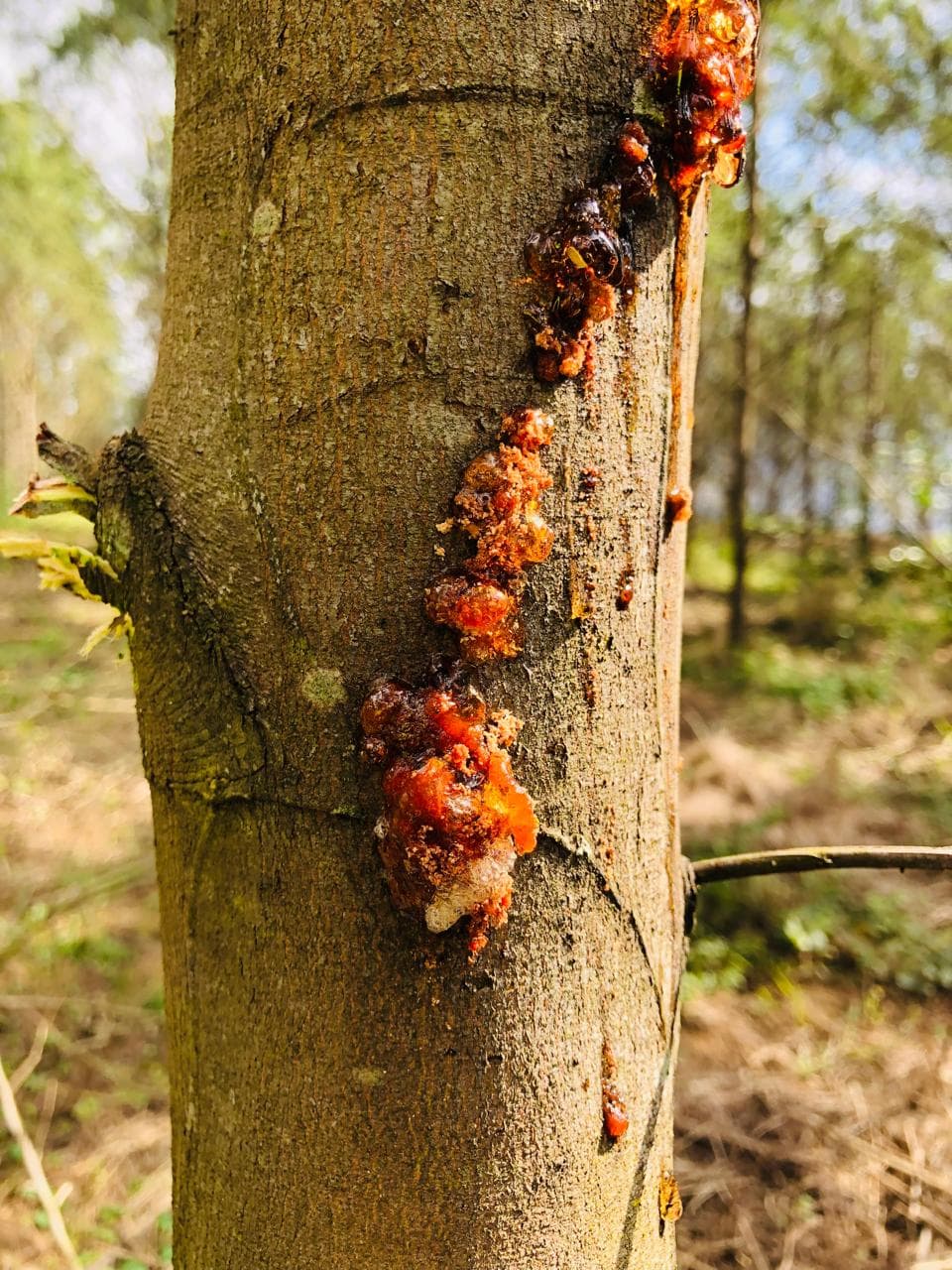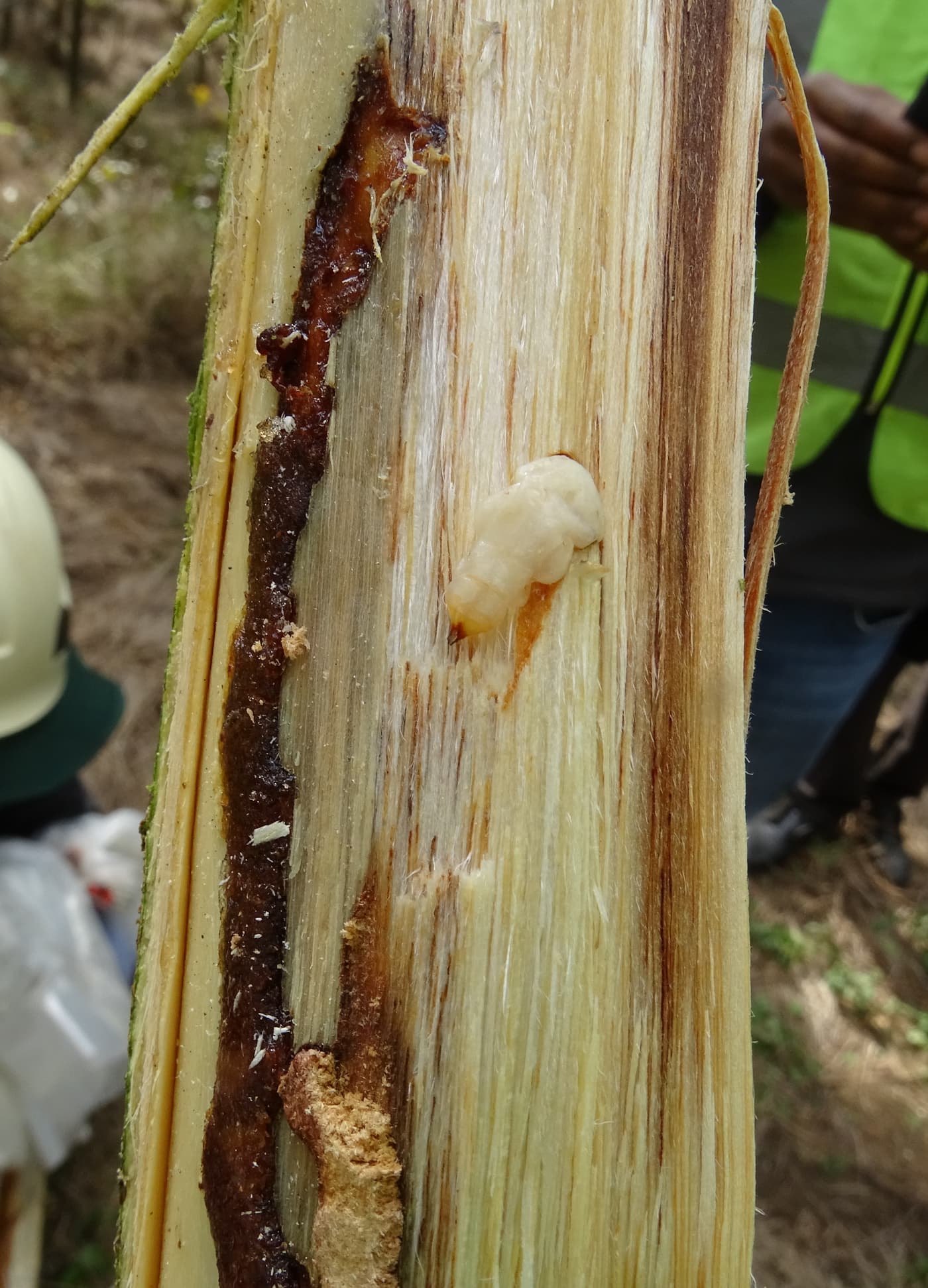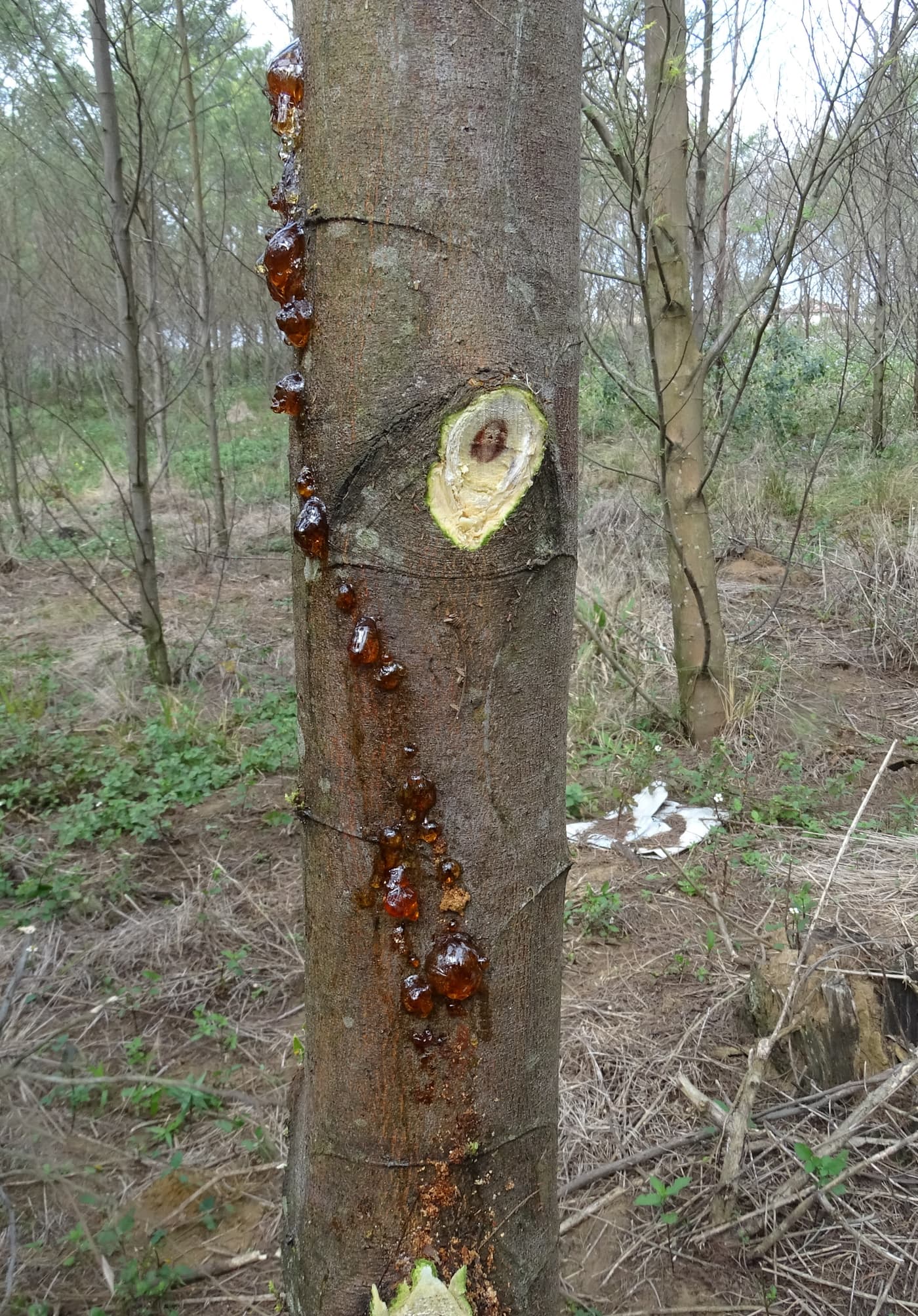
Larvae of the weevil burrow underneath the bark of the wattle tree, causing significant amounts of feeding damage. Tunneling their way in circular patterns around the stem, resinous oozing can be seen on the outer parts of the trees, spiraling along the stem following te internal feeding pathway of the larvae. Removal of the bark reveals the galleries of the larvae in the sapwood and sometimes a single flatheaded larvae is present within the gallery.
A Mpumalanga pine and eucalyptus plantation on rolling hills, a forester from behind measuring a trunk with a diameter tape (illustration)
01/02
Click to pause
Tree Protection Co-operative Programme
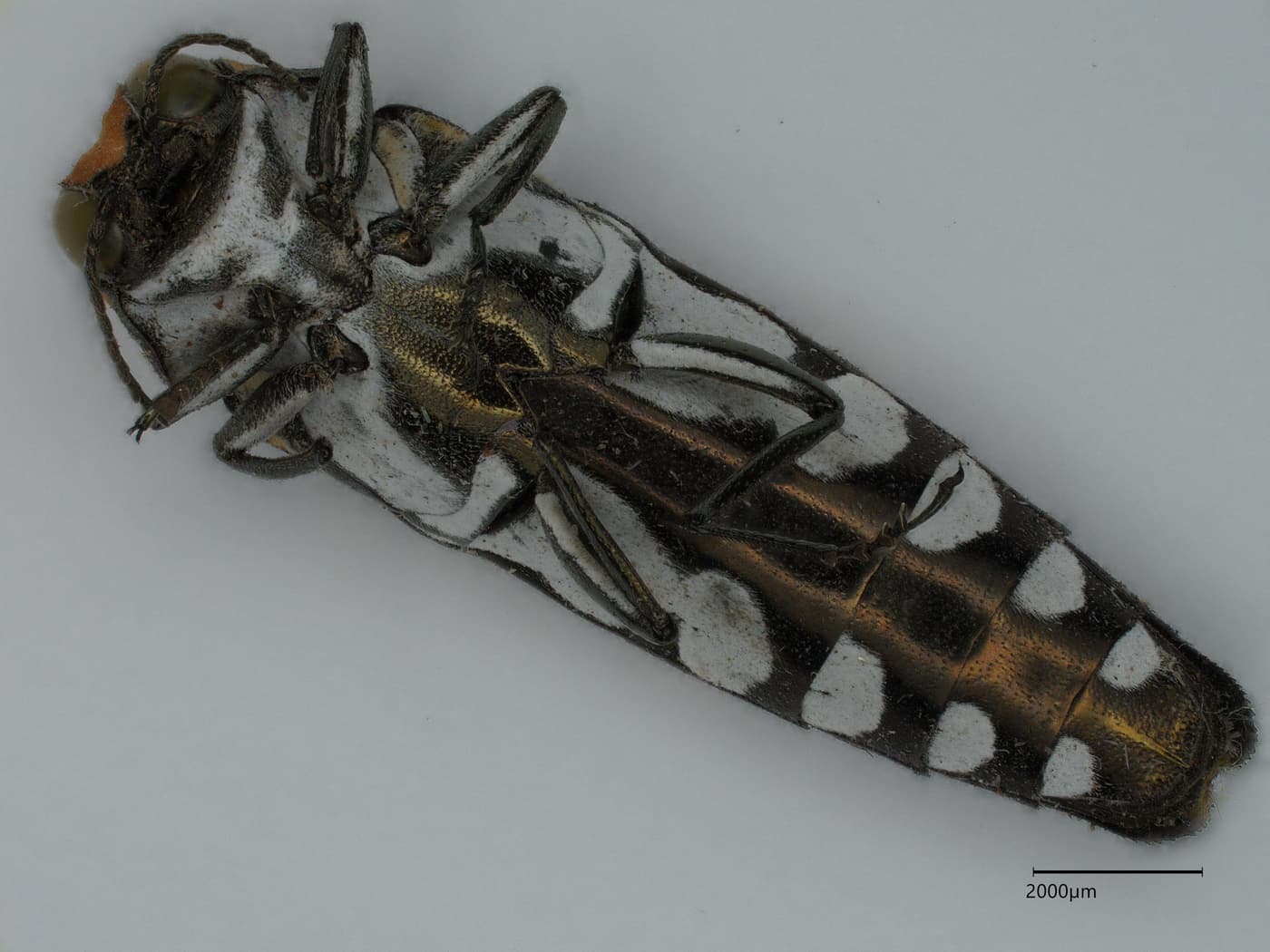
Jewel Beetle/ Agrilus grandis
Agrilus grandis
Common NameJewel Beetle/ Agrilus grandis
Scientific NameAgrilus grandis
OriginSouth Africa (native)
Distribution in South AfricaKwaZulu-Natal
Symptoms
Biology
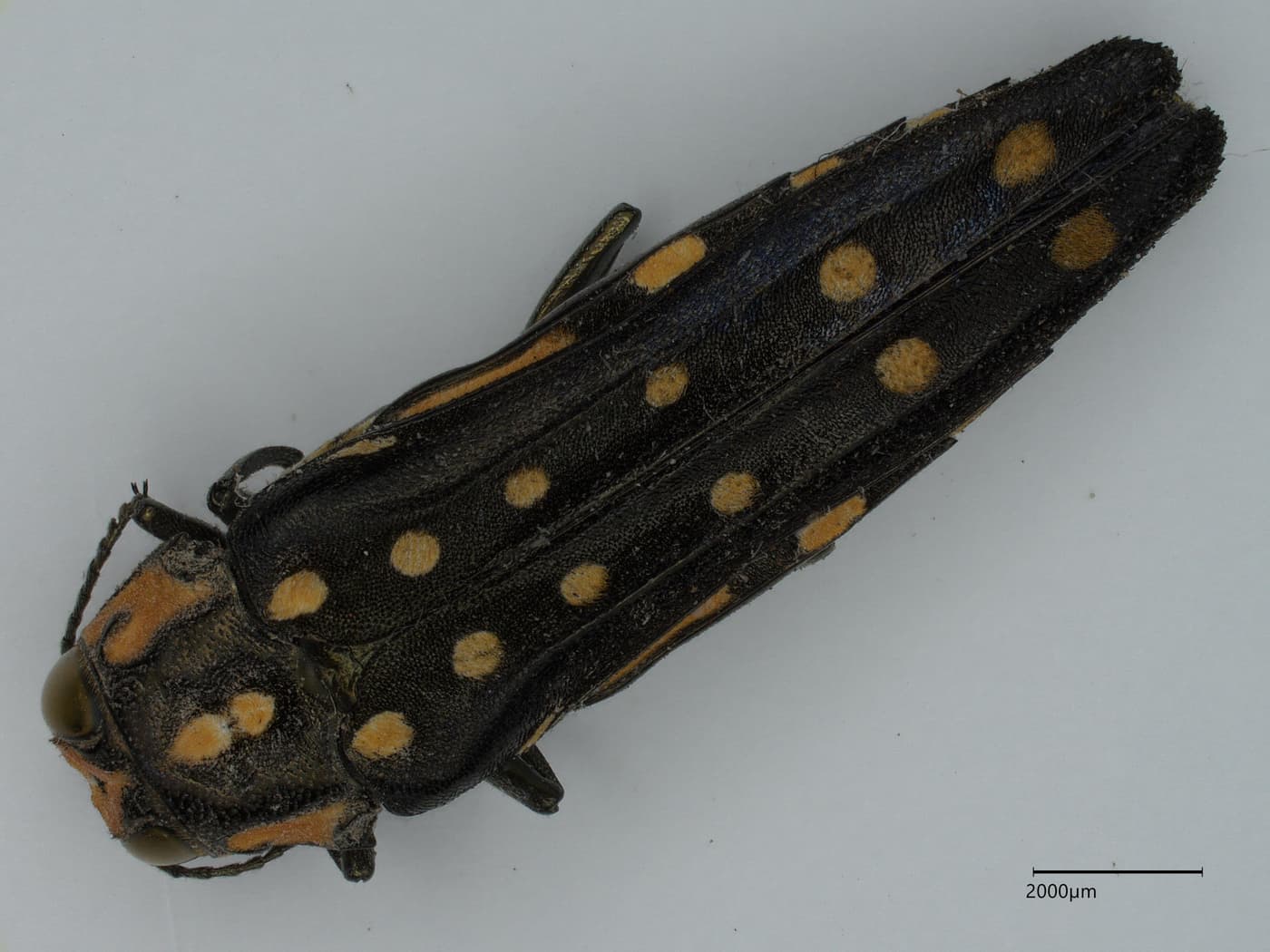
Buprestid weevils are some of the most environmentally damaging pests globally. However, despite their importance, very little is known regarding the origin, introductory pathways, and hosts of many species. The larvae are called flatheaded borers and the adults are known as jewel beetles due to their glossy iridescent colors. Most Buprestid species attack stressed or dead trees, but some attack apparently healthy trees.
Widely distributed throughout Africa, Agrilus grandis is native to South Africa. The natural host range of this beetle are species of Albizia, but it has previously been detected infesting black wattle although not to the extent observed recently. Adult weevils deposit their eggs on bark cracks and crevices and the larvae tunnel in the phloem and outer sapwood.
Gallery