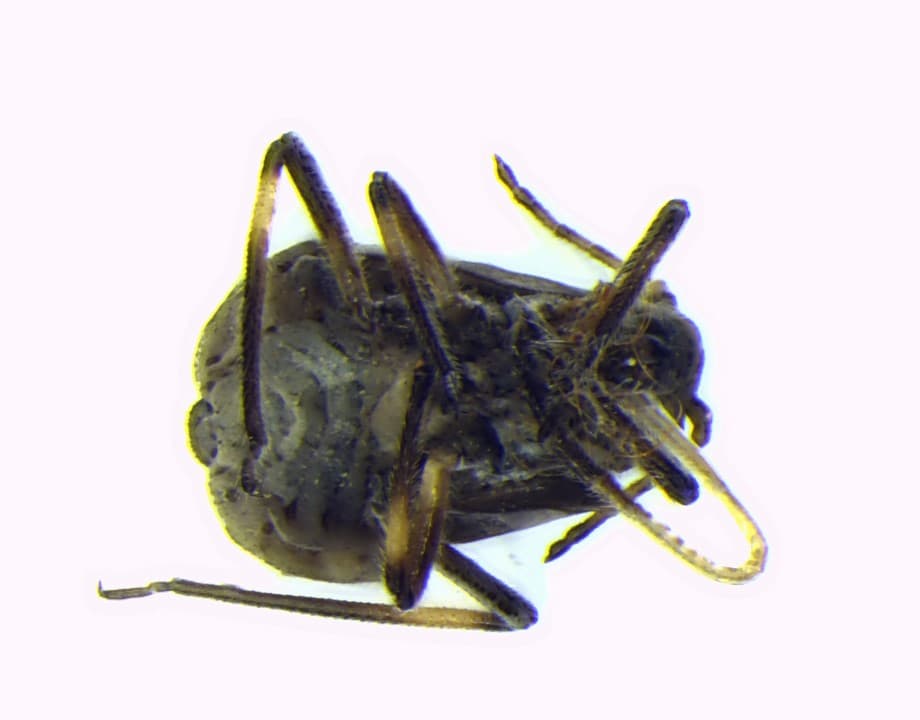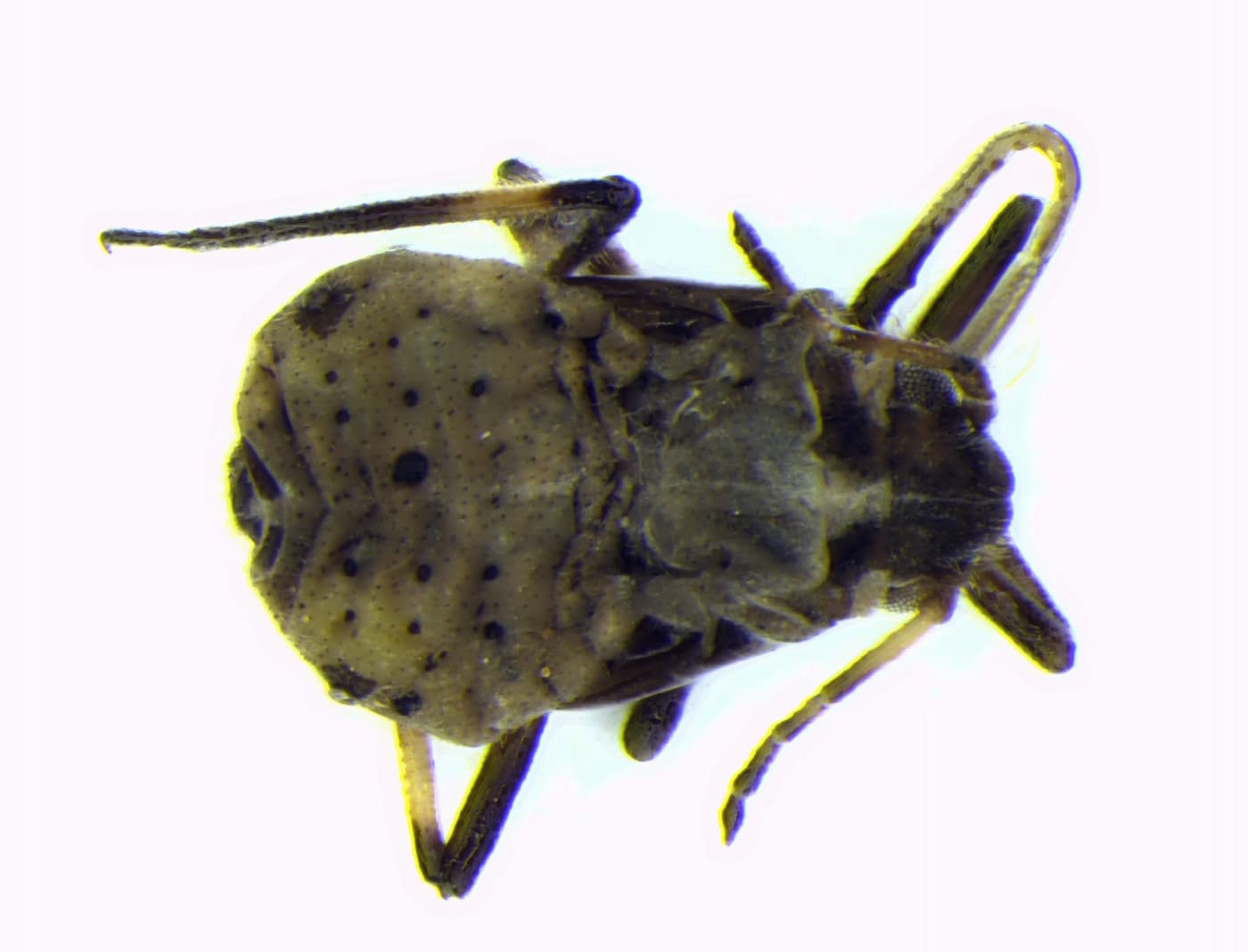
Colonies develop on the the branches of pine trees and particularly near growing tips, where the bark is thin enough to allow the aphids to feed. High infestations may result in stunted shoot growth and dieback of the tops of trees and branches (Van Rensburg 1979). In stressed trees, infestations by the black pine aphid can lead to death of the tree. Aphids excrete honeydew from the sap they consume and because of this, sooty mould fungus grows on honeydew making the surface of the leaf appear black.
A Mpumalanga pine and eucalyptus plantation on rolling hills, a forester from behind measuring a trunk with a diameter tape (illustration)
01/02
Click to pause
Tree Protection Co-operative Programme
Black Pine Aphid / Cinara cronartii
Cinara cronartii (Tissot & Pepper)
Common NameBlack Pine Aphid / Cinara cronartii
Scientific NameCinara cronartii (Tissot & Pepper)
OriginNorth America, Southeastern United States (Tissot & Pepper 1967).
Distribution in South AfricaMpumalanga, Kwazulu-Natal midlands and Limpopo (Day et al. 2003).
Symptoms
Biology
The aphid has two morphs; Apterae and Alatae. Prelarviposition days are 2 and 4 for the respective morphs. Reproductive days are 17 and 13 days respectively, fecundities for the two morphs are 67 and 40, respectively. The larval development completes in 9 days at 23°C. The adult life spans are 21 and 19 days respectively (Van Rensburg 1981). The black pine aphid is a winter pest and spend summer on the roots of pine trees (Van Rensburg 1979).
Management
Biological control using Pauesia cinaravora (Hymenoptera: Aphidiidae). The parasitoid was released in 1983 and has been effective in reducing black pine aphid populations in South Africa (Kfir et al. 2003). Chemical control is not considered a viable option as the costs of aerial sprays are prohibitive.
Gallery