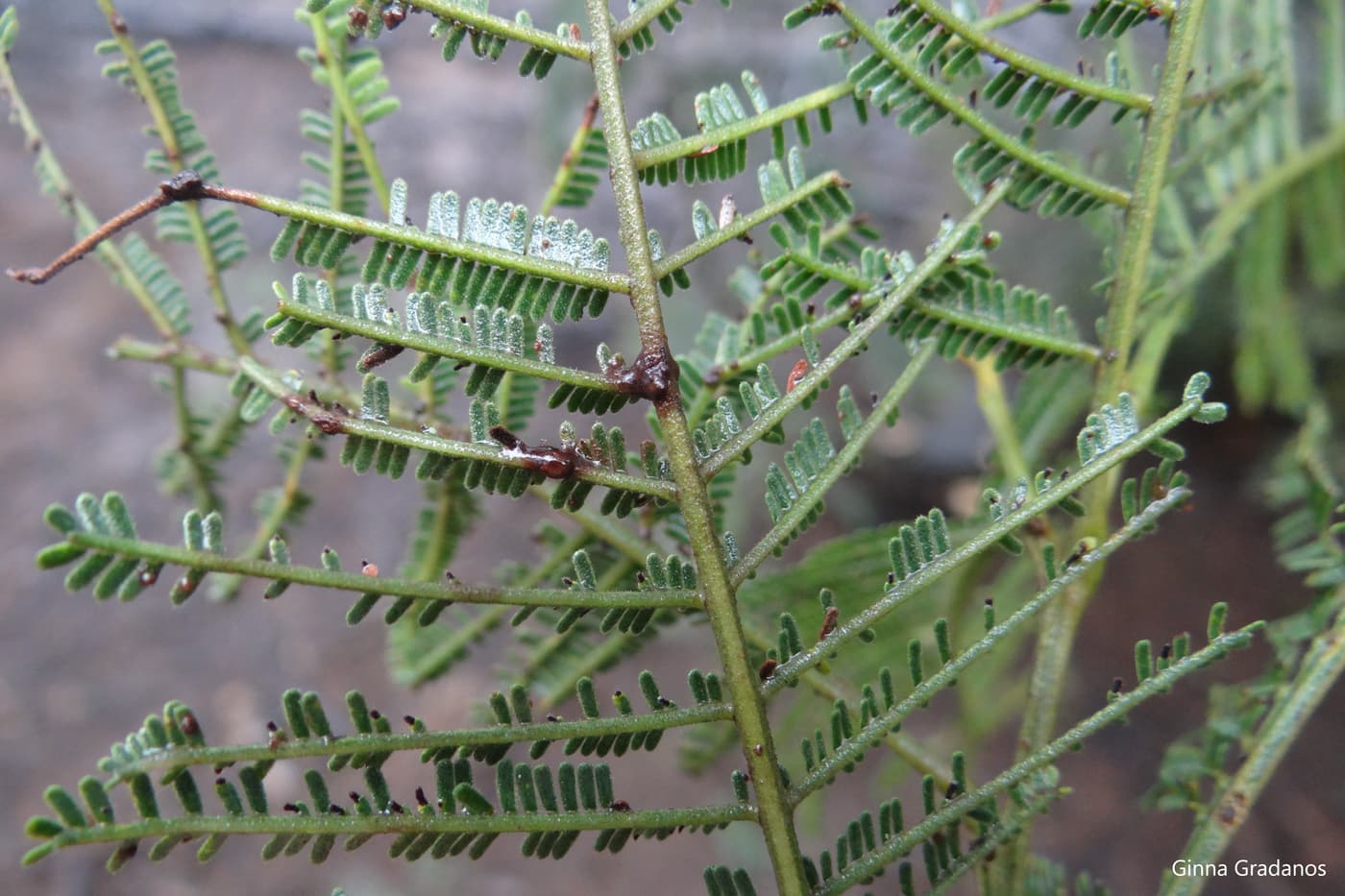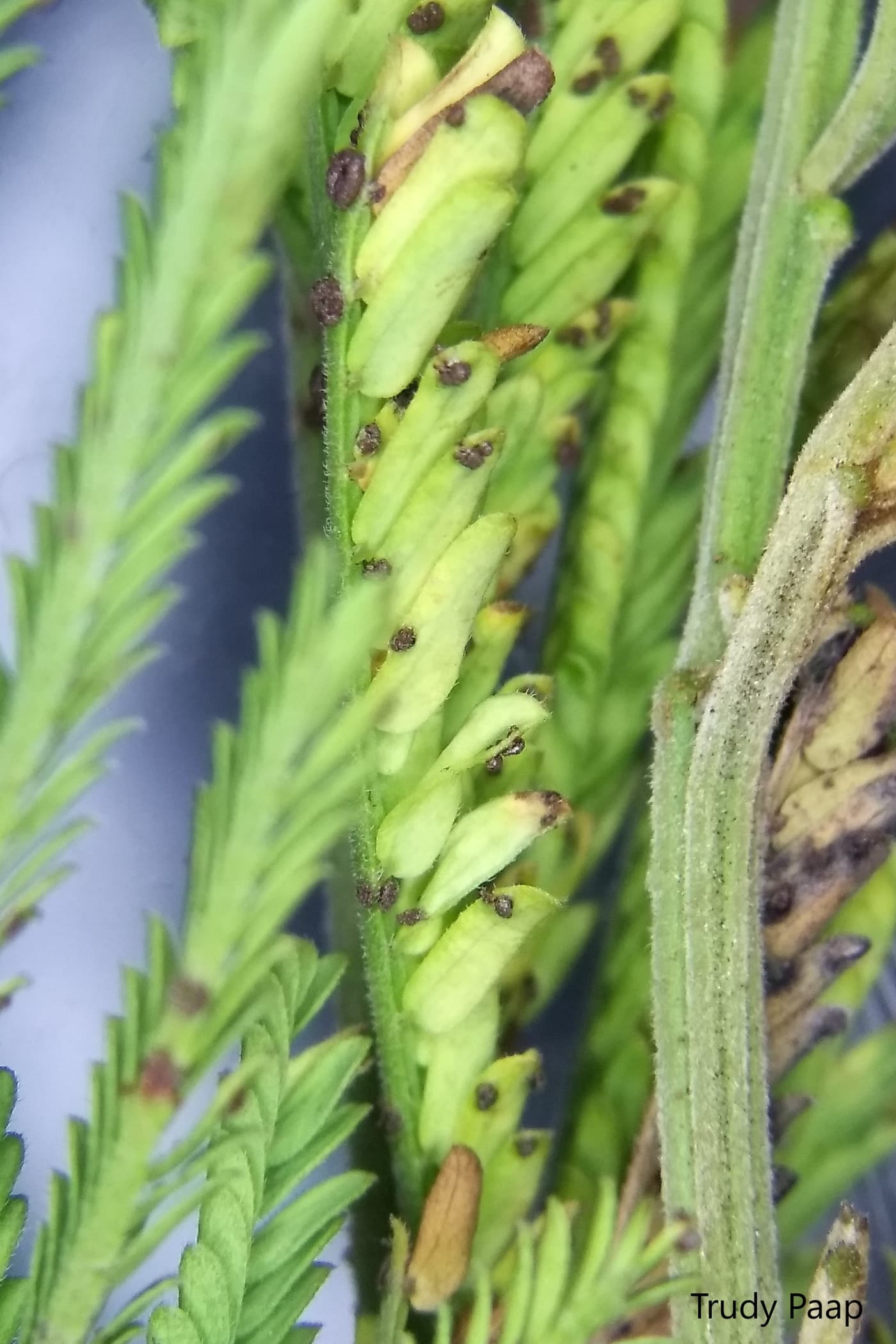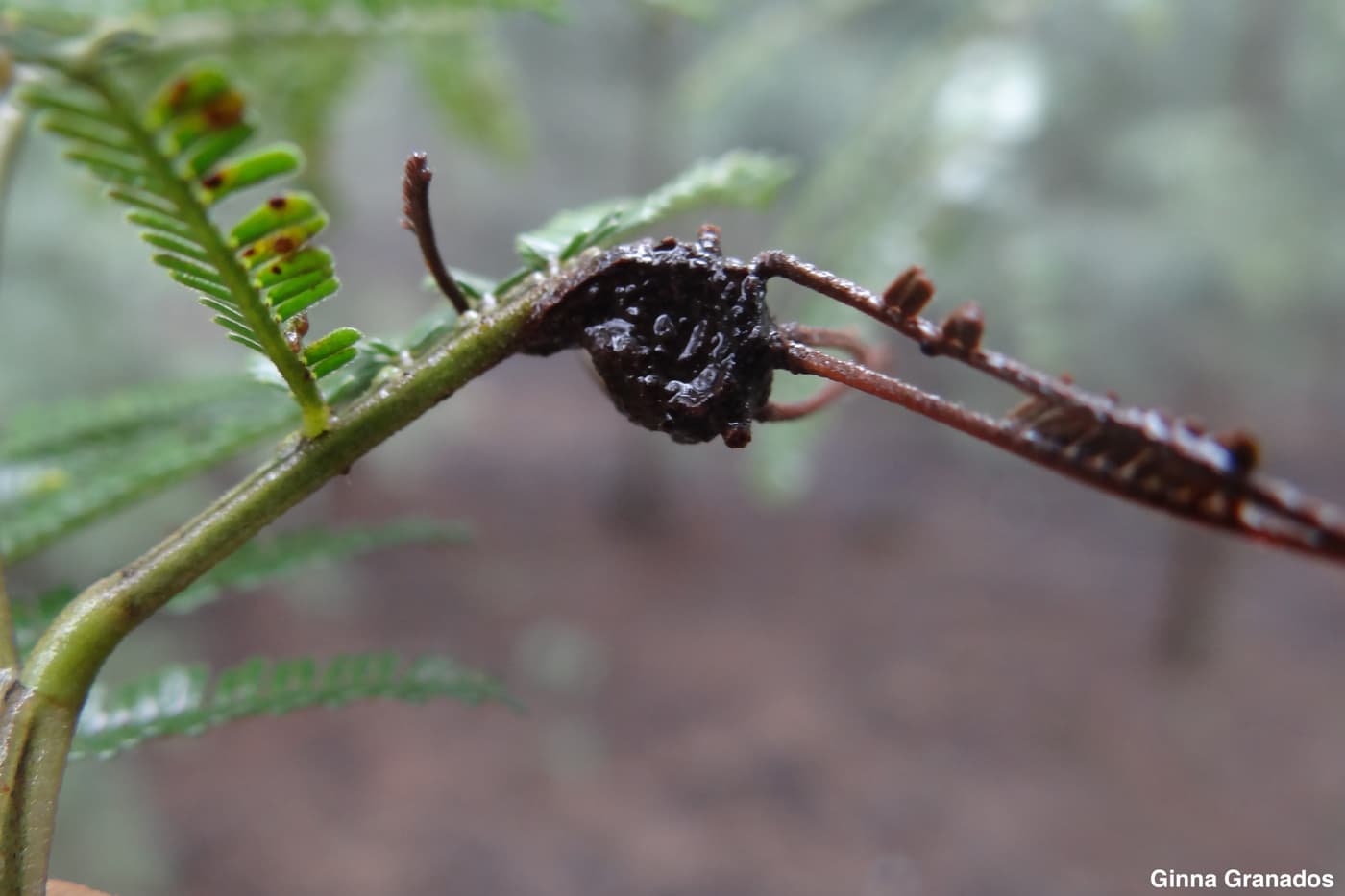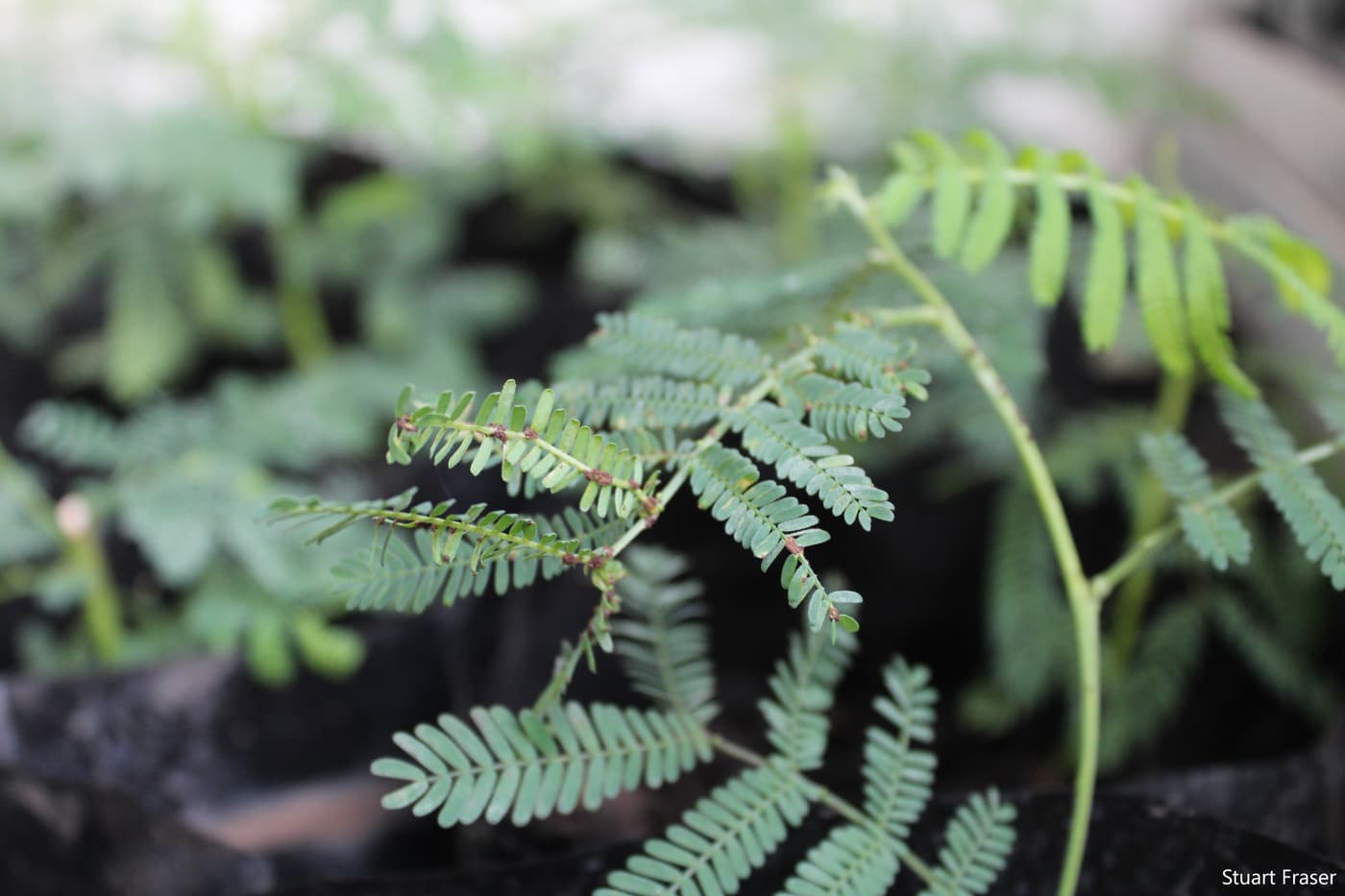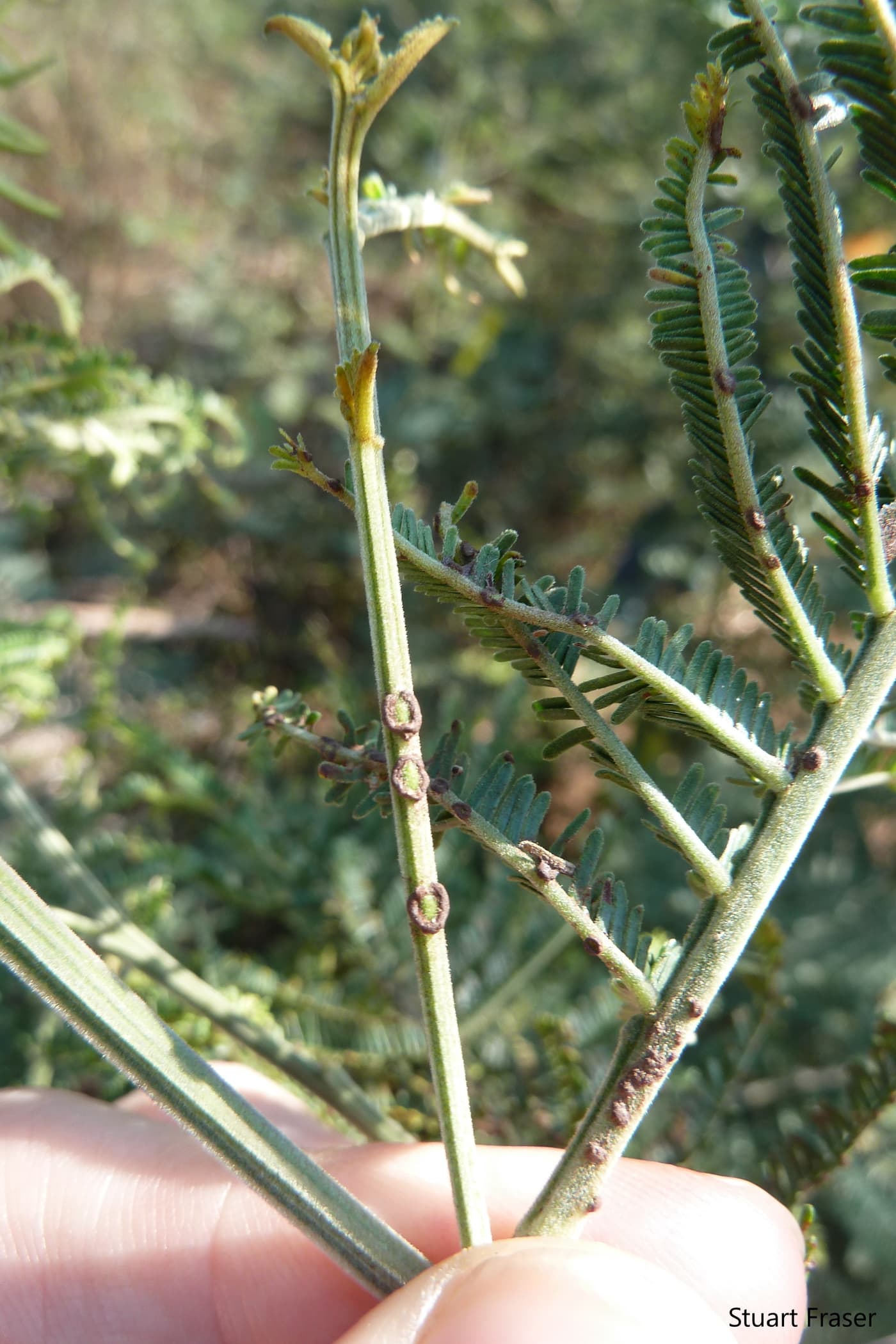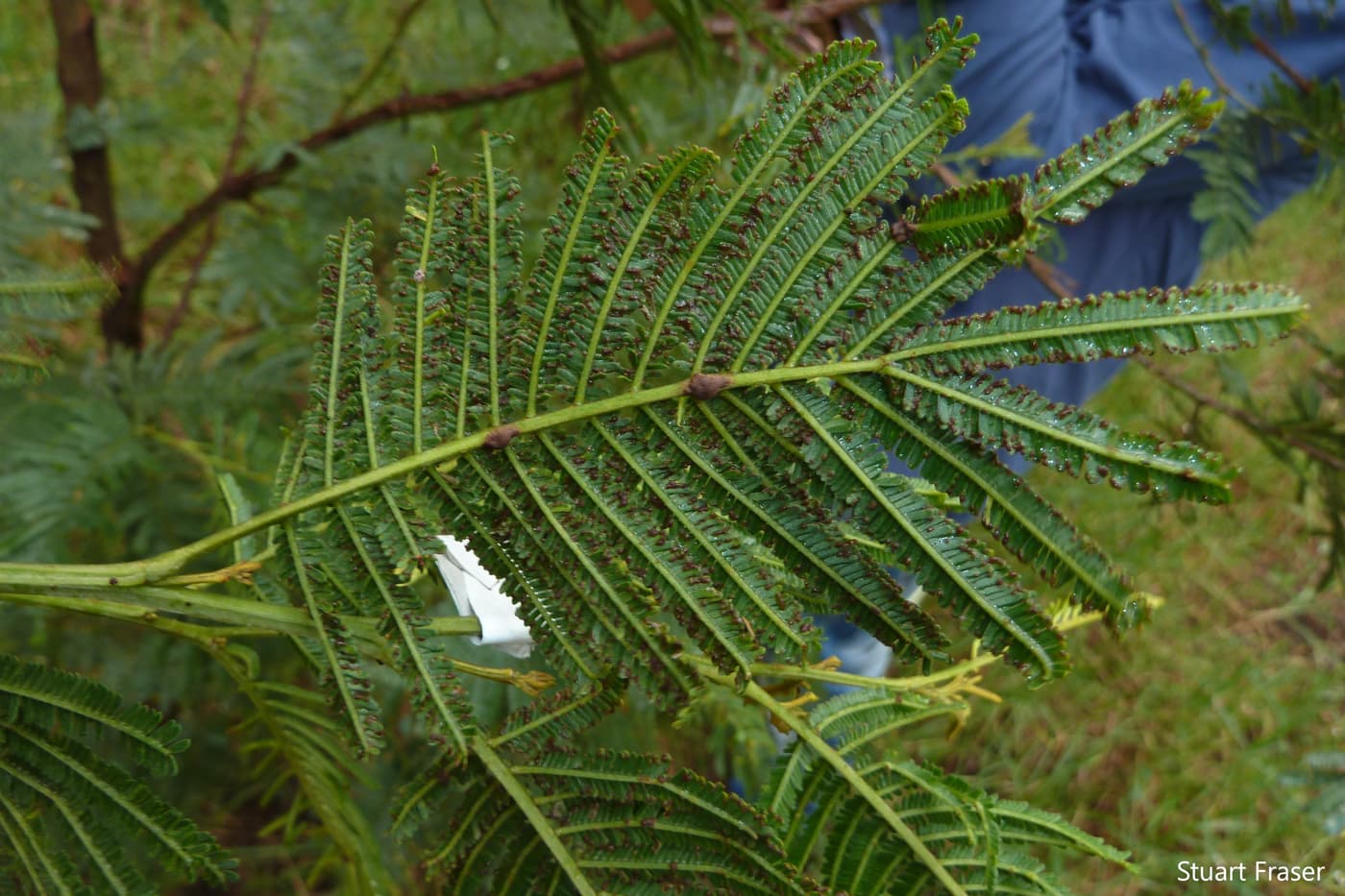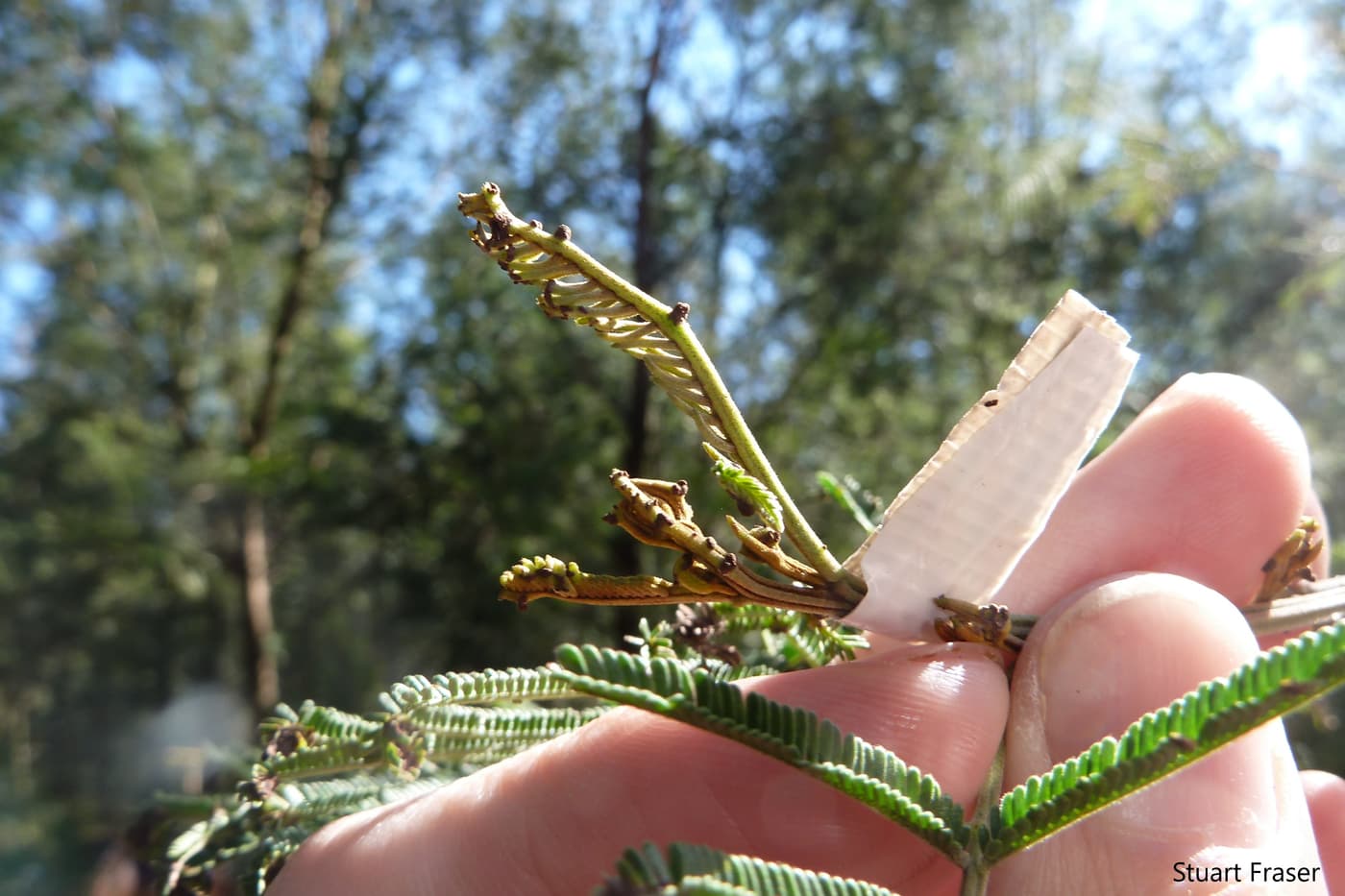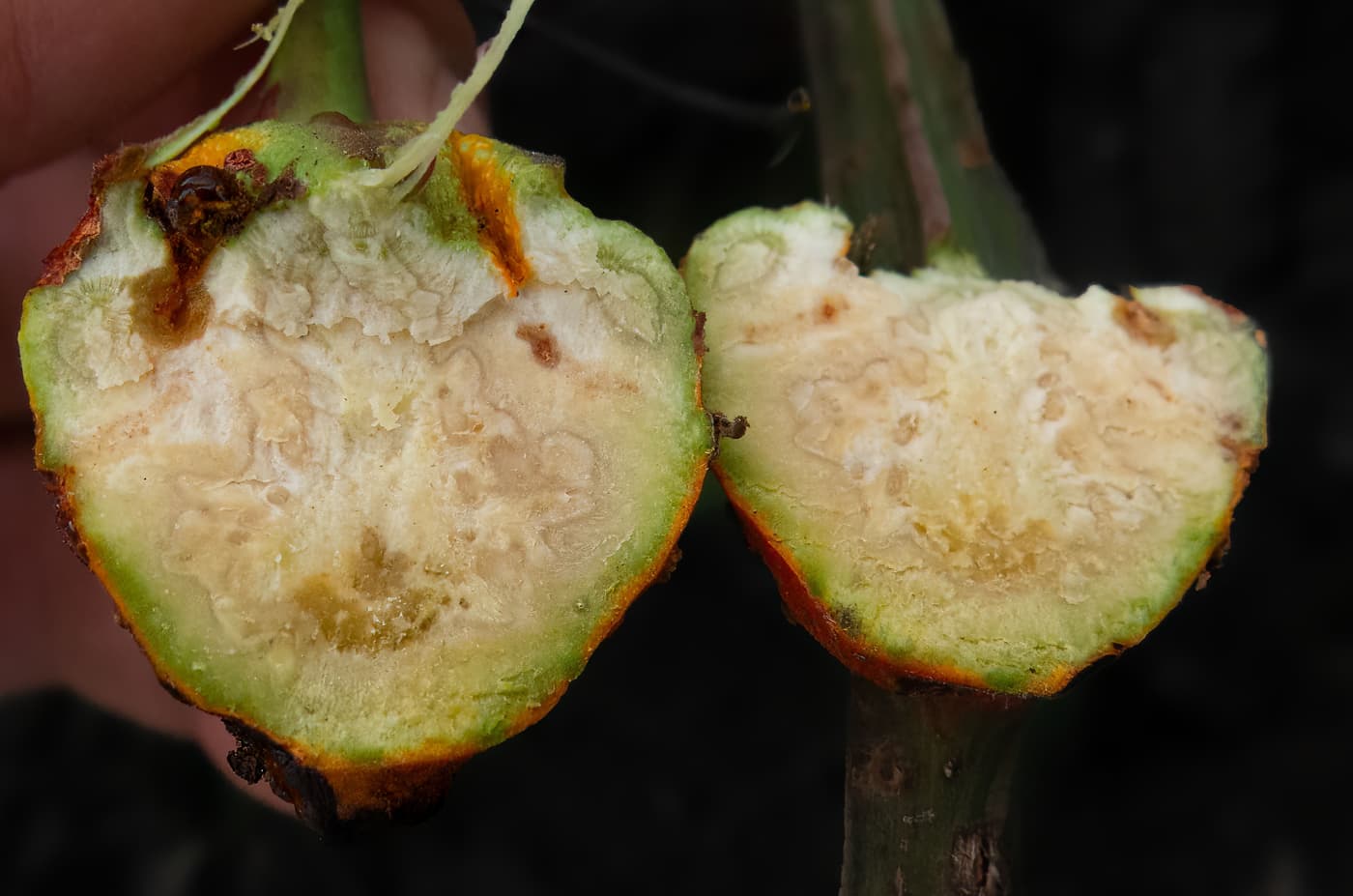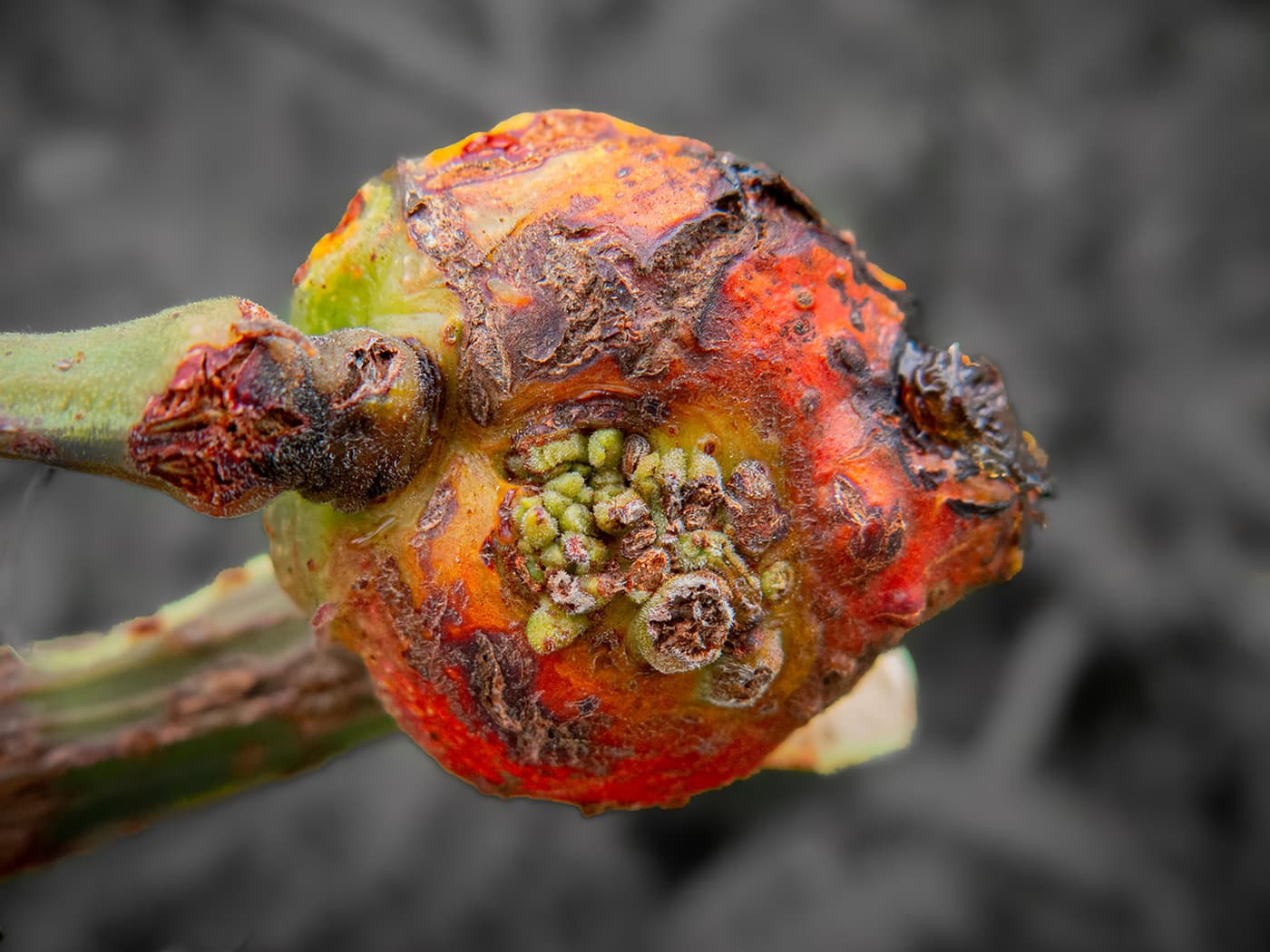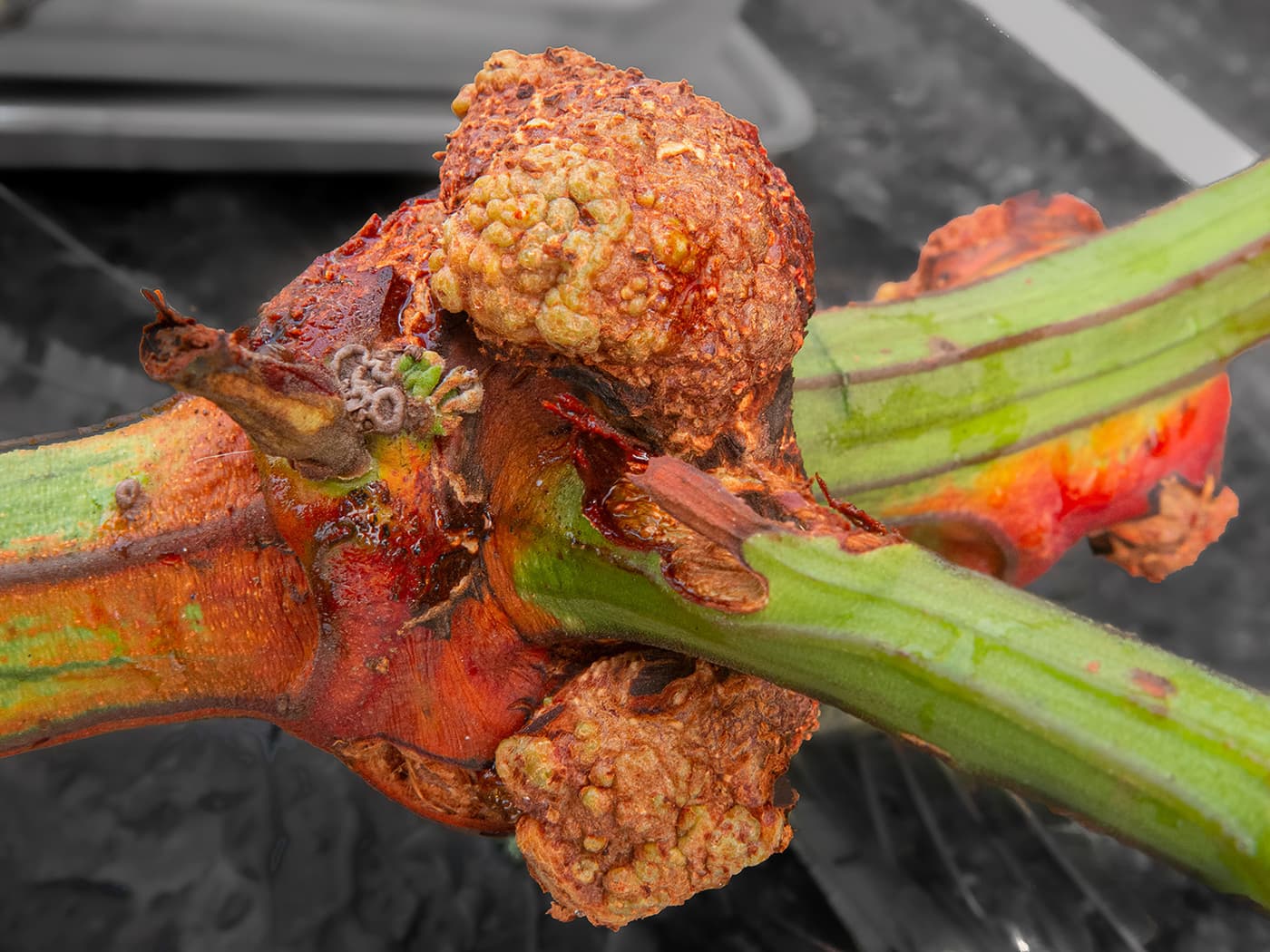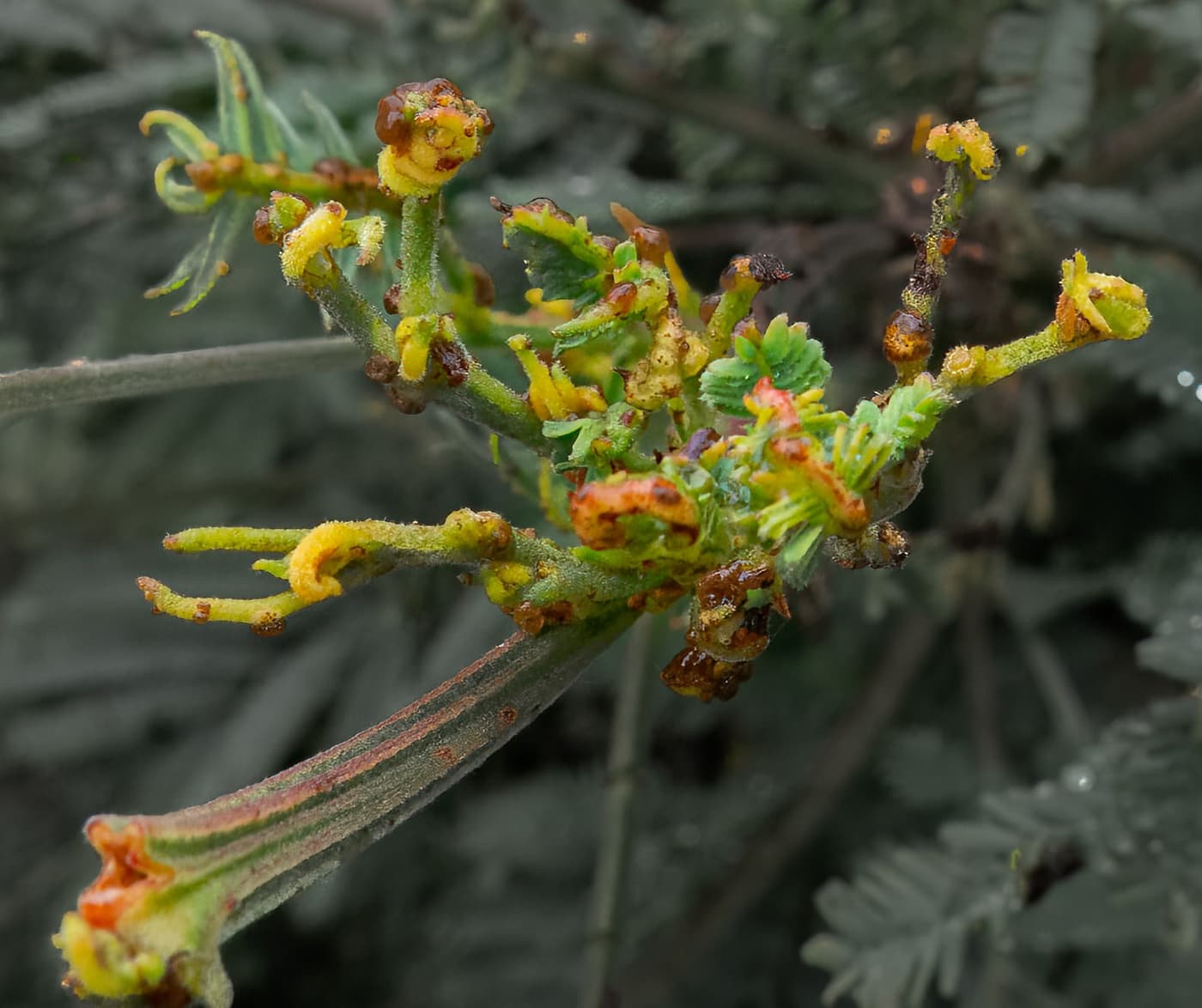
This pathogen infects foliage of trees and stems of saplings, as well as flowers and seed pods. Telia, resembling brown powdery masses, develop dry on young host tissue, but become slimy under wet conditions. Spores, that are released under these wet conditions, coat the foliage and mat leaves together forming a brown crust. Rachi, petioles and leaflets may become malformed (twisting or swelling) (McTaggart et al. 2015). In severe cases, wattle rust can reduce growth of young trees by 20 to 40% (Little & Payn 2016).
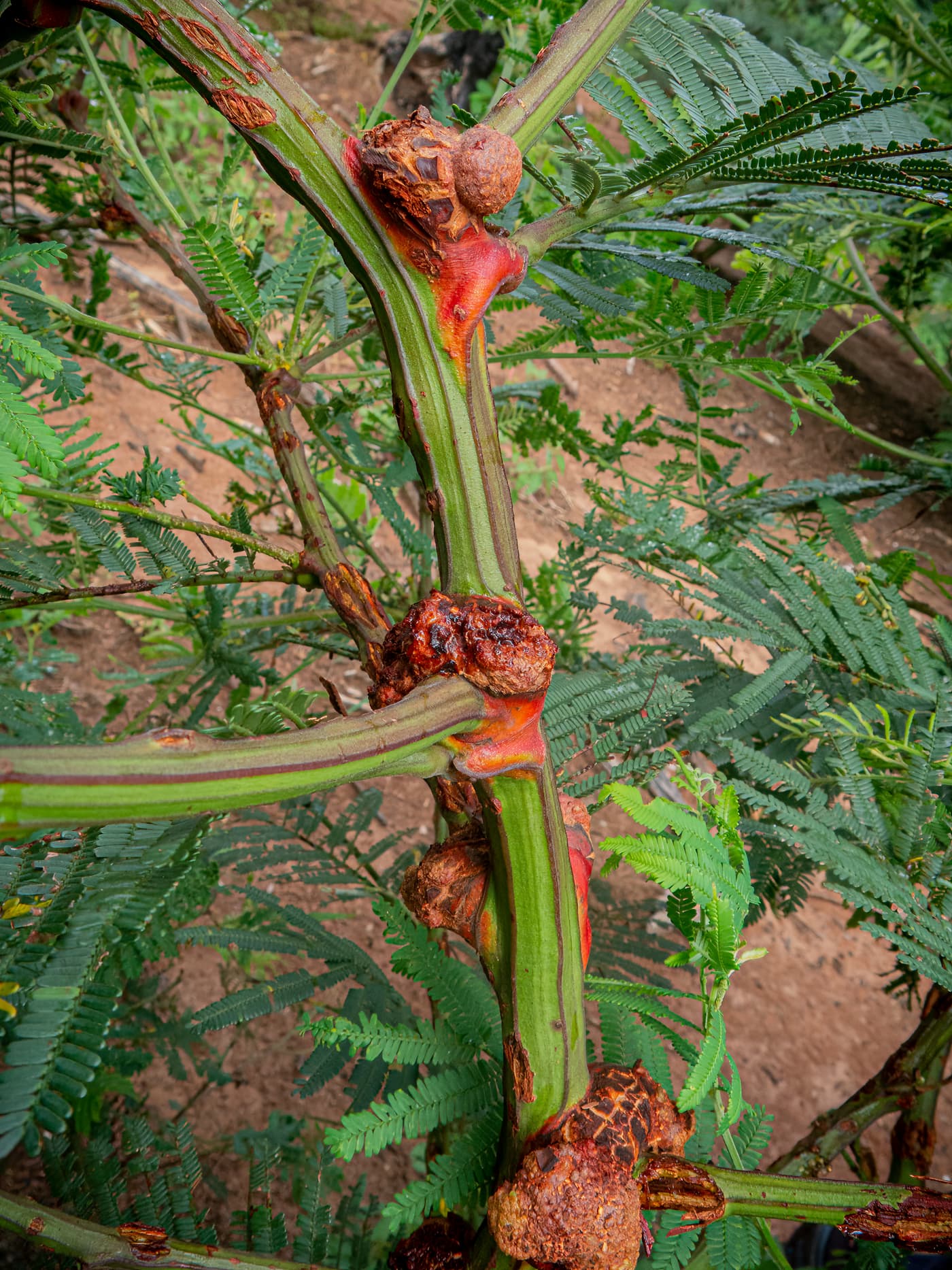
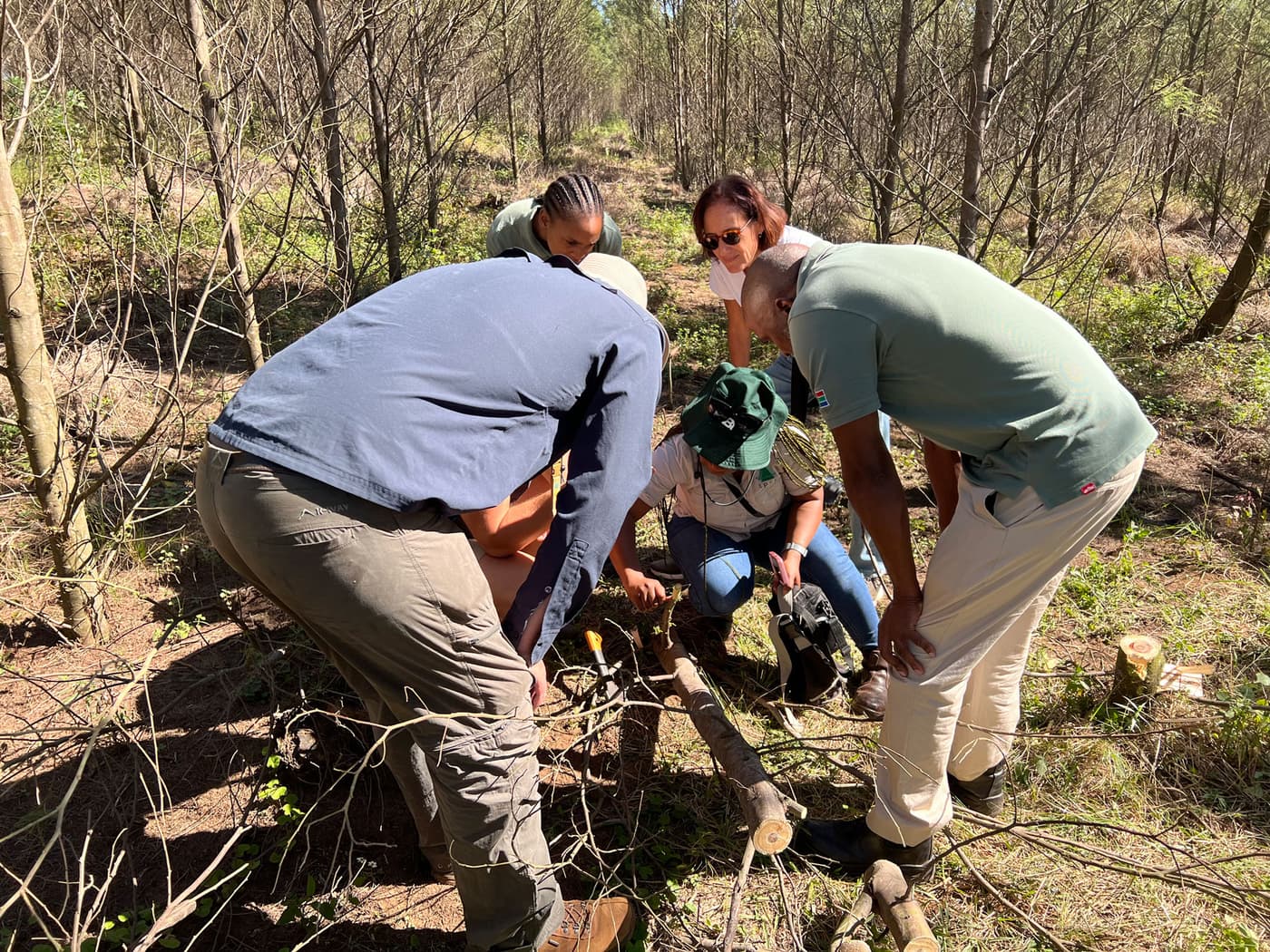
Early in 2022, a new and previously unknown rust symptom emerged on A. mearnsii. At first, this was thought to be a new rust problem but DNA sequencing showed that the unusual gall symptoms were caused by U. acaciae. This is the first time that gall symptoms have been associated with this rust species, and further studies must be undertaken to determine the basis for this unusual symptom development.