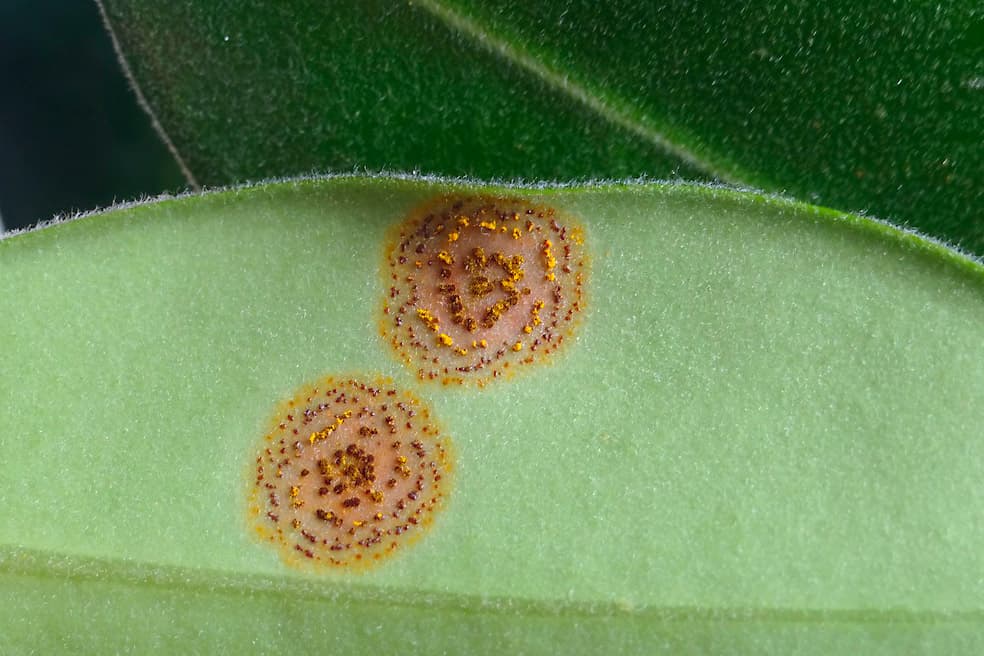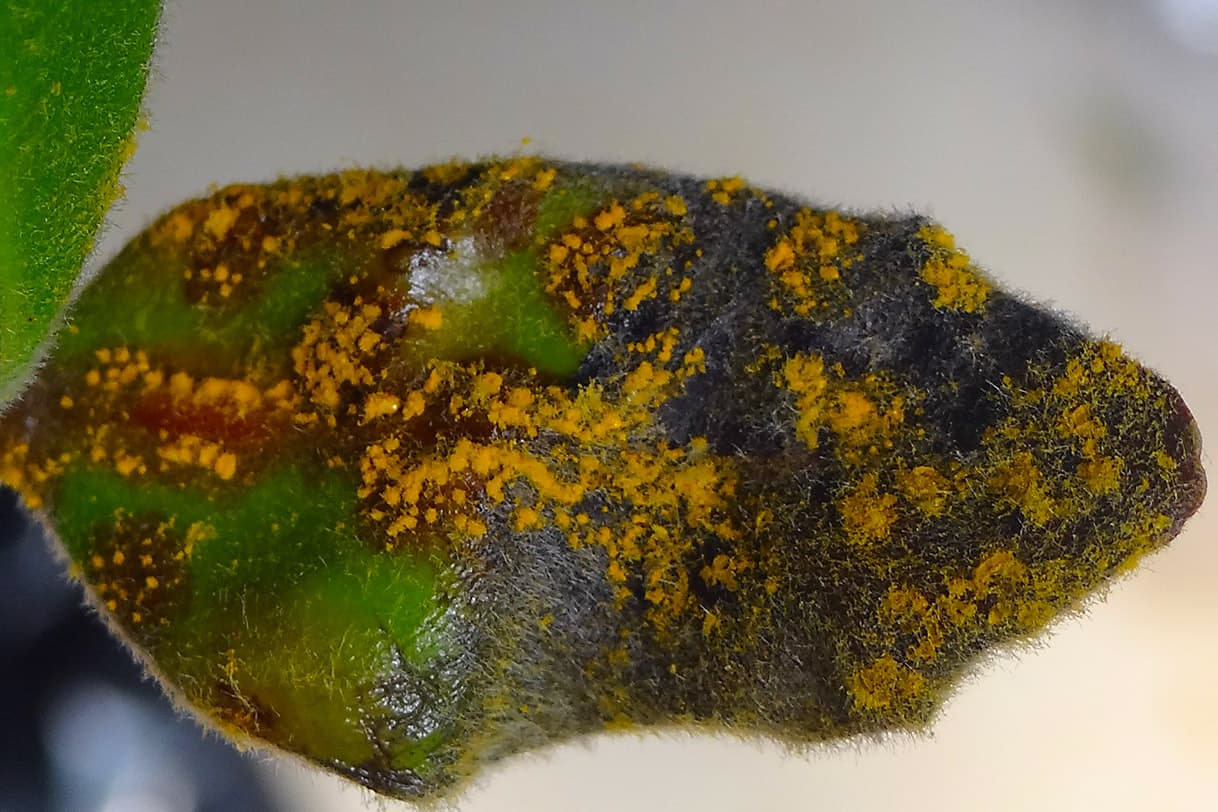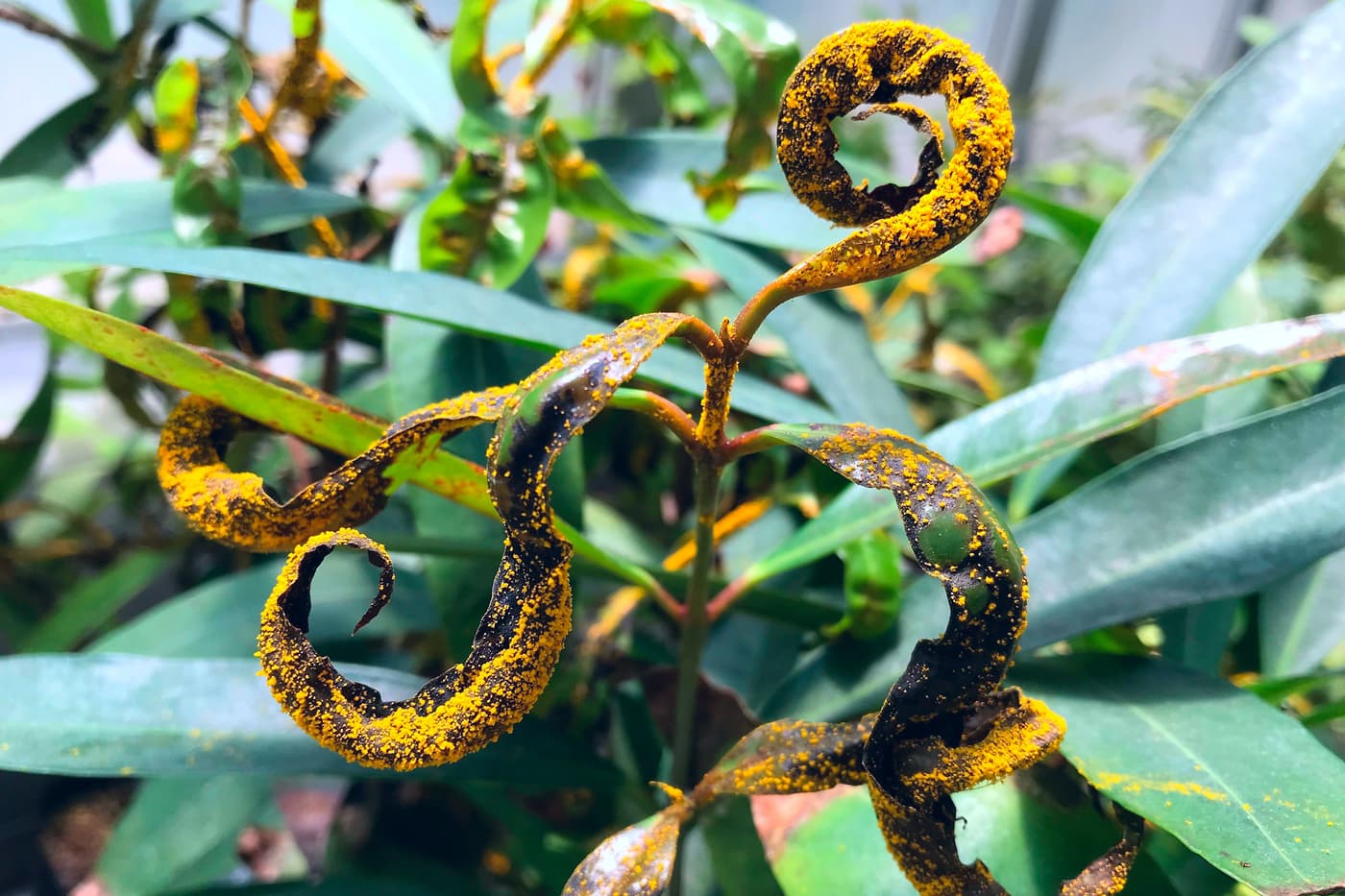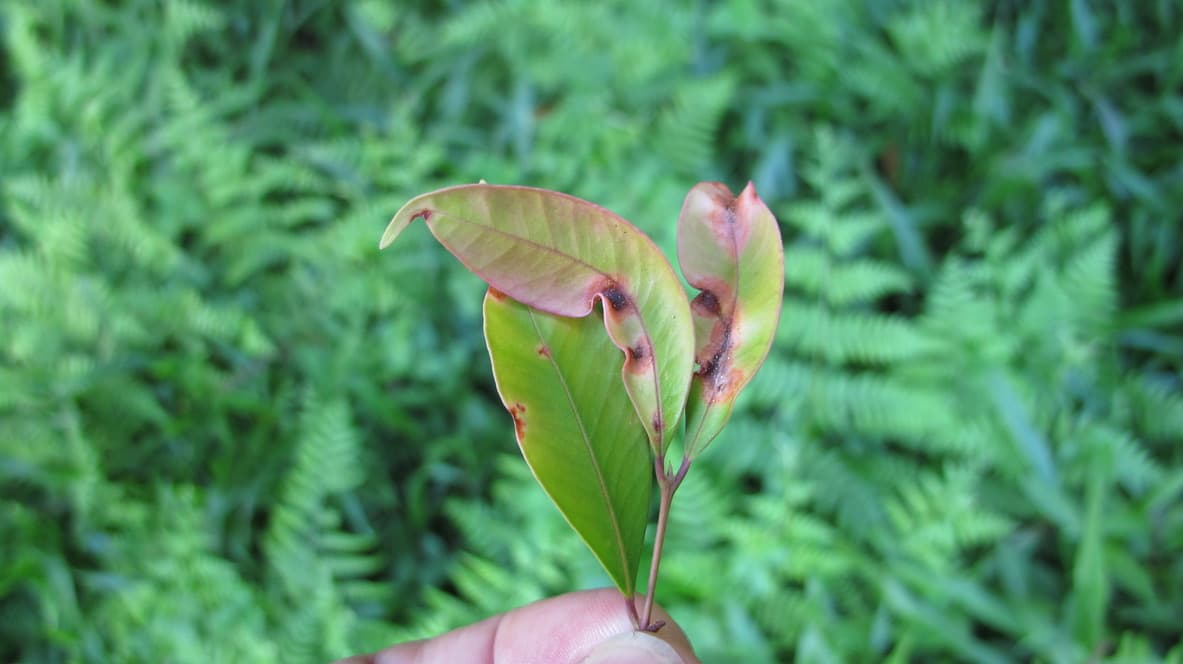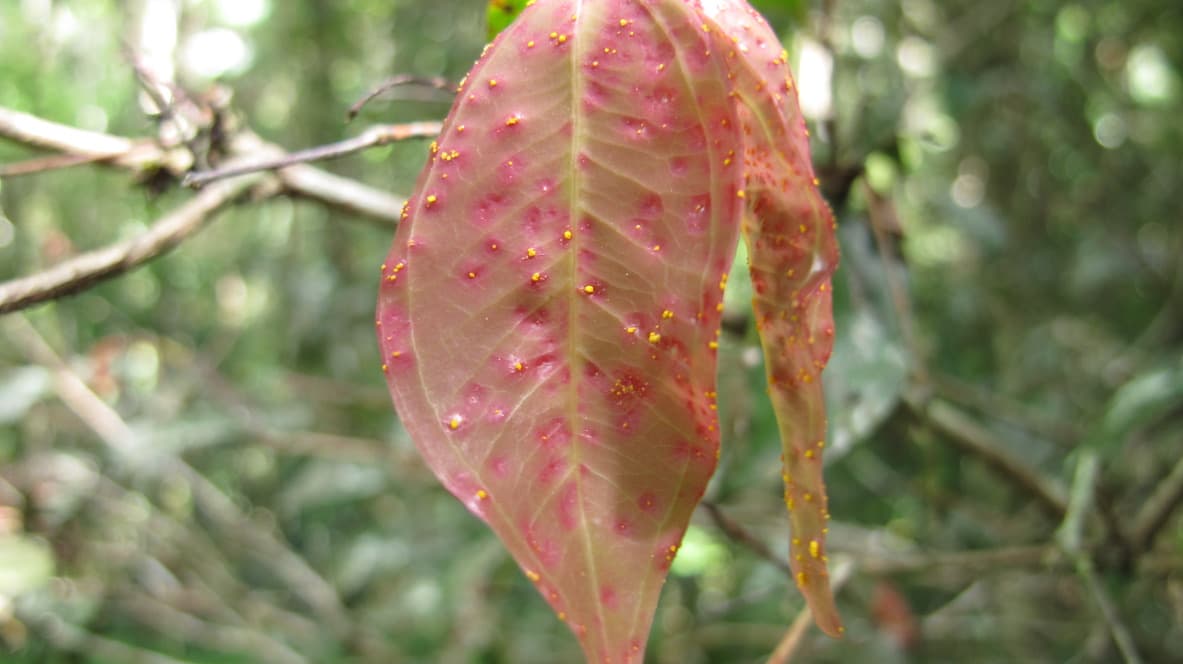
Bright yellow uredinia develop on both sides of young leaves. Lesions are often produced on actively growing shoots, sepals and occasionally young fruits (Glen et al. 2007; Roux et al. 2013). Heavy infections can deform leaves and cause defoliation, tip dieback, loss of apical dominance and stunting (Coutinho et al. 1998). In severe cases, shoot death or death of susceptible individuals can be the result of multiple re-infections (Carnegie et al. 2016).
A Mpumalanga pine and eucalyptus plantation on rolling hills, a forester from behind measuring a trunk with a diameter tape (illustration)
01/02
Click to pause
Tree Protection Co-operative Programme
Myrtle Rust
Austropuccinia psidii (G. Winter) Beenken
Common NameMyrtle Rust
Scientific NameAustropuccinia psidii (G. Winter) Beenken
Pathogen / Pest TypeRust
SynonymsBasionym: Puccinia psidii G. Winter
OriginThe origin of A. psidii is currently believed to be South America.
Distribution in South AfricaEastern Cape, Free State, Gauteng, KwaZulu-Natal, Limpopo, Mpumalanga, Western Cape
Symptoms
Biology
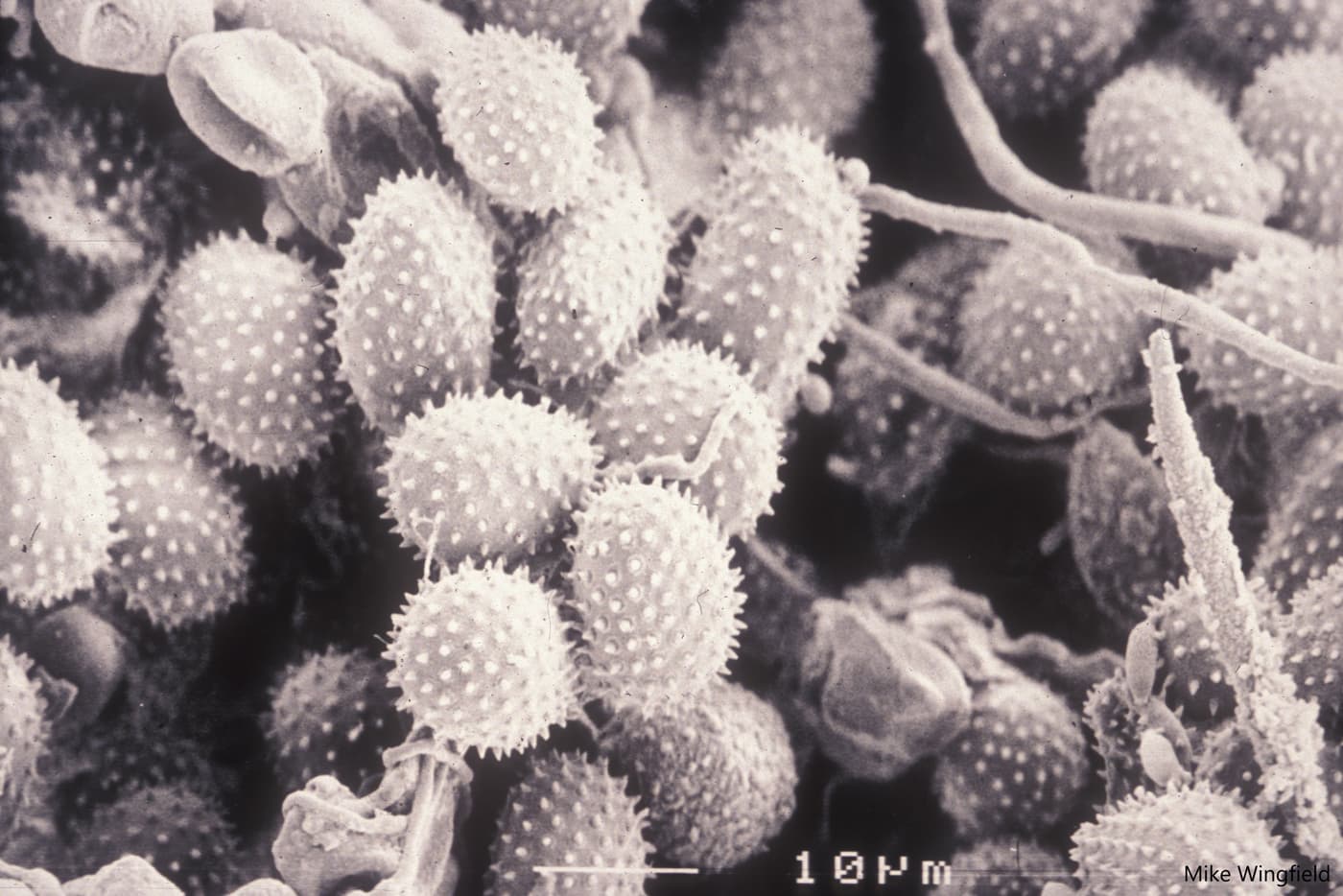
The life stages of A. psidii include urediniospores, teliospores and basidiospores (McTaggart et al. 2018). Two types of reproduction (sexual and asexual) can be distinguished in the life cycle of Austropuccinia psidii (Glen et al. 2007). The asexual stage is identified by urediniospores as their main structure for dispersal. The sexual stage starts with the teliospores that produce basidiospores after meiosis. Thus, compatible basidiospores are hypothesised to form a hymenium capable of producing uredinia or teliospores (McTaggart et al. 2018).
Gallery