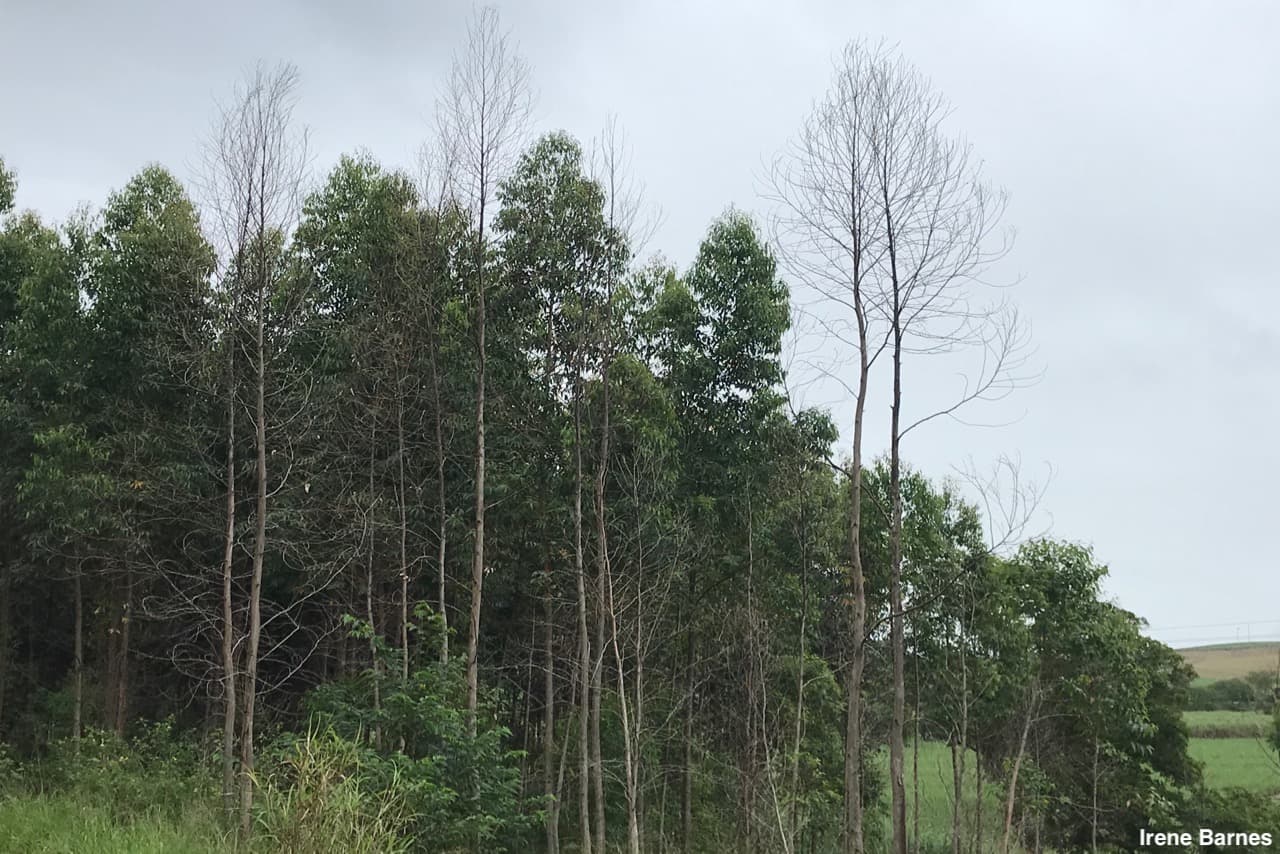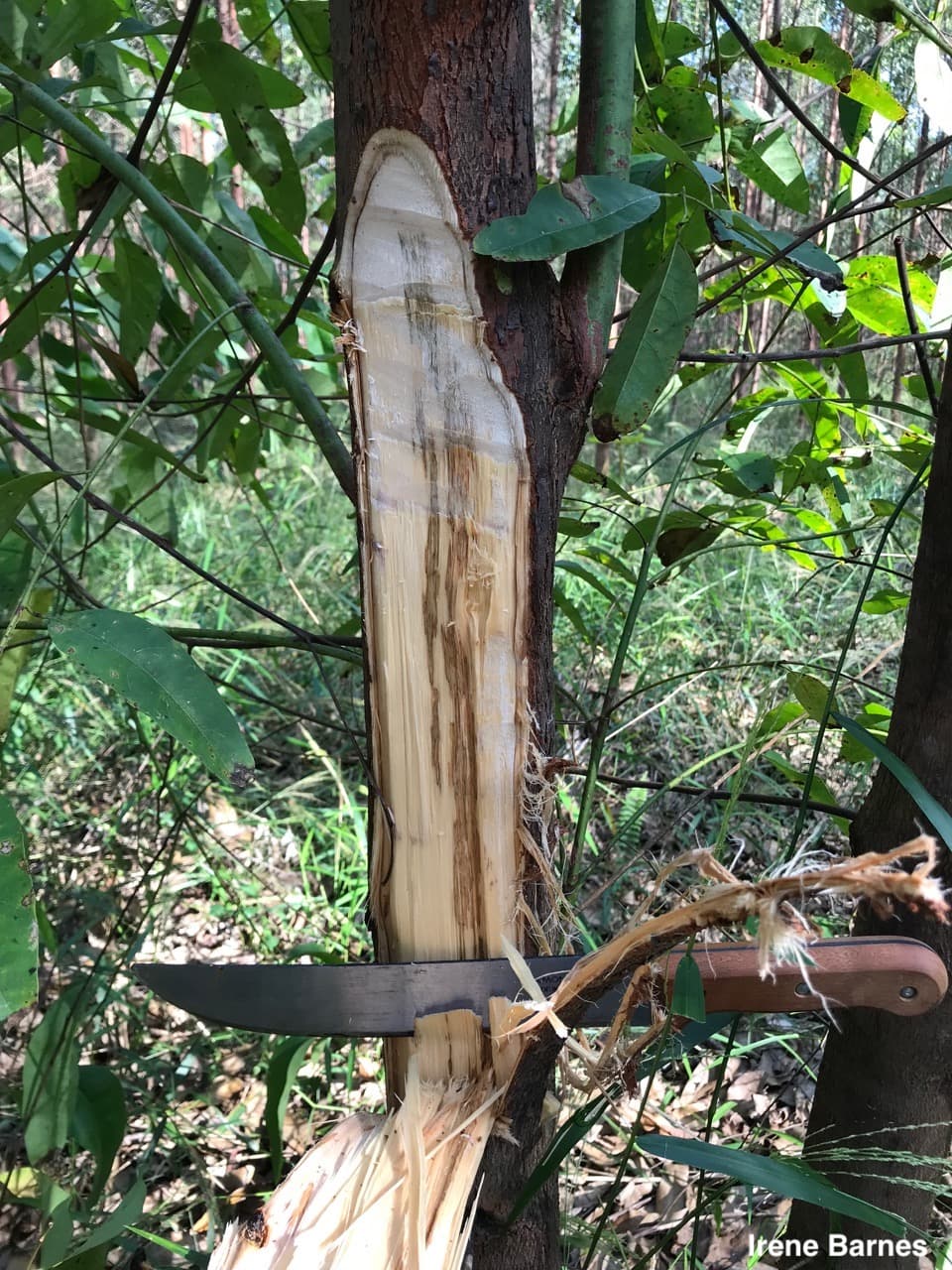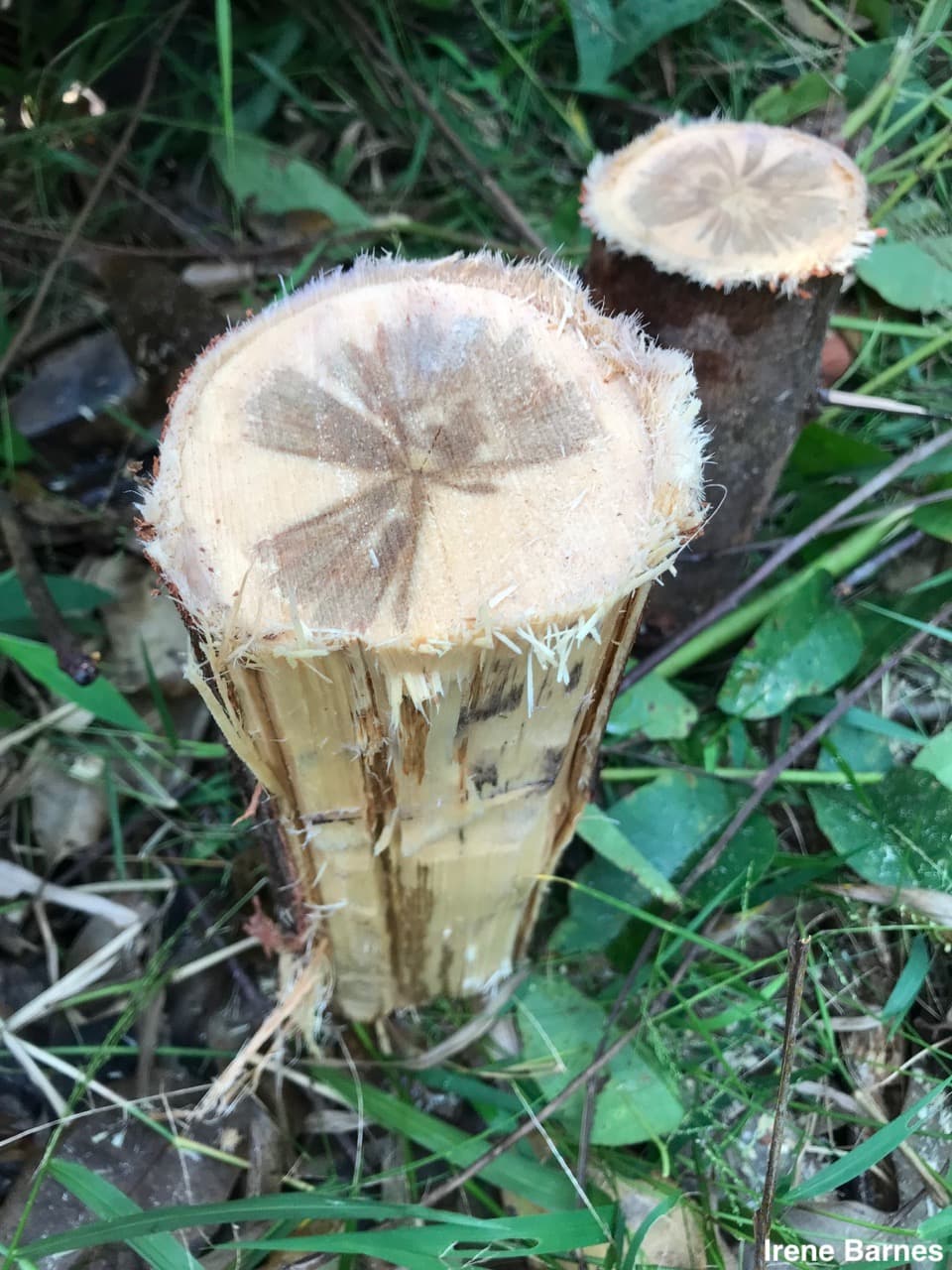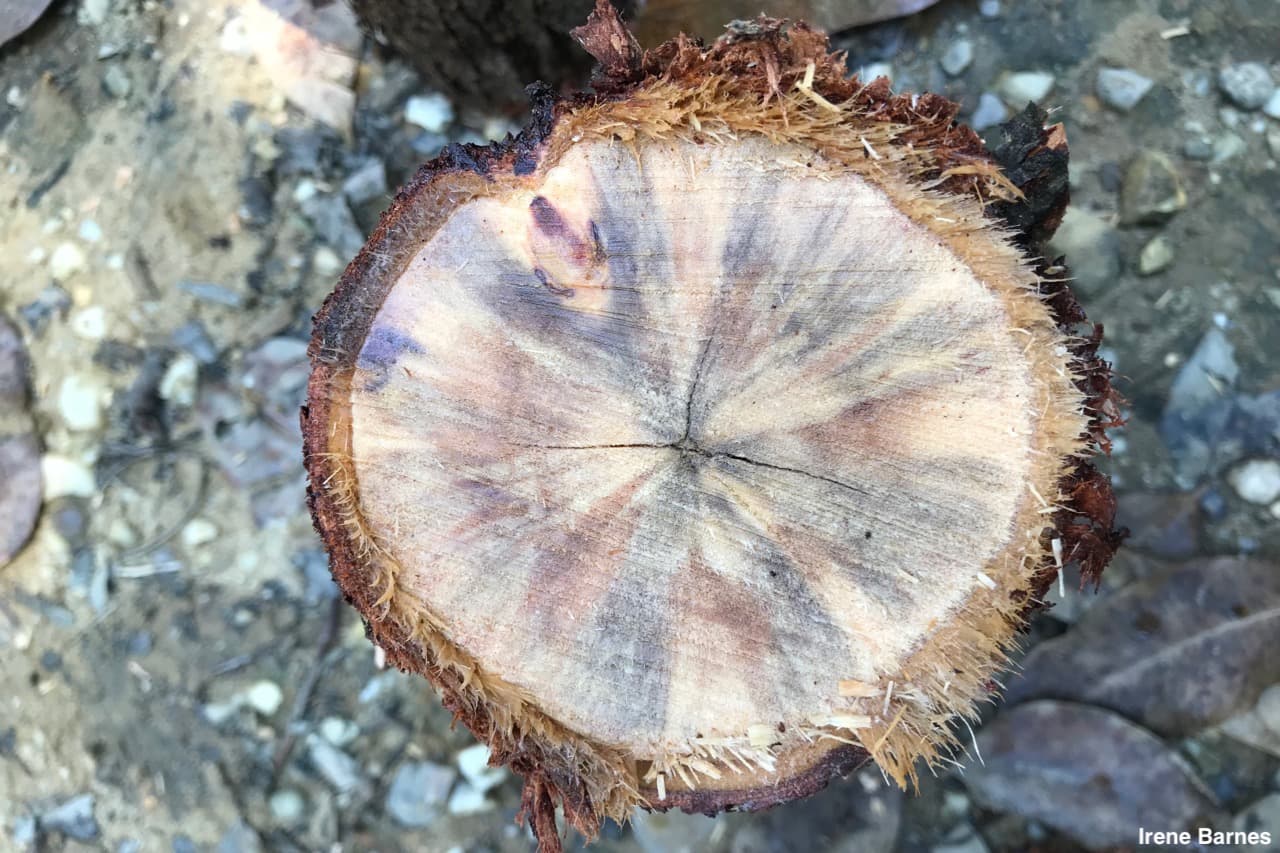
Infection normally occurs through natural openings or external wounds induced through silvicultural practices, insects or weather conditions. Symptoms of infected tree hosts include leaf discolouration and wilting which eventually leads to death. The stems produce cankers and exude gum at infection sites and internal infections in the stem are visible as dark brown to black streaks in the cambium.
A Mpumalanga pine and eucalyptus plantation on rolling hills, a forester from behind measuring a trunk with a diameter tape (illustration)
01/02
Click to pause
Tree Protection Co-operative Programme
Ceratocystis wilt
Ceratocystis albifundus Wingfield, De Beer and Morris; and Ceratocystis eucalypticola M. van Wyk & M.J. Wingfield
Common NameCeratocystis wilt
Scientific NameCeratocystis albifundus Wingfield, De Beer and Morris; and Ceratocystis eucalypticola M. van Wyk & M.J. Wingfield
Distribution in South AfricaC. albifundus : On Acacia mearnsii in KwaZulu-Natal, Limpopo and Mpumalanga; Protea cynaroides in the Western Cape; other native trees in Limpopo and Gauteng C. eucalypticola : Mpumalanga and KwaZulu-Natal
Symptoms
Biology
The spore masses of Ceratocystis are often be distributed via insect vectors. It can also be present in the frass created by insects; the frass can be distributed via wind and rain. Fungal spores can survive for long periods of time in the soil and infect new trees planted in the same soil.
Gallery