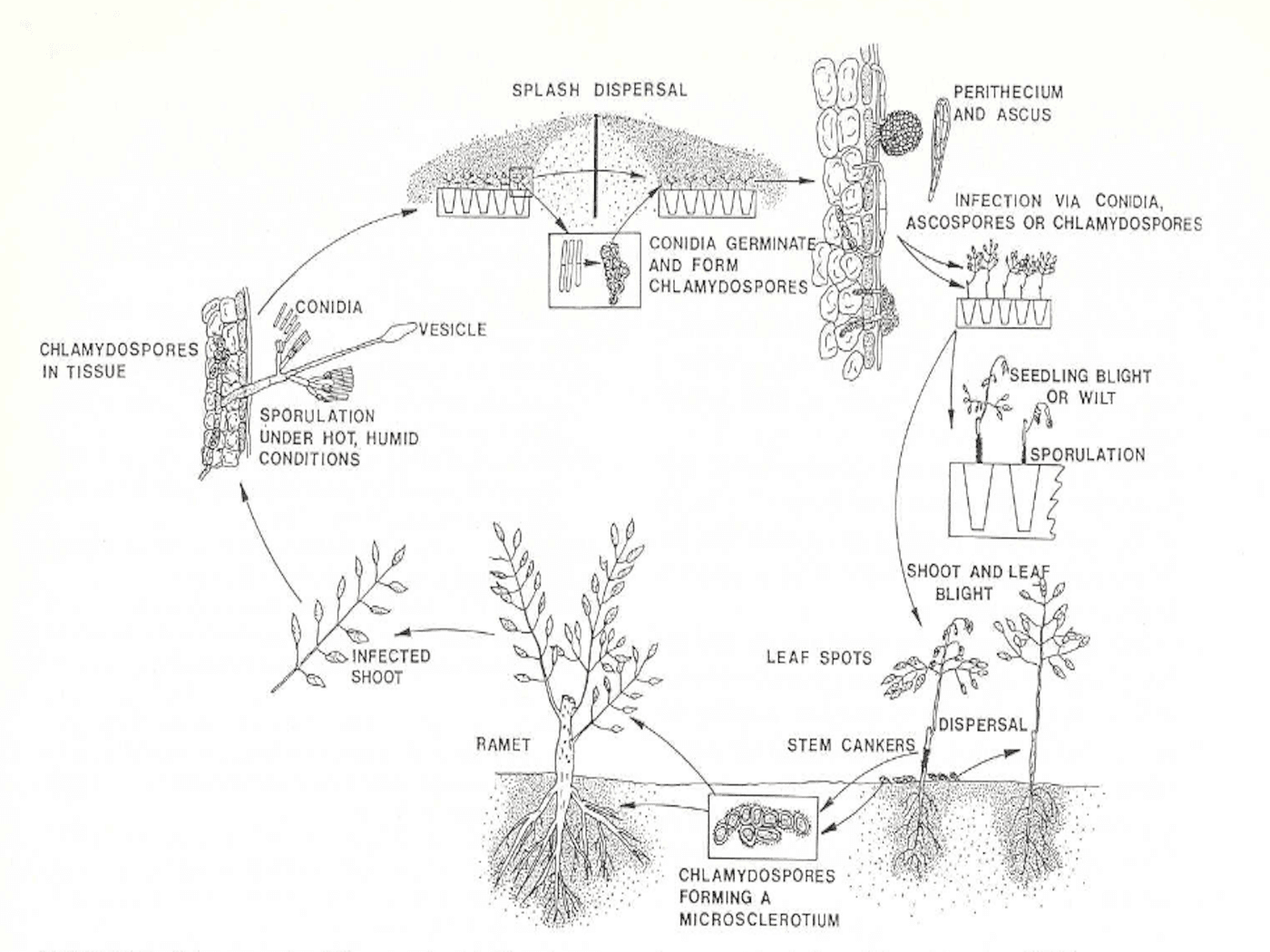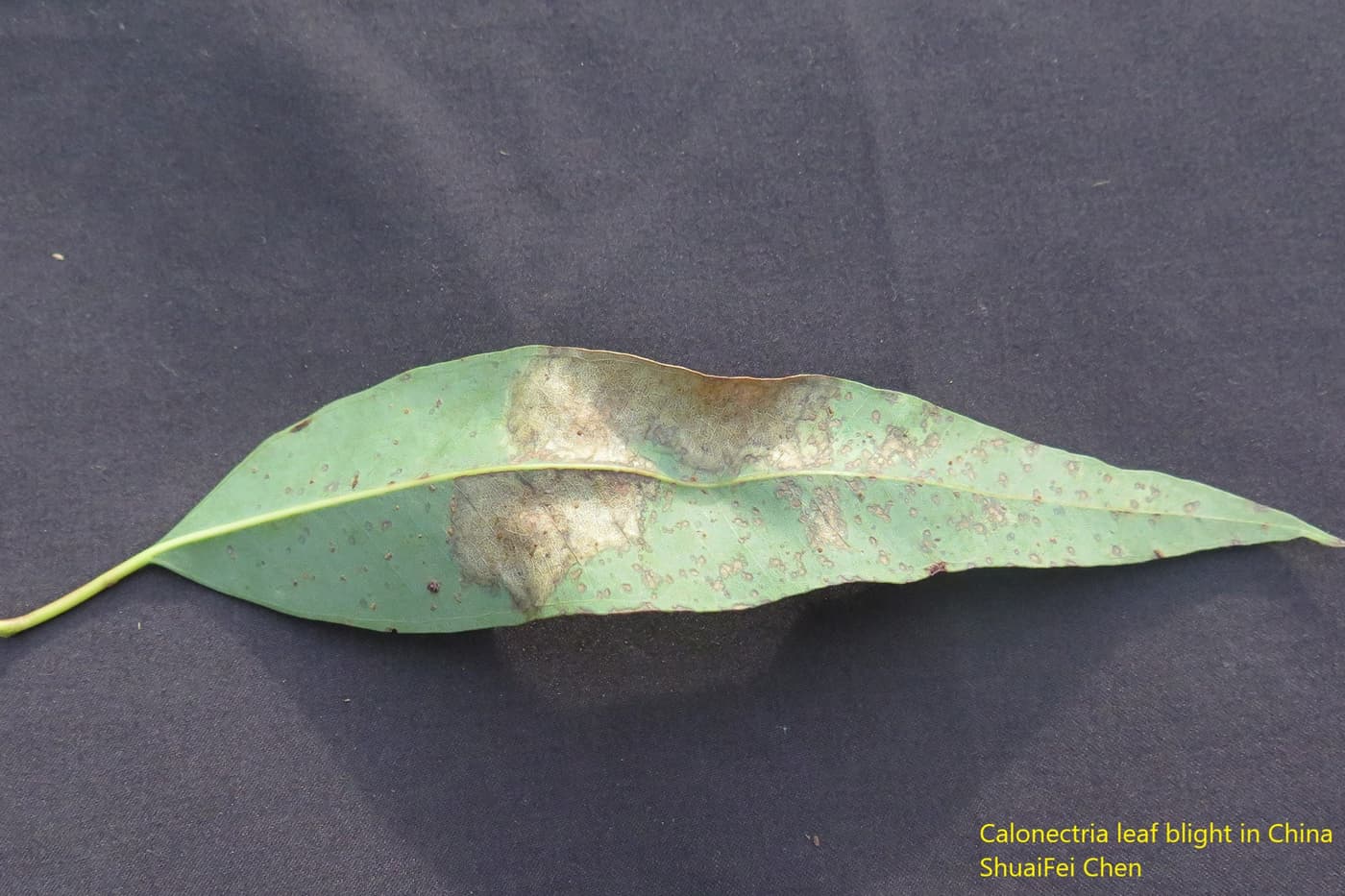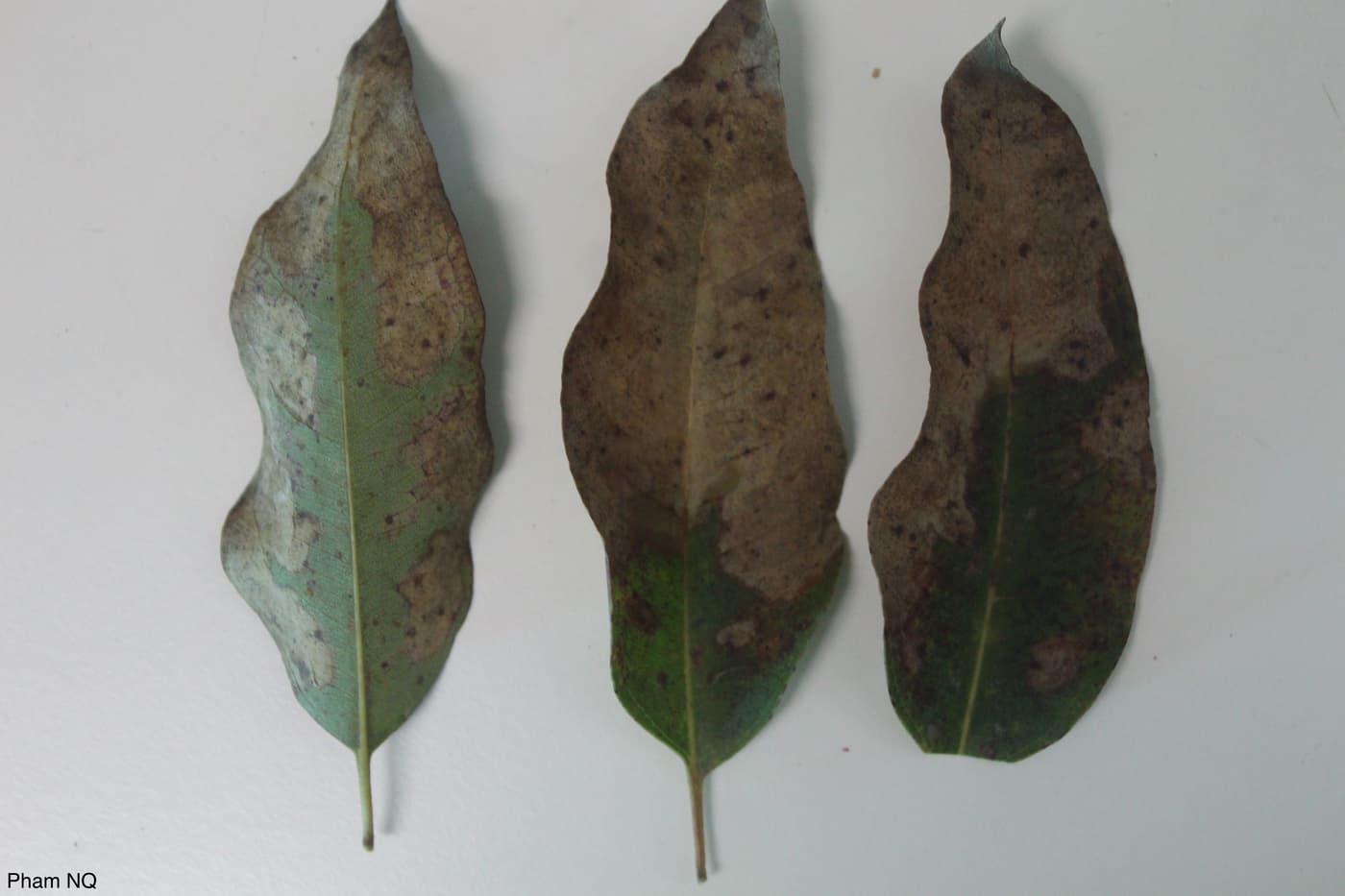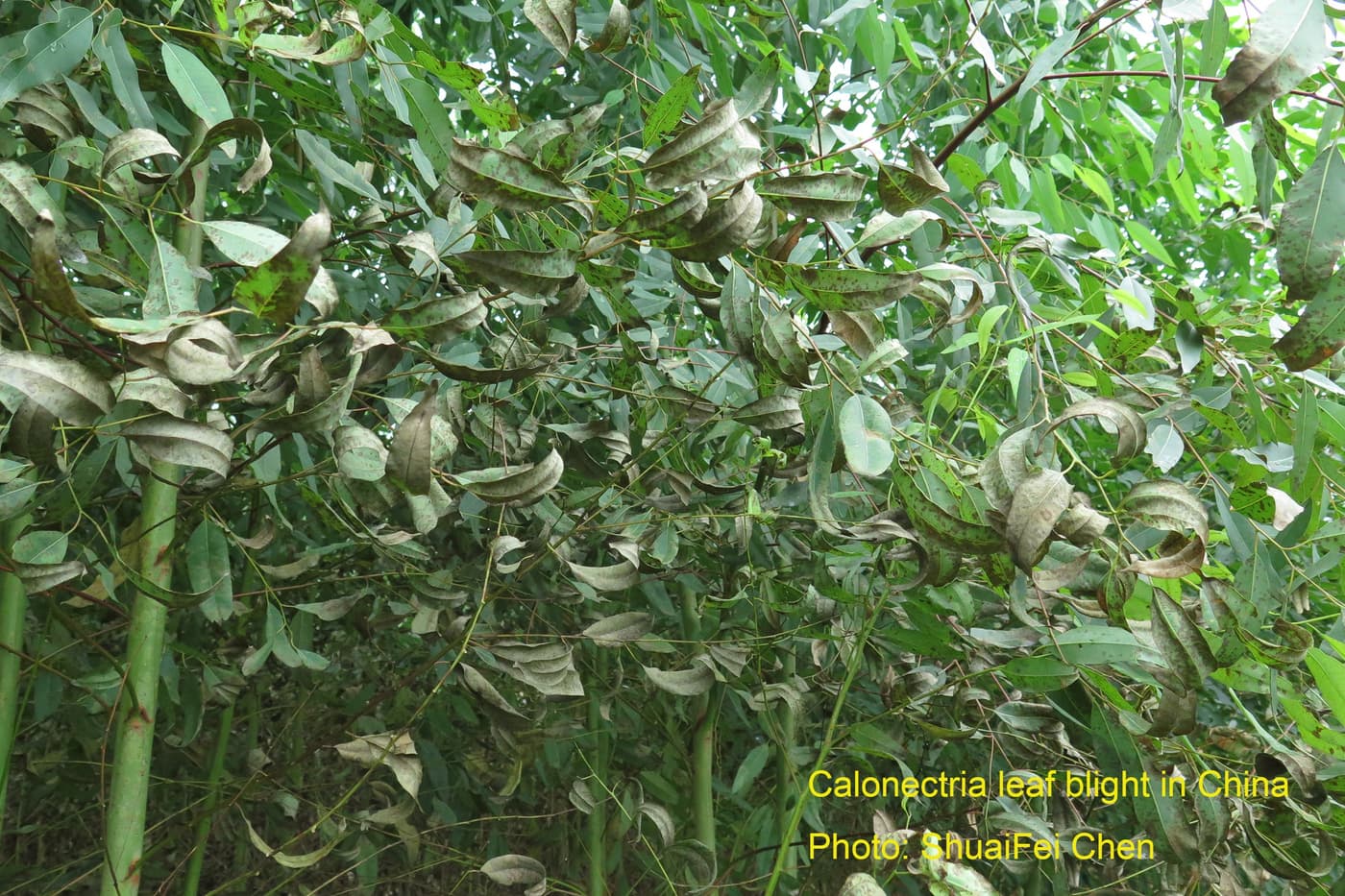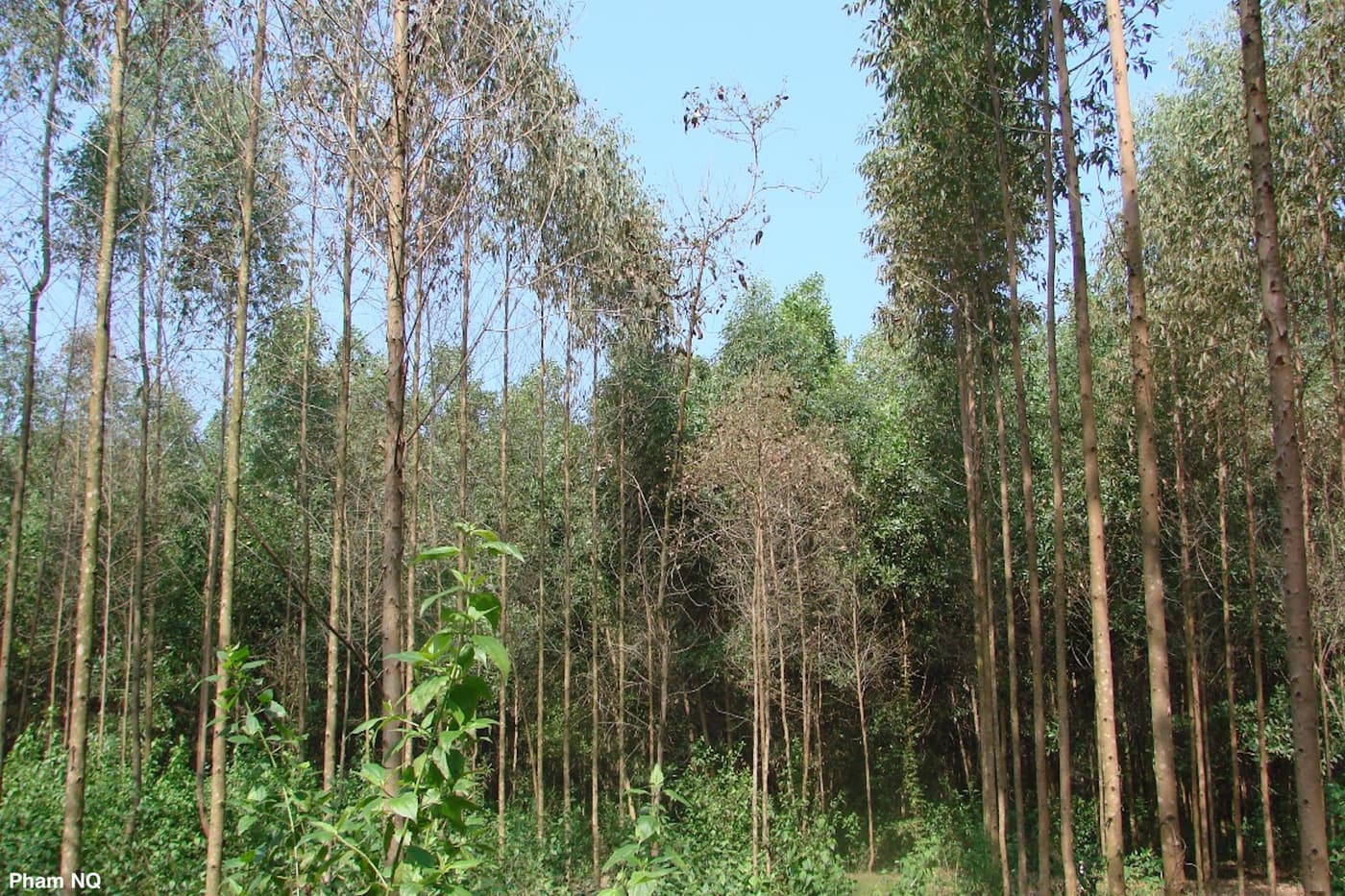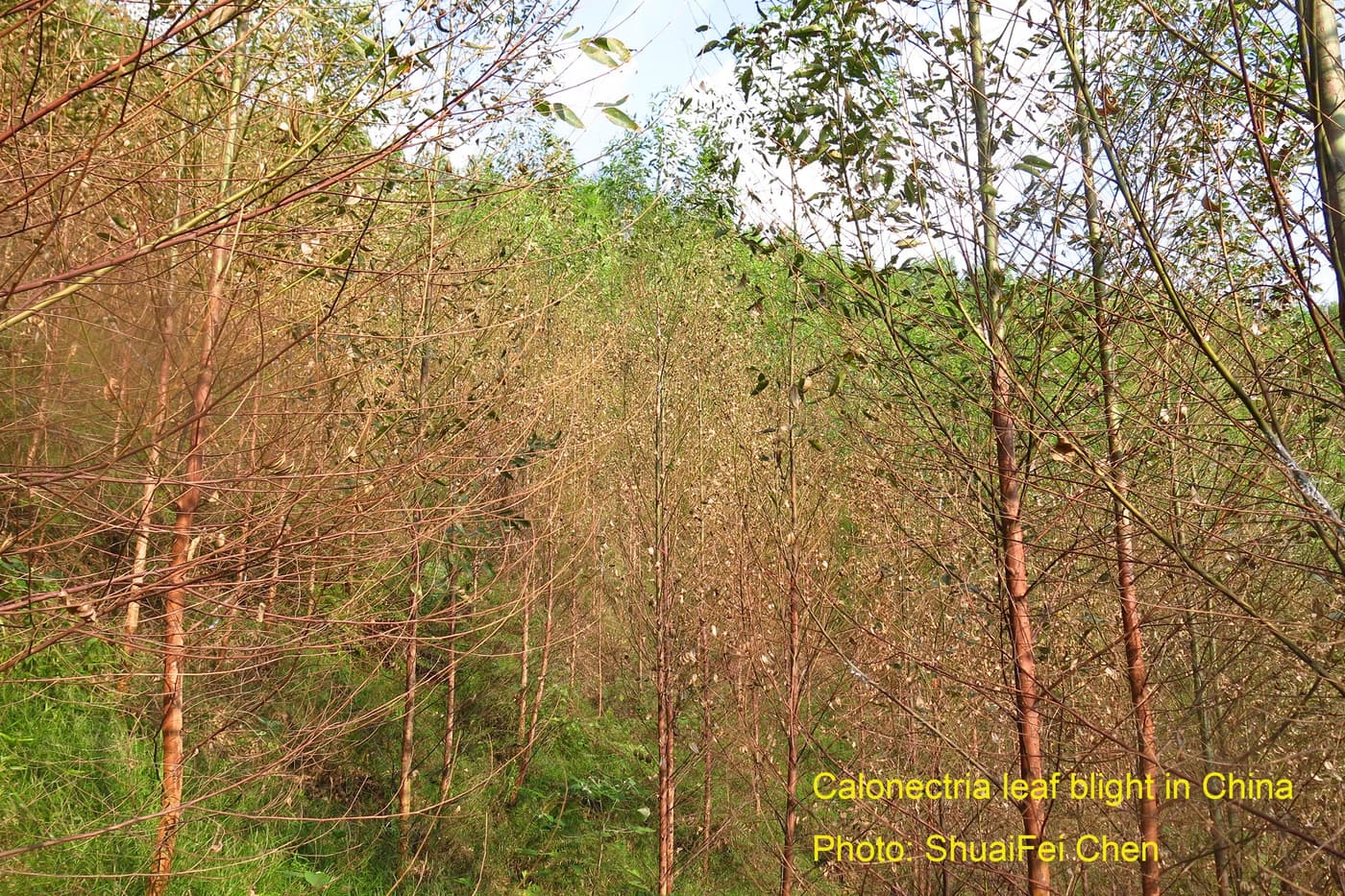
Typical symptoms include damping off, root rot, discrete pale brown leaf spots, leaf blight, shoot blight, stem cankers and root disease of Eucalyptus (Crous 2002). Species in the Calonectria pteridis complex, which include important pathogens in South America, cause small (1-7 mm diam), round or elongated leaf spots, that are initially pale grey, becoming pale brown. Other species such as those in the Ca. candelabra complex, cause large, pale brown leaf botches (Alfenas et al. 2013). In China, South-East Asia and Australia, species in the Ca. retaudii complex are the most common causal agent of CLB. The disease first appears as greyish water-soaked spots on young leaves that coalesce and develop into extensive necrotic areas. Necrotic lesions cover the entire area of the leaf resulting in leaf and shoot blight symptoms (Old et al. 2003). Defoliation caused by CLB decreases timber volume due to the reduced photosynthetic area.
According to Crous et al. (2019), there are 37 species of Calonectria confirmed to cause CLB on Eucalyptus.