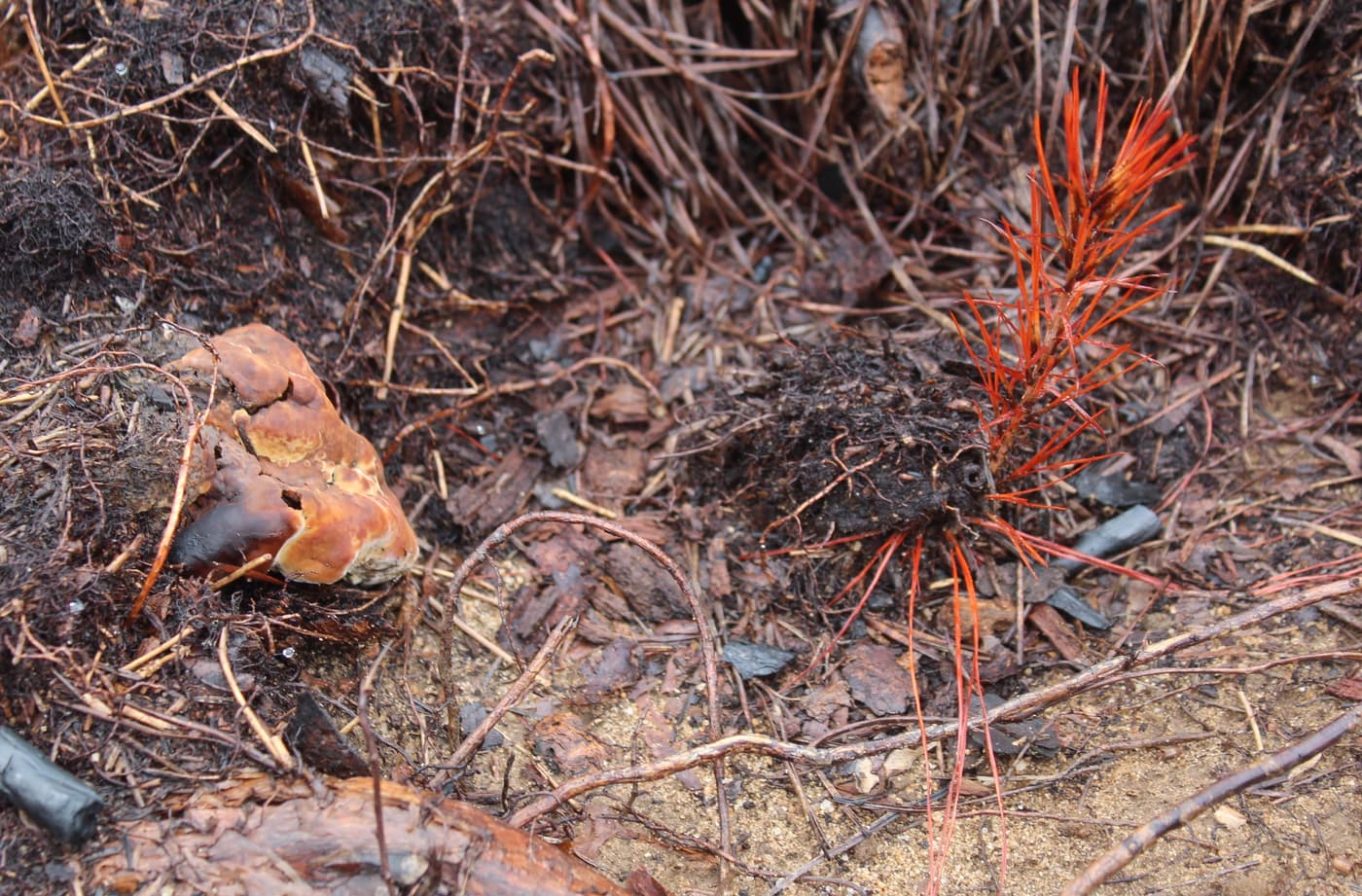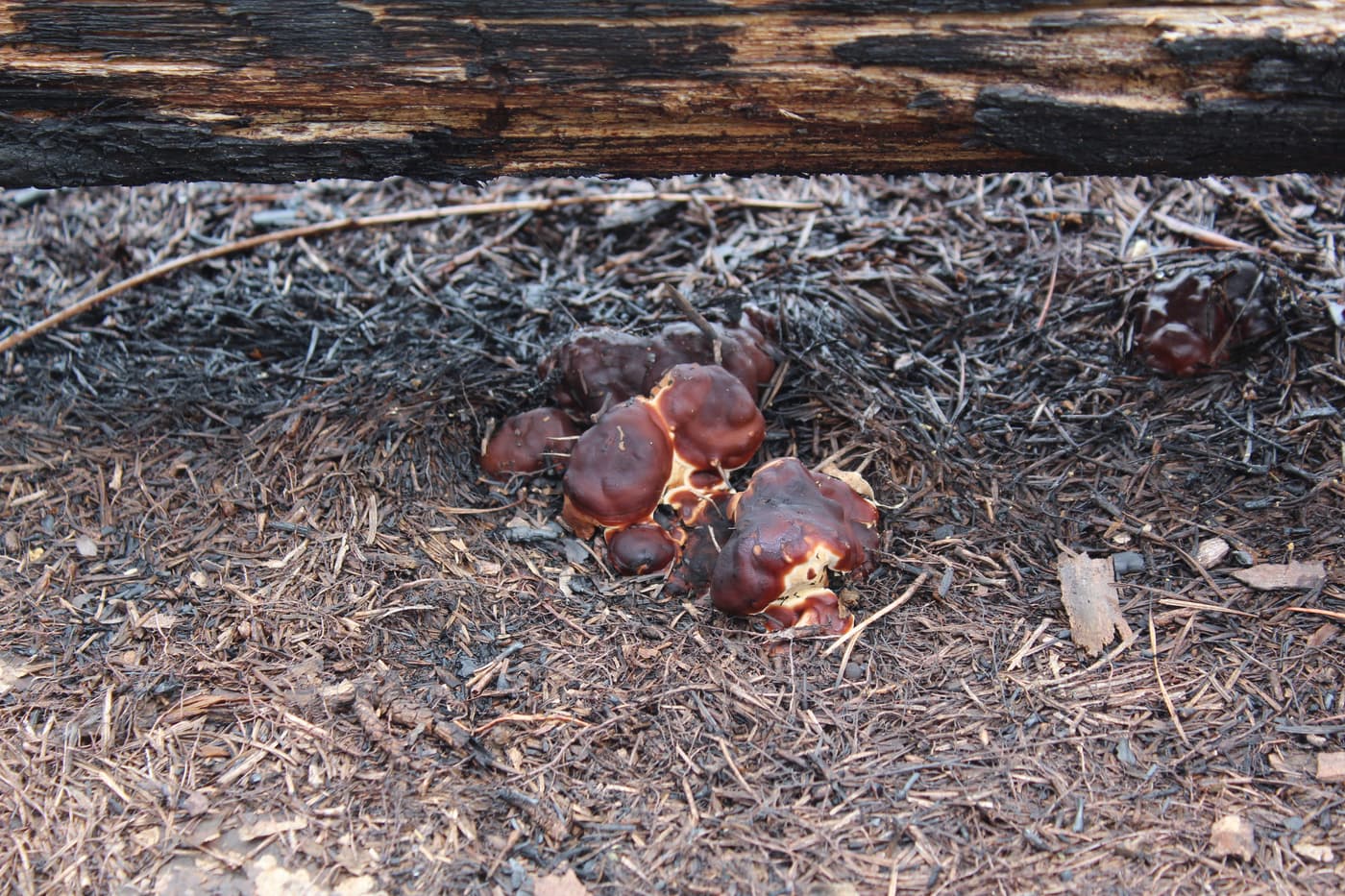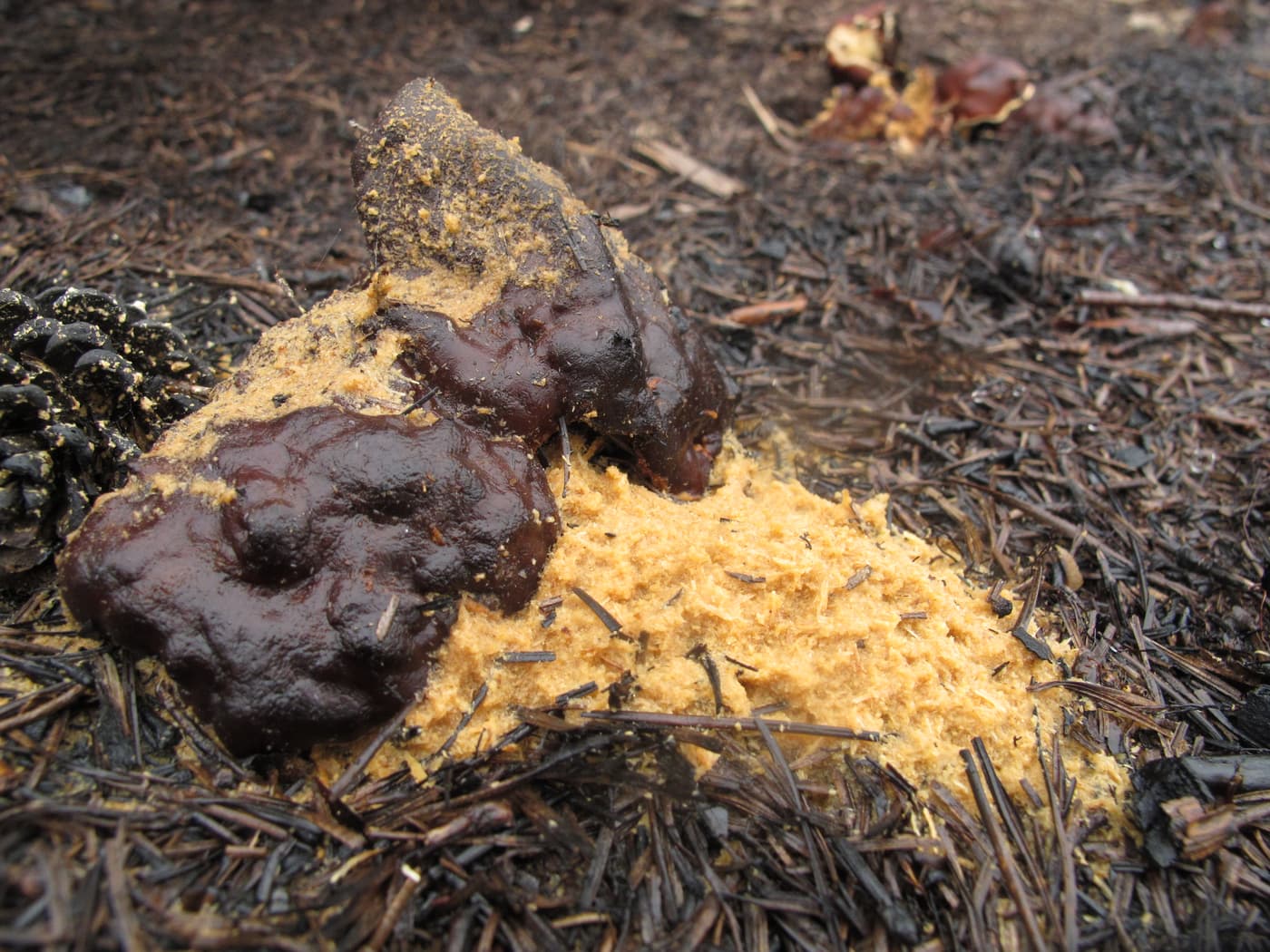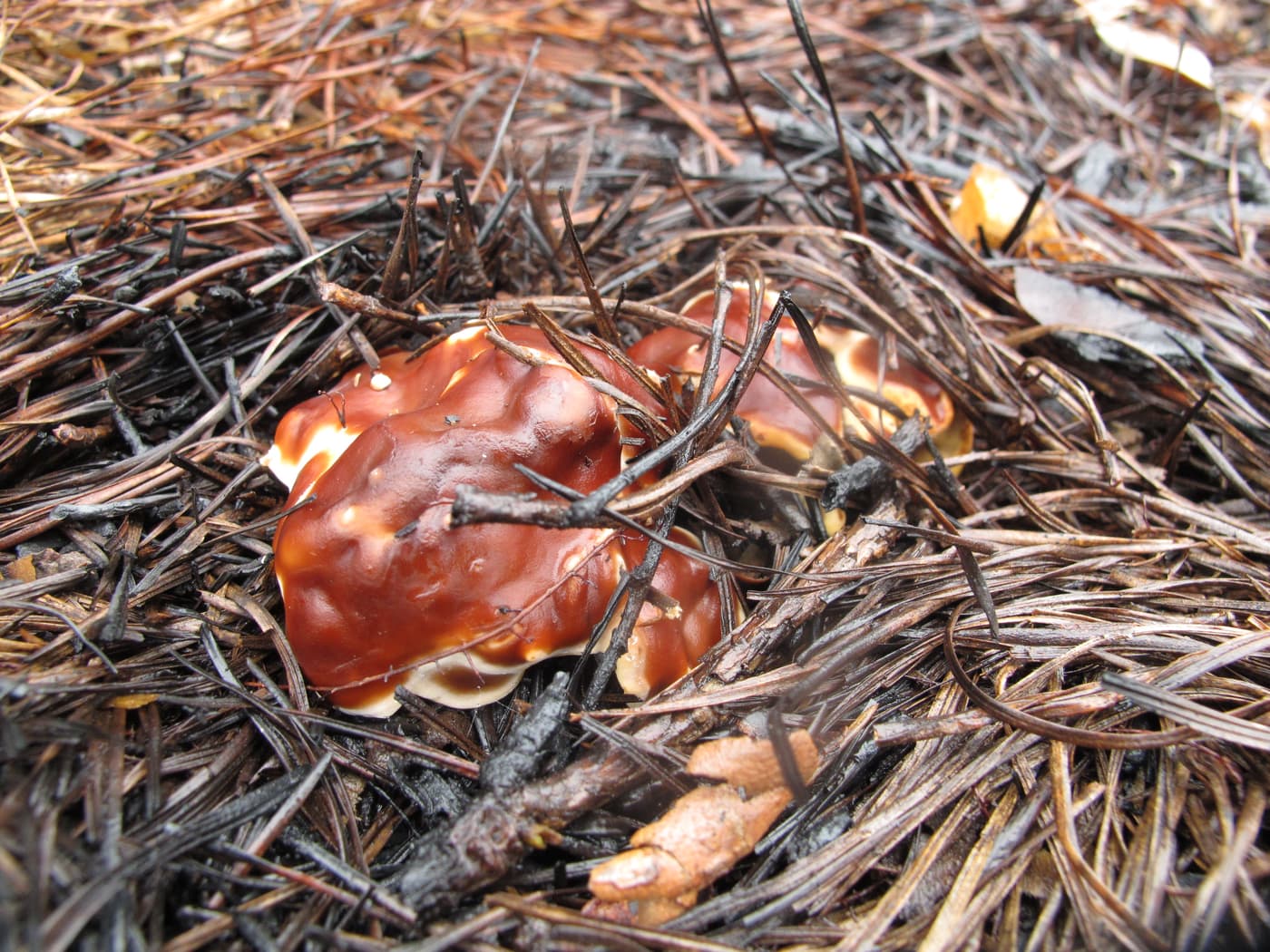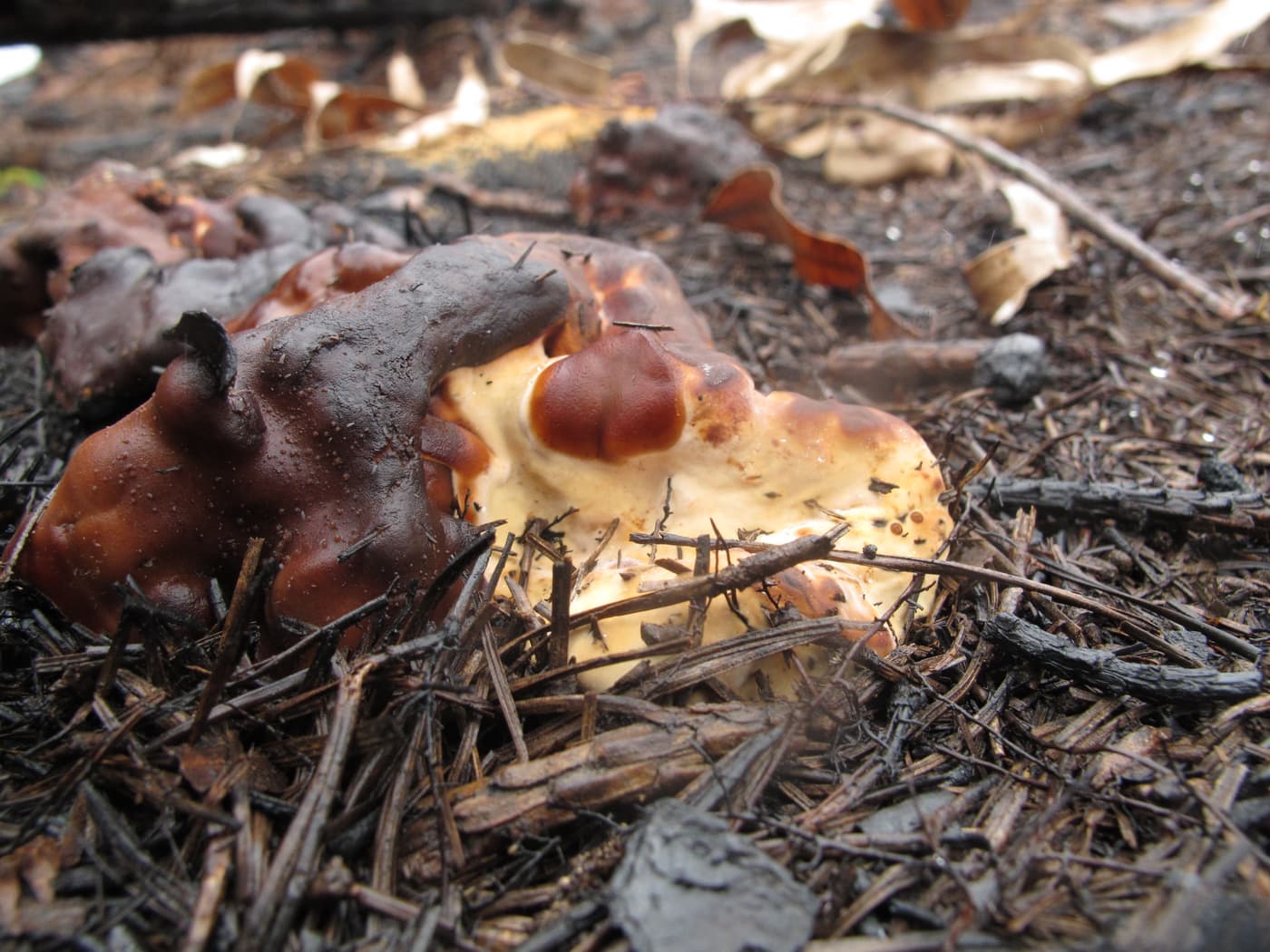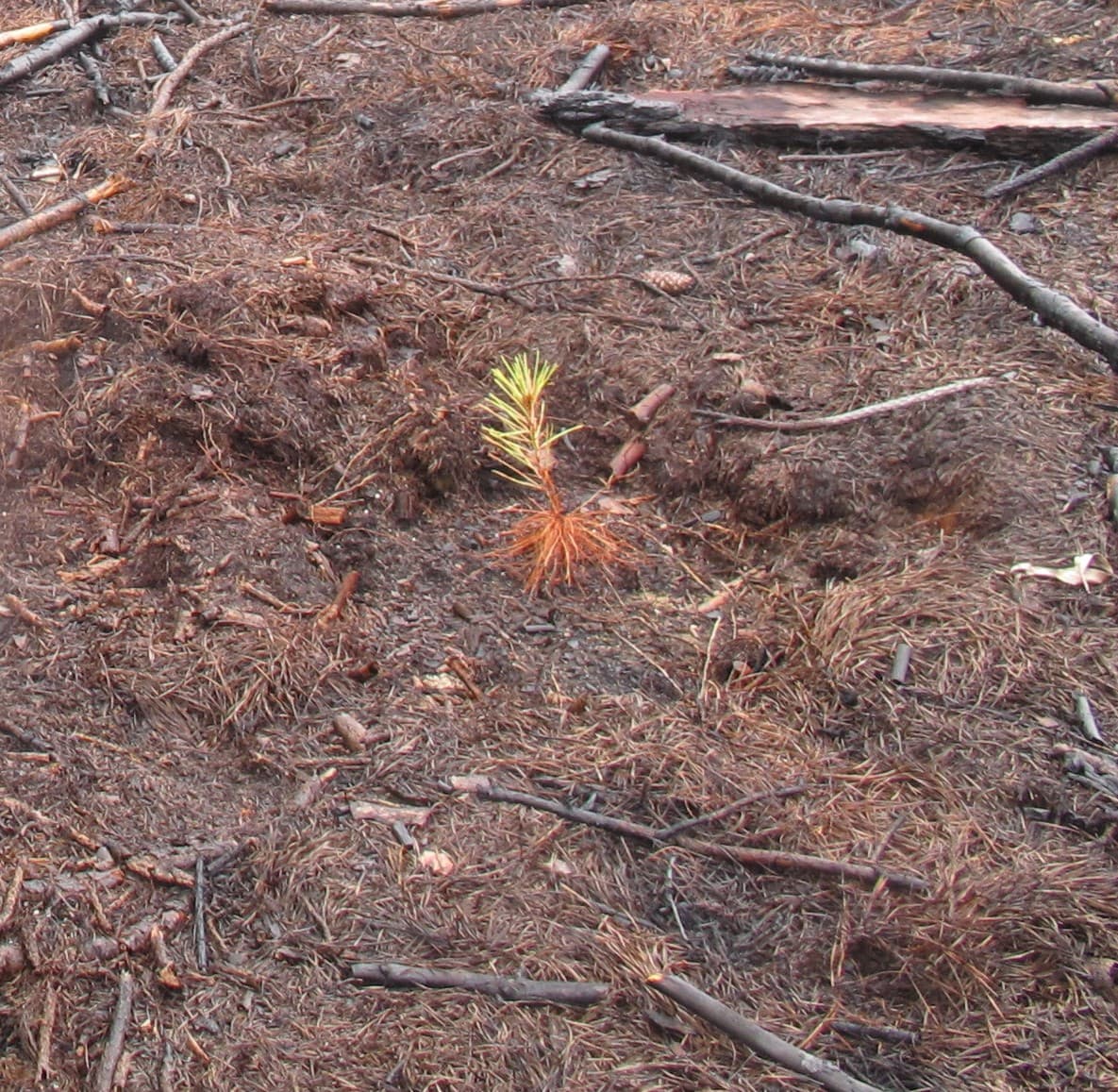
Rhizina undulata is a pathogen of Pinus species. Common symptoms associated with R. undulata are wilting and death of young trees, especially after transplanting. Tree mortality may occur within weeks or months. Symptoms of infection in mature trees will include reduced shoot growth, resin production and necrotic needles. The roots become infected and the fungus remains dormant on the roots after the plant has died. After fire events such as slash and burn, when conditions of high humidity are present, fruiting structures will be seen on roots or stumps of burnt trees. These fruiting structures are typically used to confirm the presence of R. undulata.

A Mpumalanga pine and eucalyptus plantation on rolling hills, a forester from behind measuring a trunk with a diameter tape (illustration)
01/02
Click to pause
Tree Protection Co-operative Programme
Pine fire fungus, Doughnut fungus / Rhizina undulata
Rhizina undulata Fr.
Common NamePine fire fungus, Doughnut fungus / Rhizina undulata
Scientific NameRhizina undulata Fr.
Pathogen / Pest TypeRoot rot
SynonymsHelvella inflata (Schäeffer) Rhizina inflata (Schäffer) Quélet Octospora rhizophora Hedw. Rhizina inflata var. rhizophora (Hedw.) Massee Helvella acaulis Pers. Rhizina laevigata Fr.
OriginUnknown.
Distribution in South AfricaMpumalanga, Kwa-zulu Natal and Western Cape.
Symptoms
Biology
Rhizina undulata is a soilborne pathogen that can survive for long periods of time on the roots of Pinus species. The fungus relies on fire to germinate and infects plants through the roots. Fruiting structures can be found during spring or early summer and usually require wet conditions to form.
Management
Management strategies include waiting for the fungus to go dormant before planting, not to slash and burn in a compartment that is known to have the fungus and the use of monitoring plots in sites that are known to have the pathogen.
Gallery