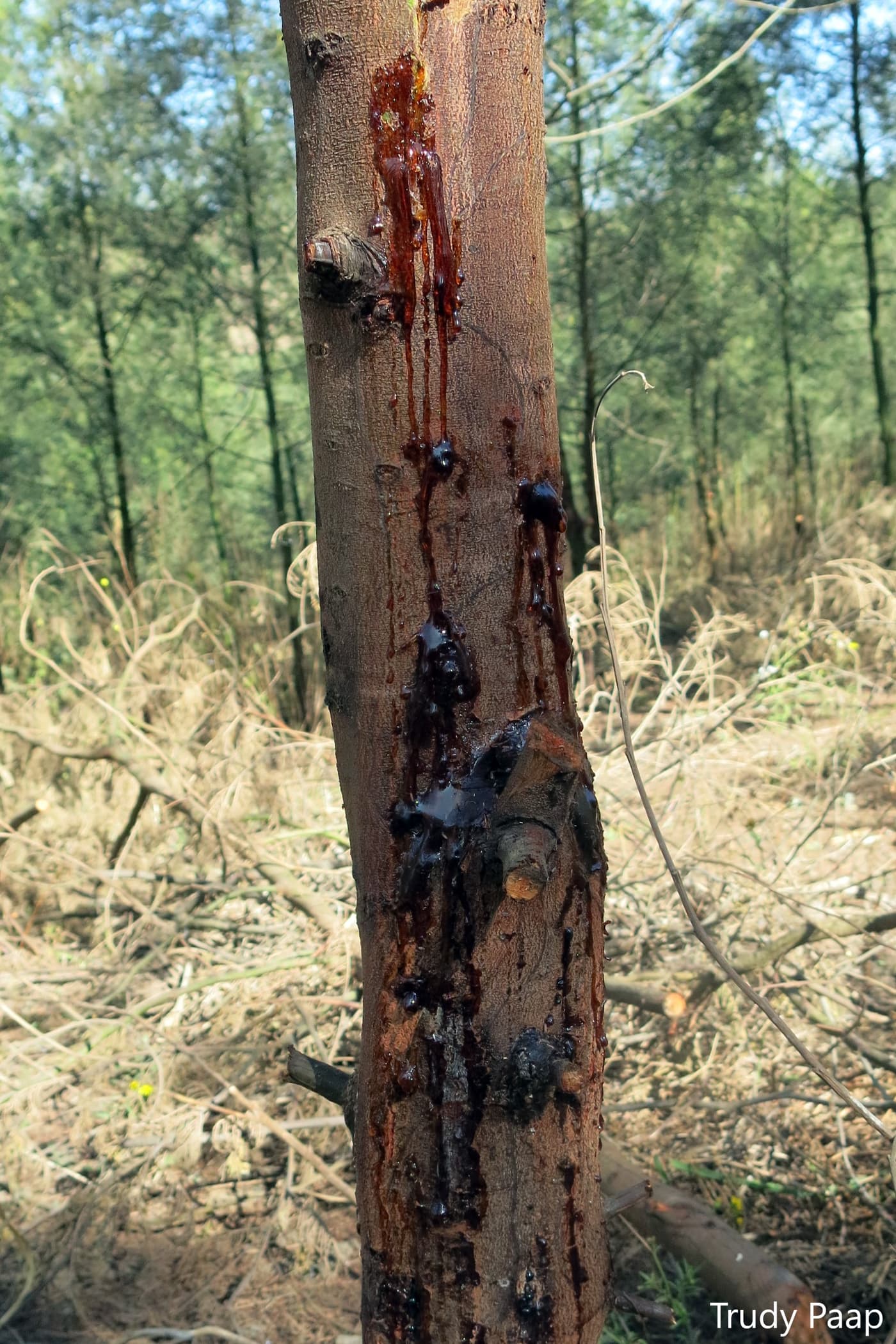
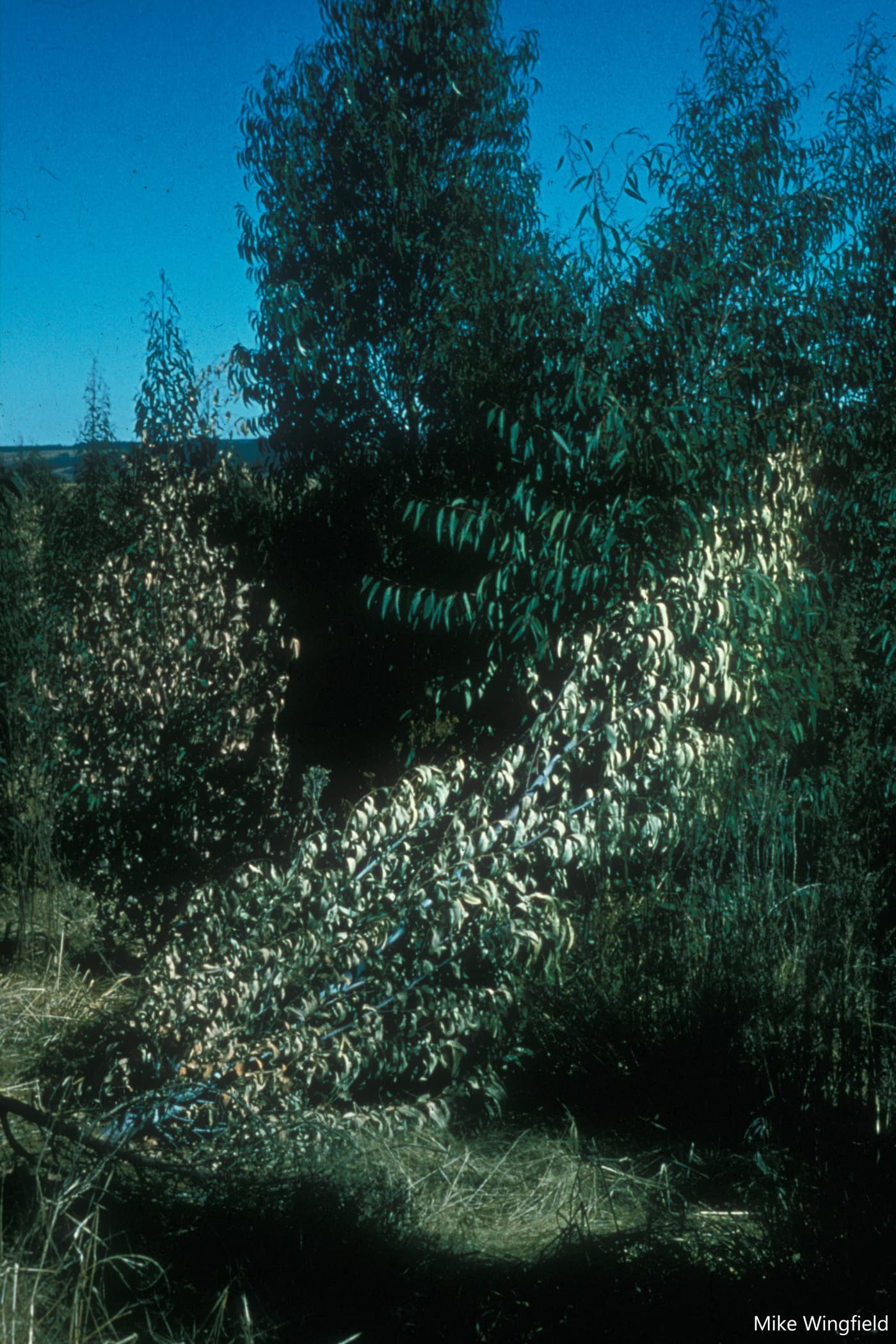
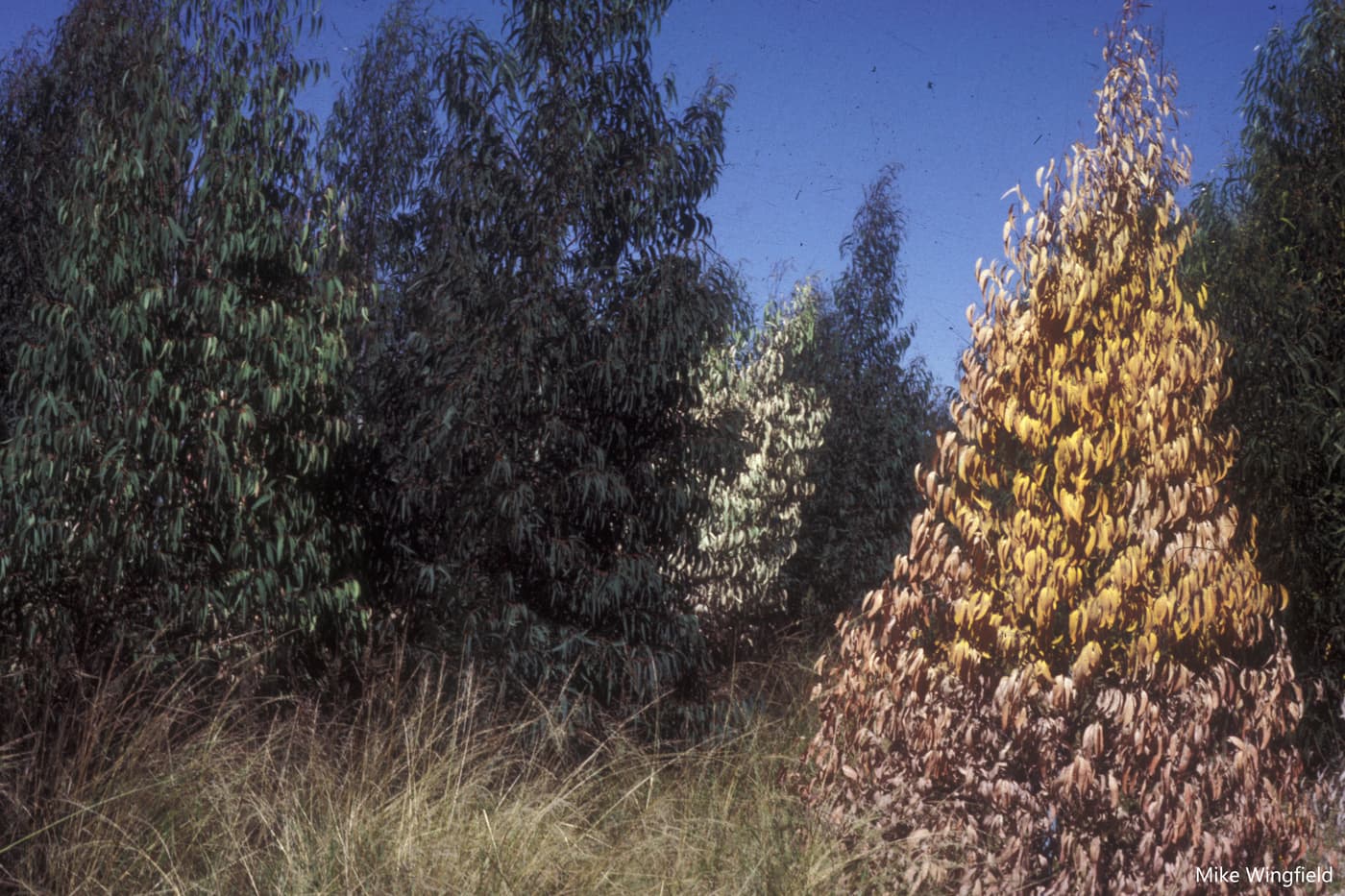
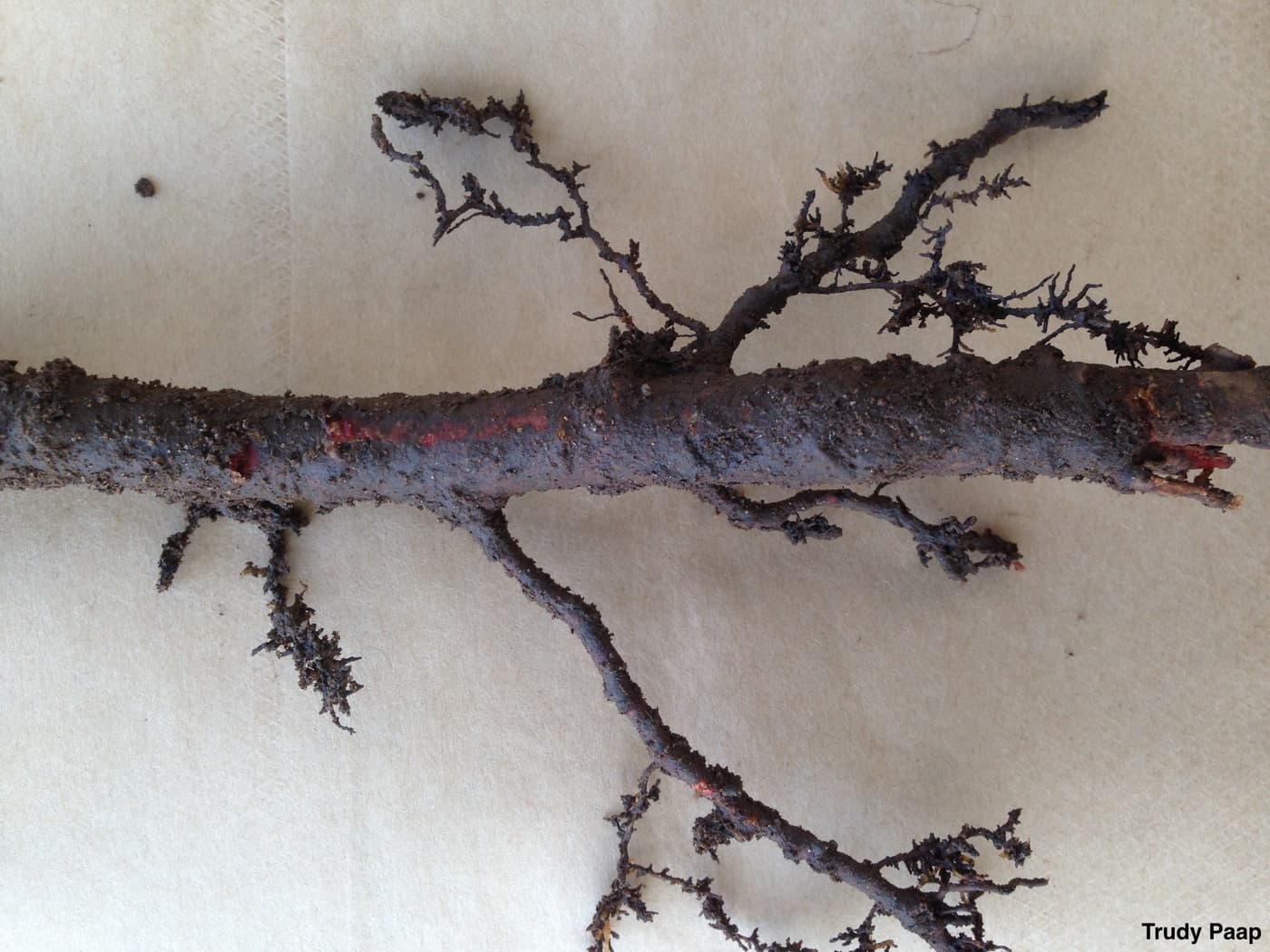
In wattle, Phytophthora causes “black butt”, also referred to as “gummosis” and mottling cankers, affecting trees of all ages.
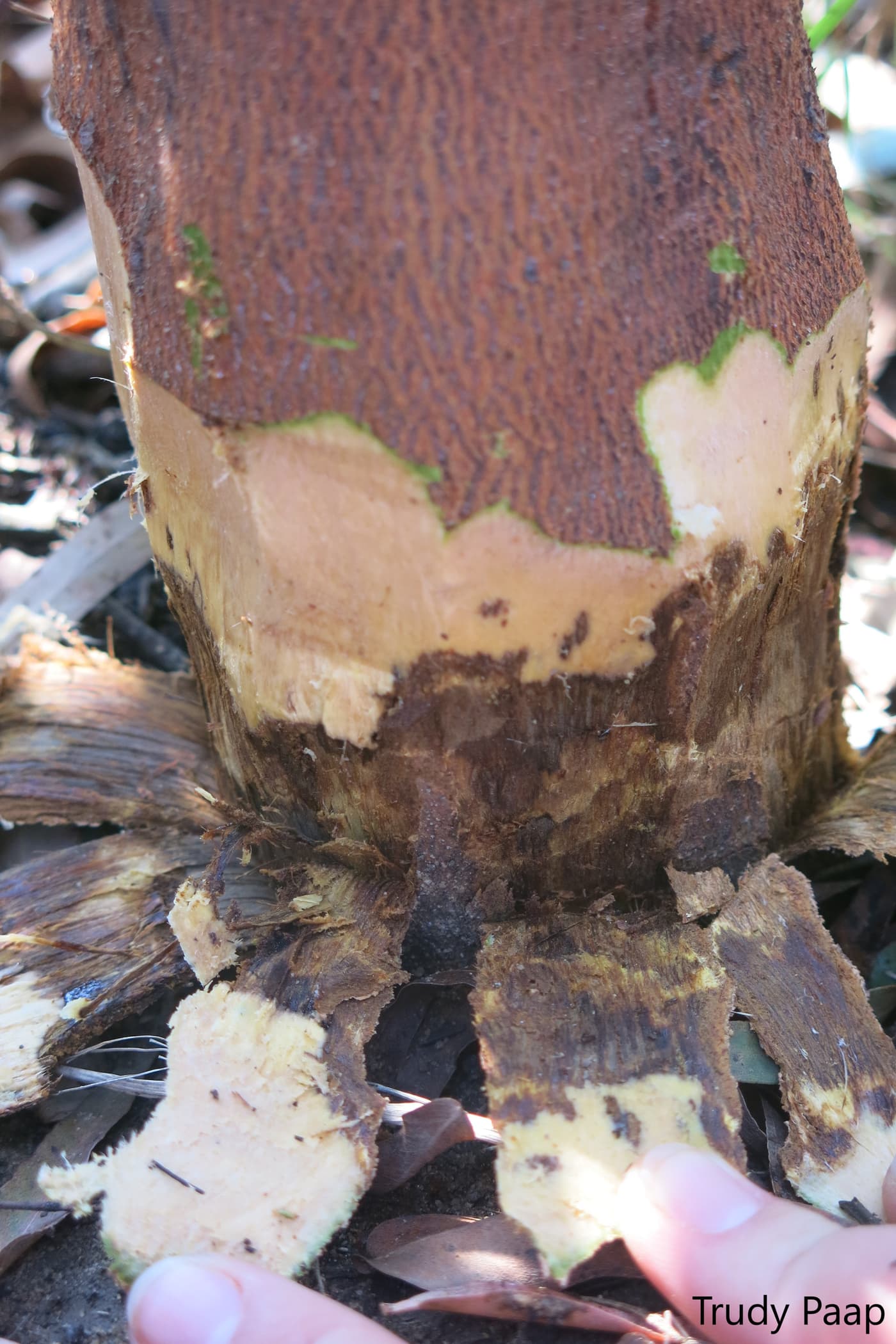
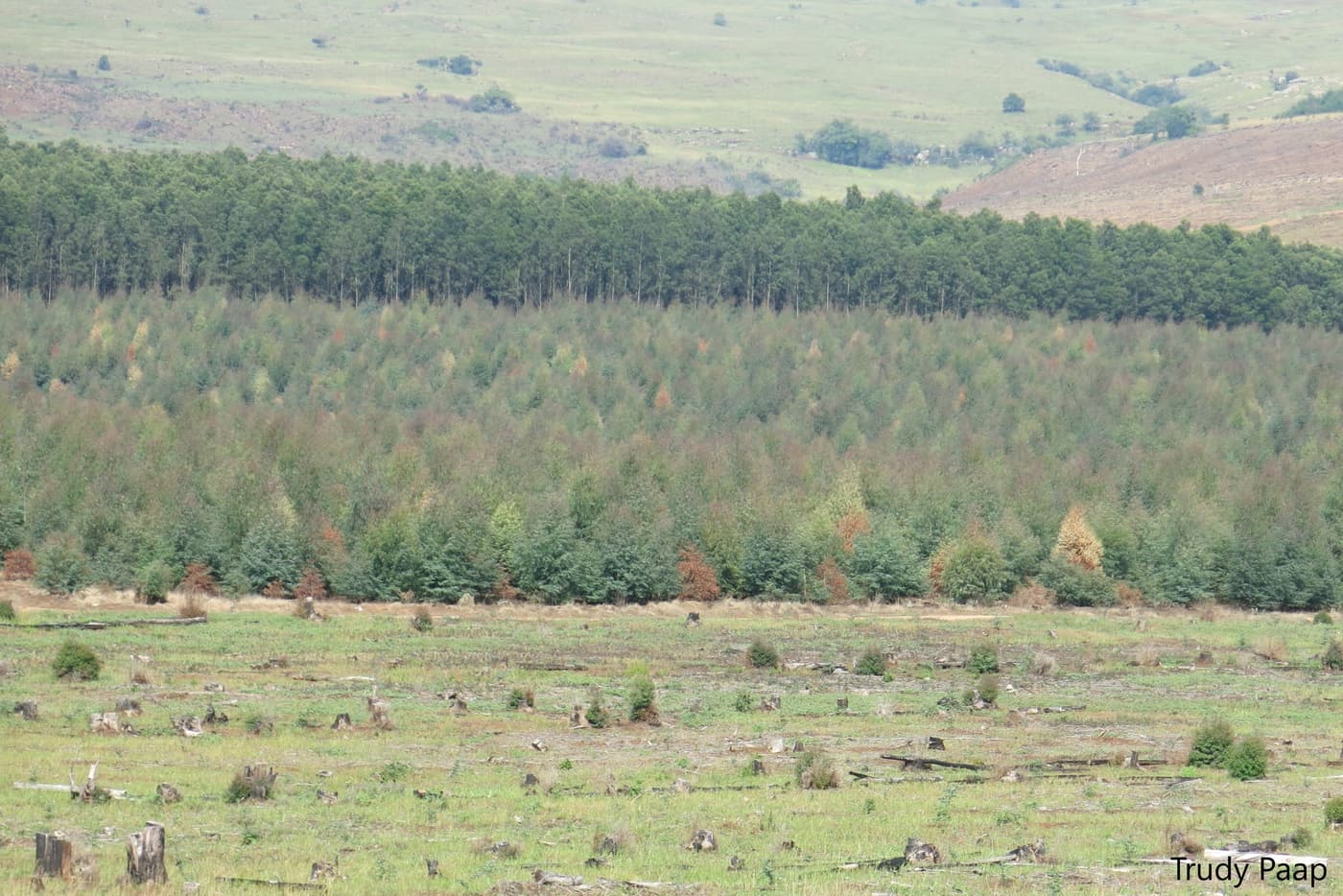
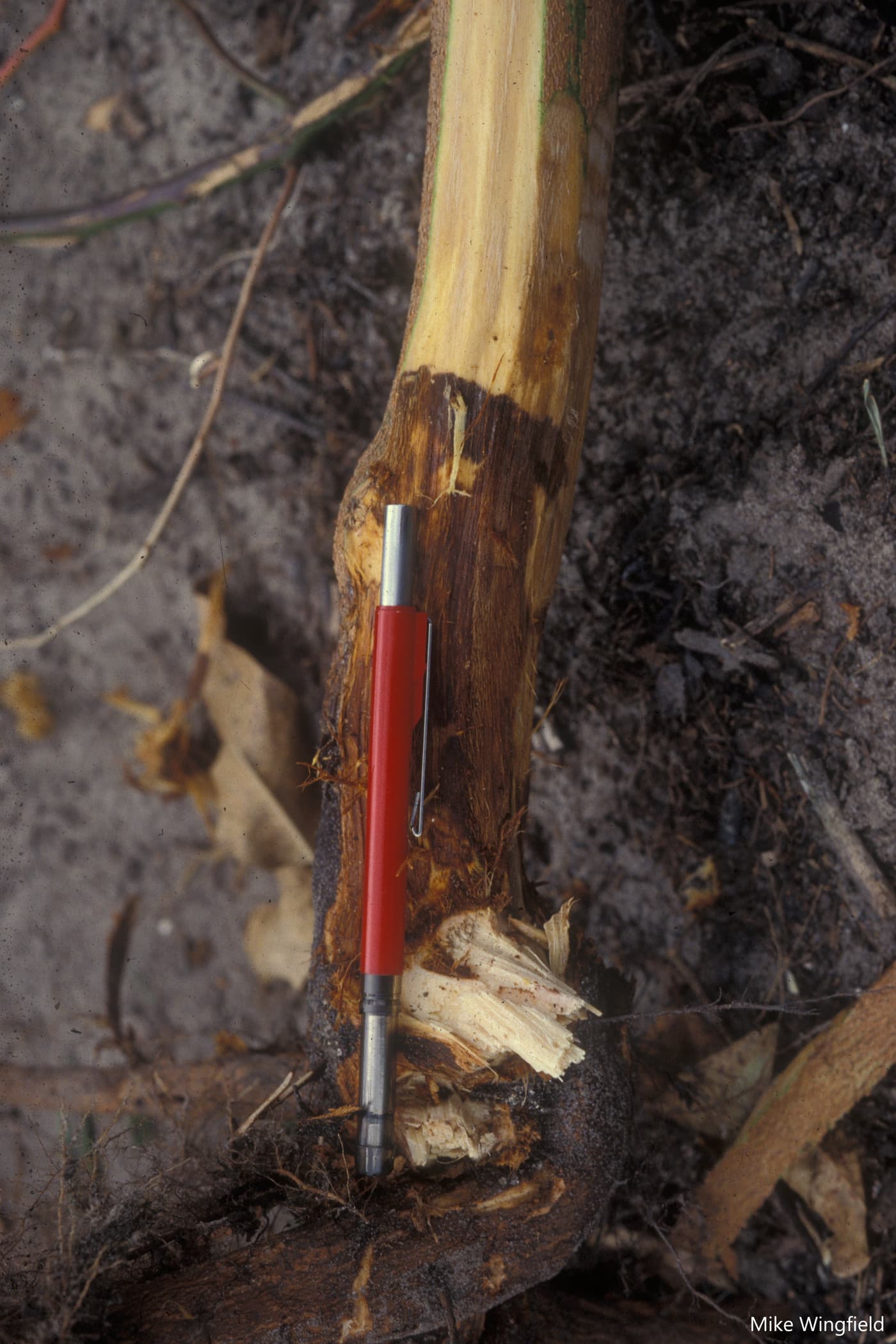
Symptoms in Eucalyptus spp. include basal cankers, root and collar rot.

Phytophthora spp.
In wattle, Phytophthora causes “black butt”, also referred to as “gummosis” and mottling cankers, affecting trees of all ages.
Symptoms in Eucalyptus spp. include basal cankers, root and collar rot.
The species of Phytophthora causing disease in South African forestry are soil borne pathogens. They are well adapted to diverse plant hosts and environments, and produce several types of structures that are specialised for survival, dispersal or infection. They persist in soil and plant tissue for extended periods of time, by the formation of thick-walled resting spores including oospores (sexual spores) and chlamydospores (asexual spores). Infection requires moist conditions. In the presence of water, resting spores germinate to form sporangiophores, which bear sporangia. These release short-lived, motile zoospores. When these arrive on a suitable site (root or collar), they encyst and infect the plant cells via hyphae. Once the plant is infected, more chlamydospores, oospores, and/or sporangia are produced, thus completing the life cycle. Under water-logging conditions, rapid girdling of collars can occur. Symptoms, however, are often only observed following hot, dry periods when trees suddenly wilt as a result of reduced water uptake capacity.