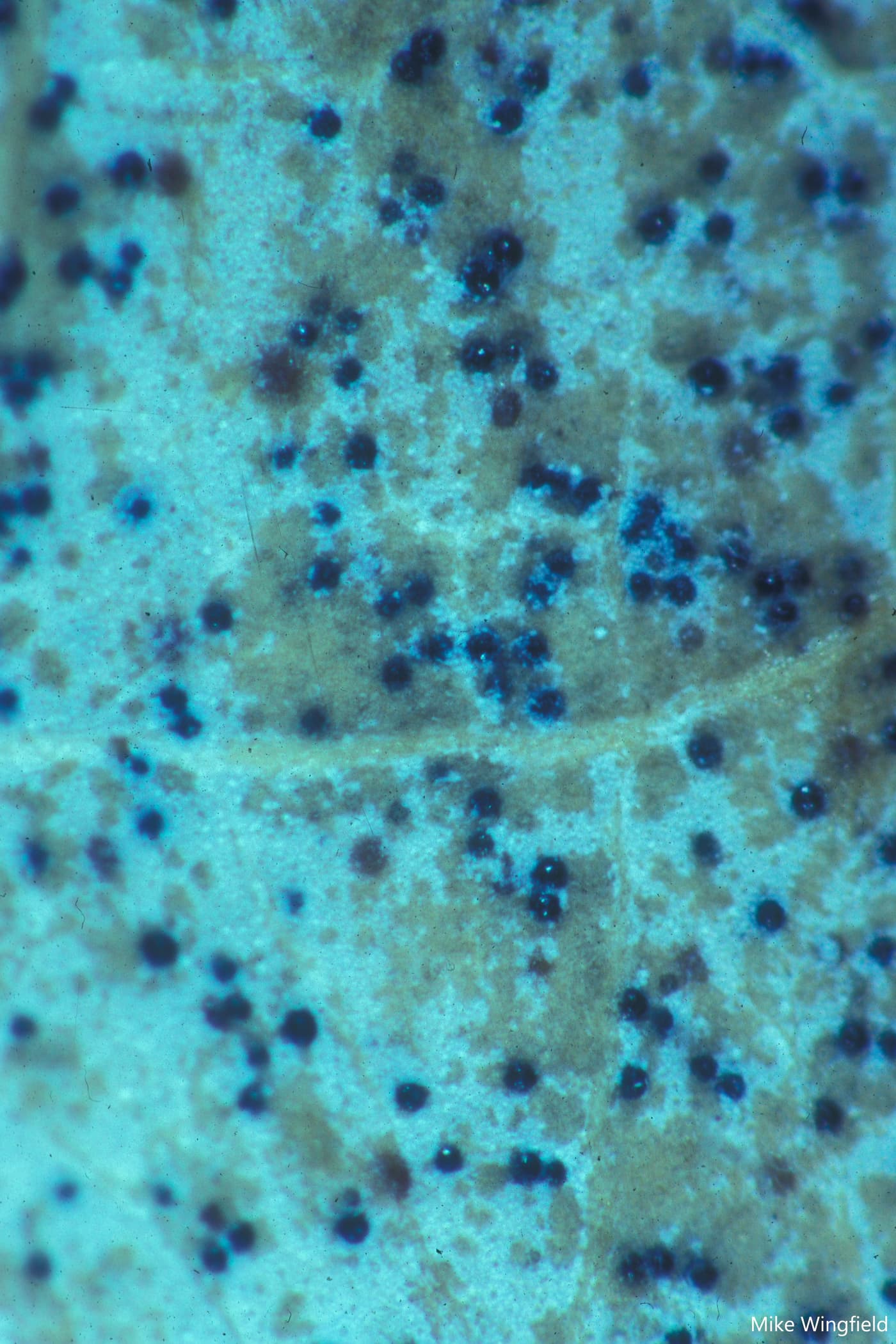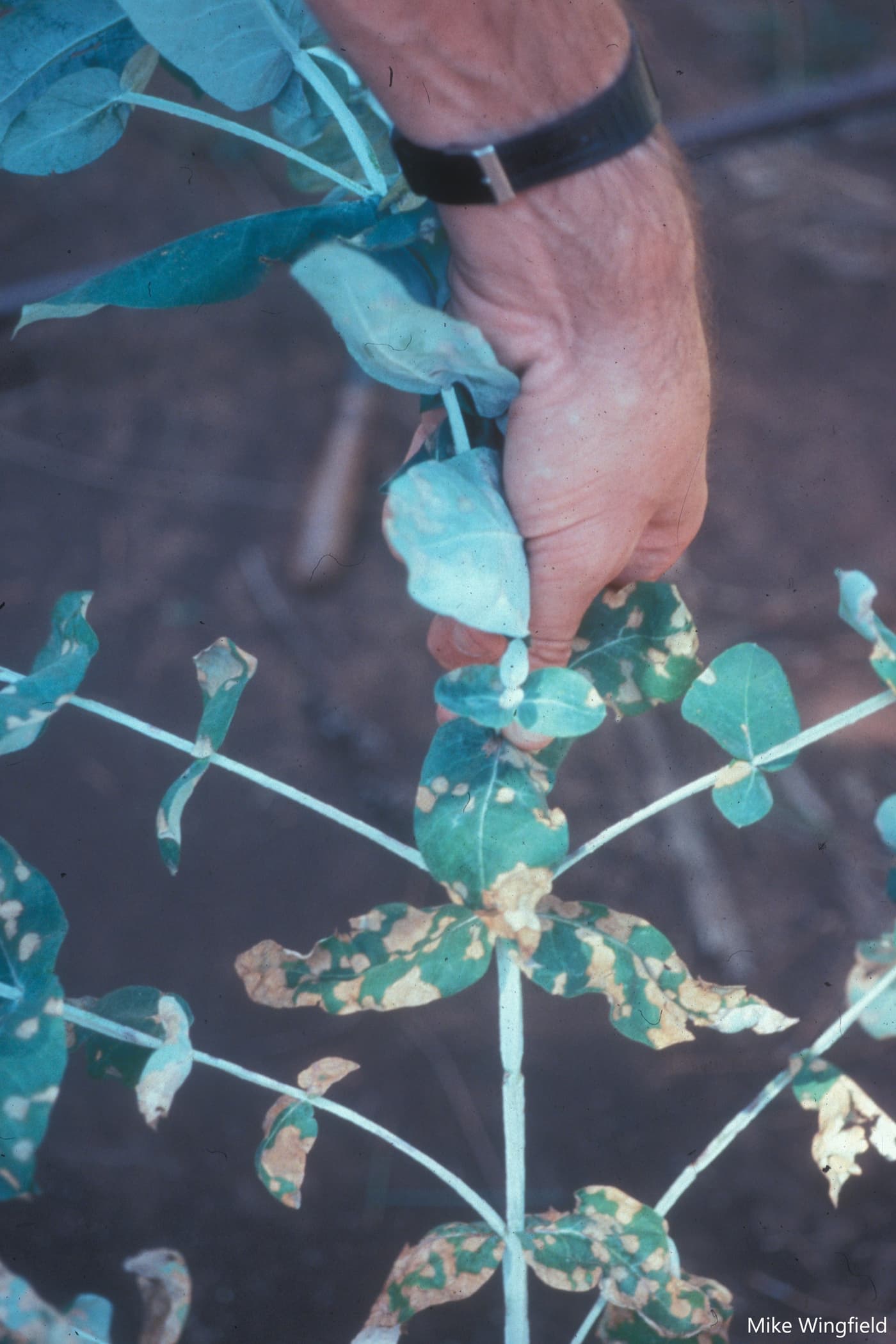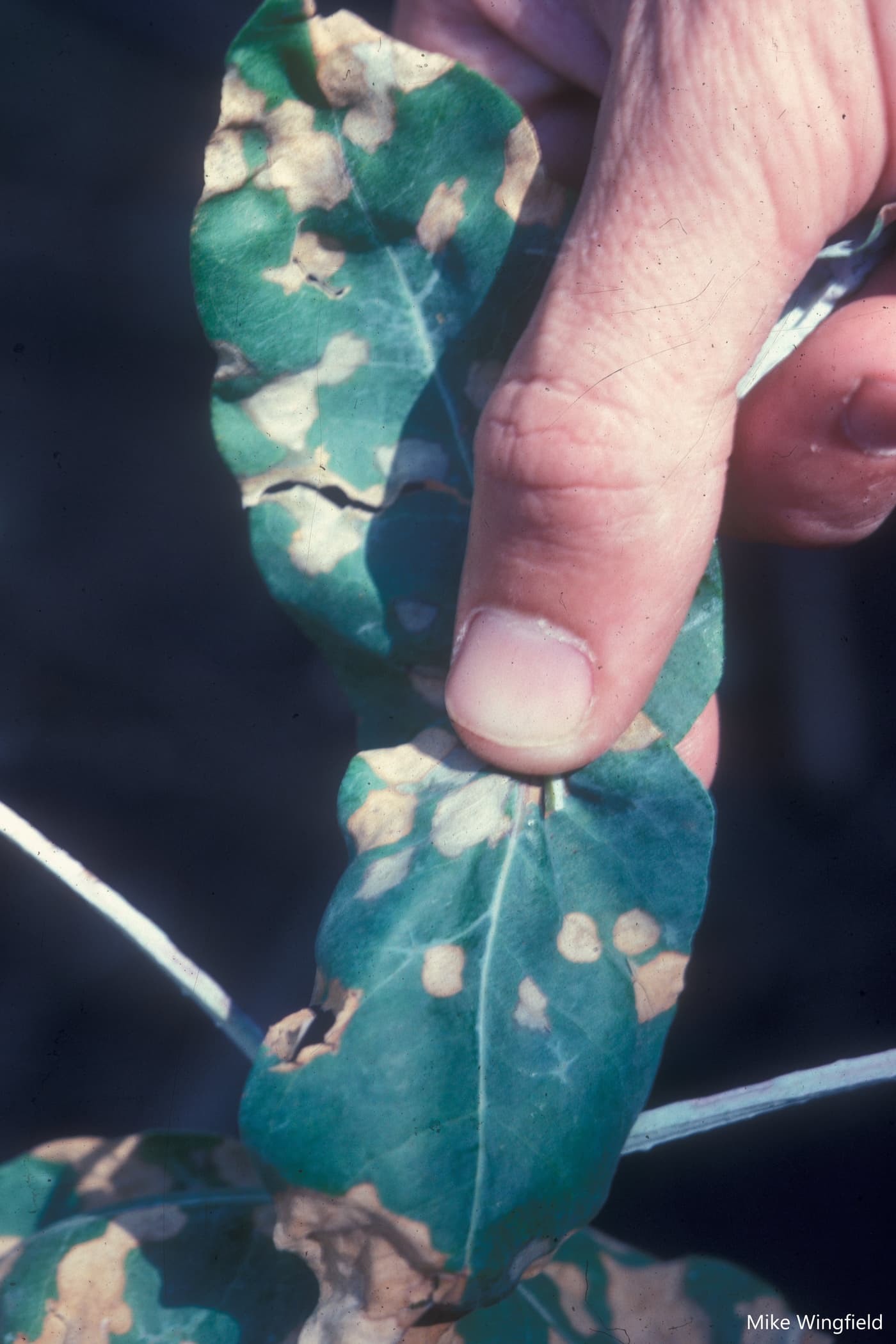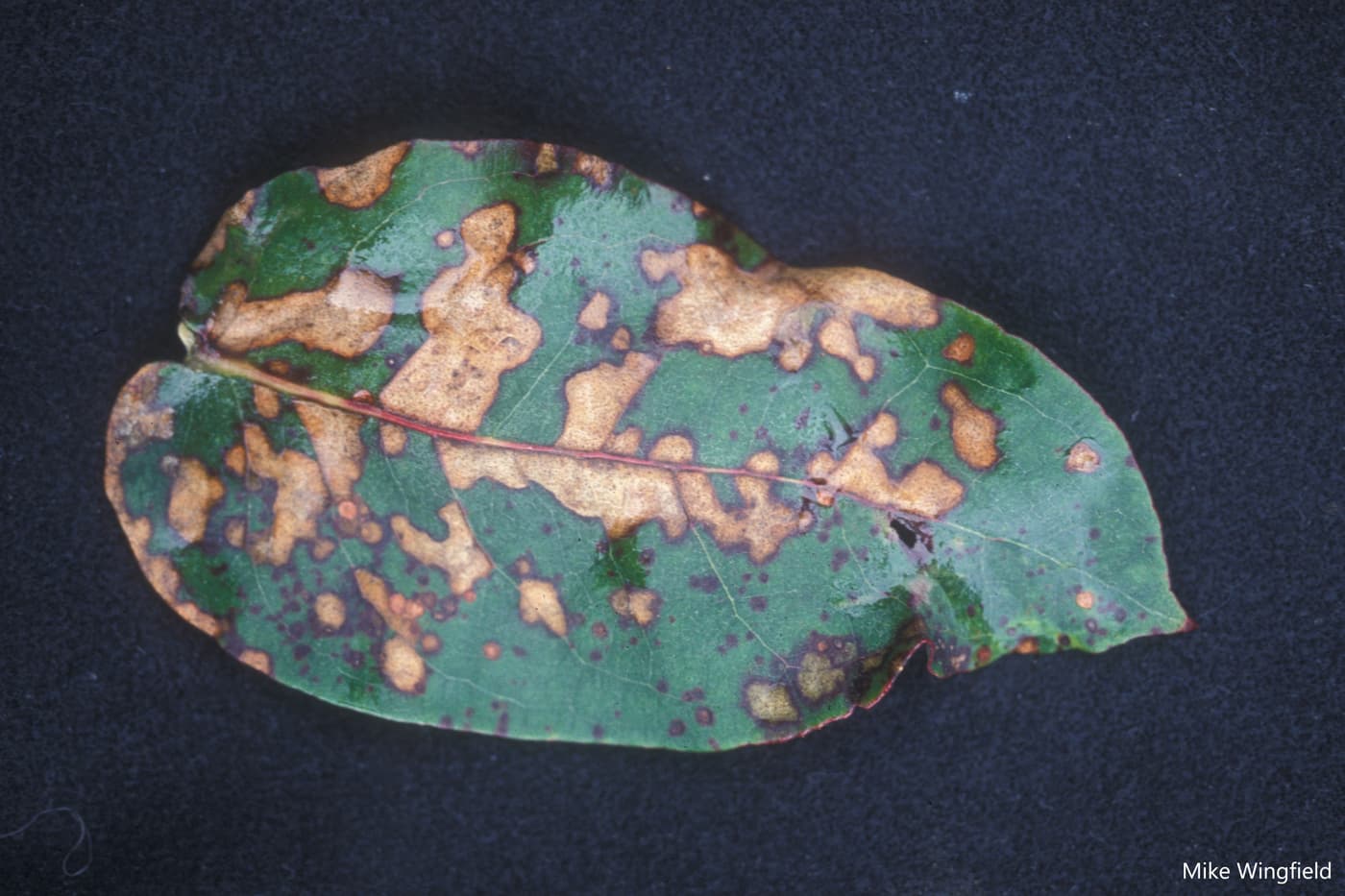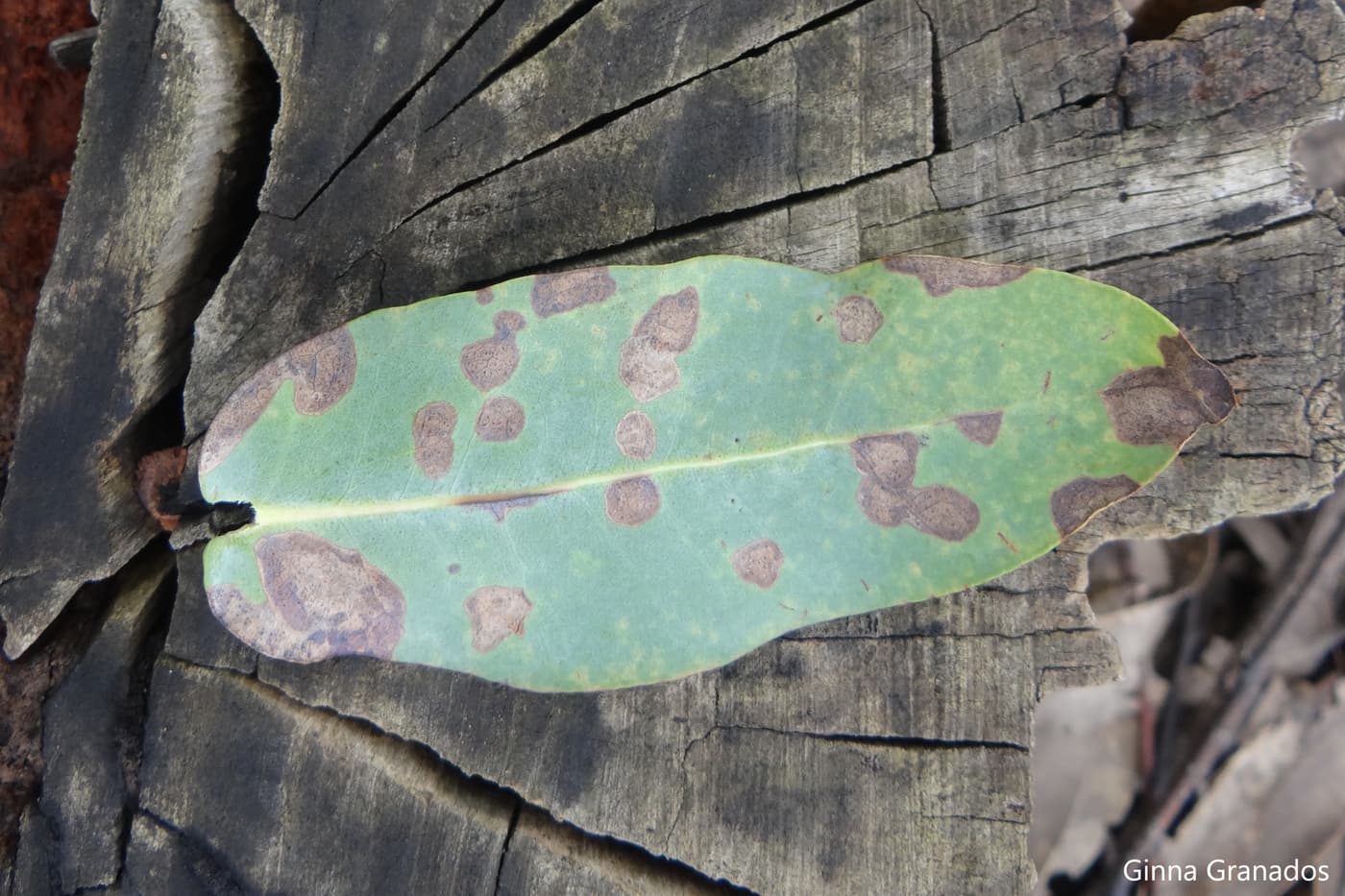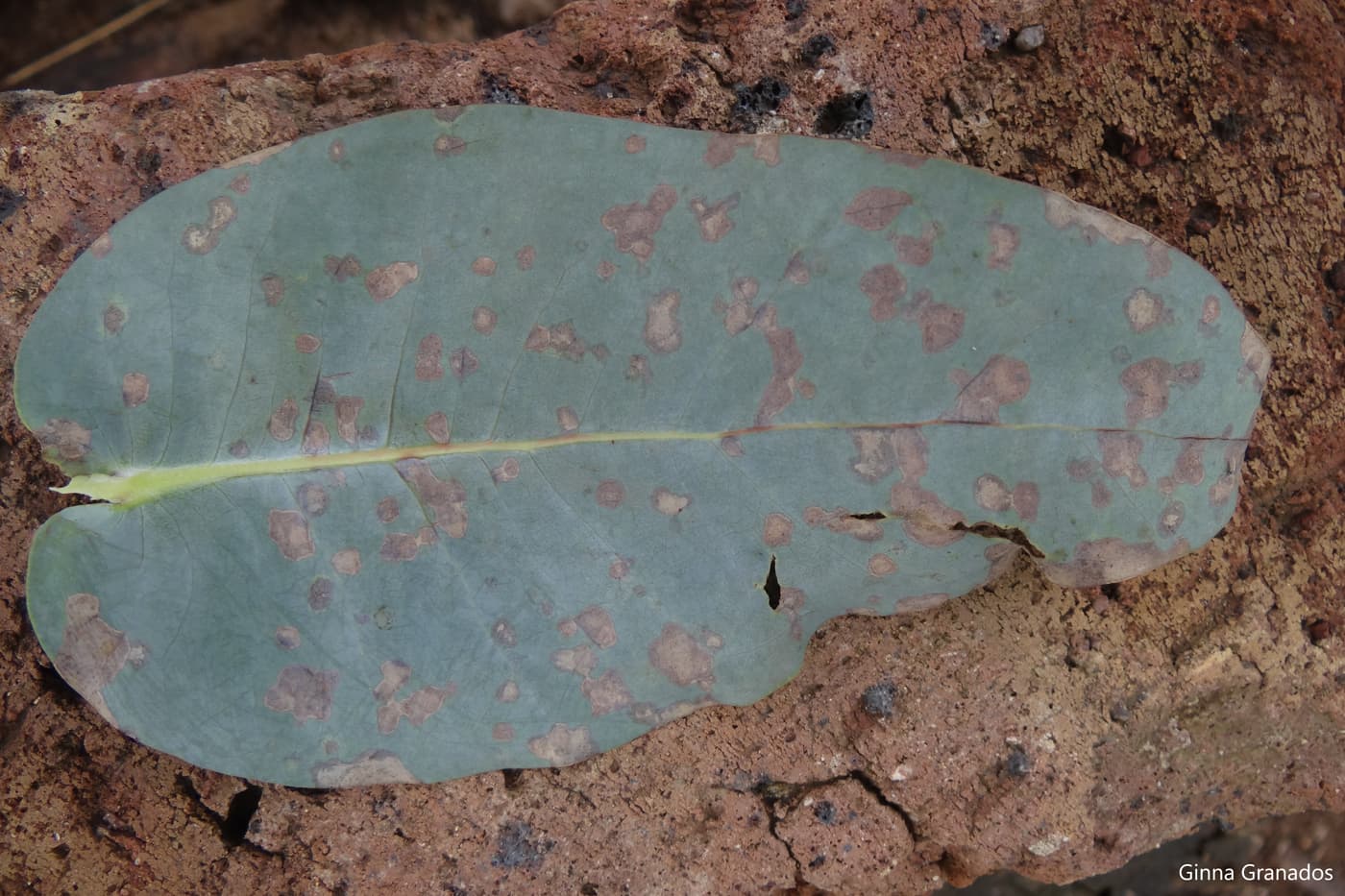
Leaf spots predominantly occur on young leaves, but are also found on mature leaves. They occur on both surfaces of the leaves, varying in size from pin spots or flecks to small, round or irregular spots, up to 15 mm diam. These spots coalesce to form larger blotches over the leaf surface up to 3 cm diam on older leaves. Initial lesions appear as pale-green spots surrounded by purple margins and, once mature, generally yellow to pale brown with dark-brown raised borders (Crous & Wingfield 1996; Hunter et al. 2009).

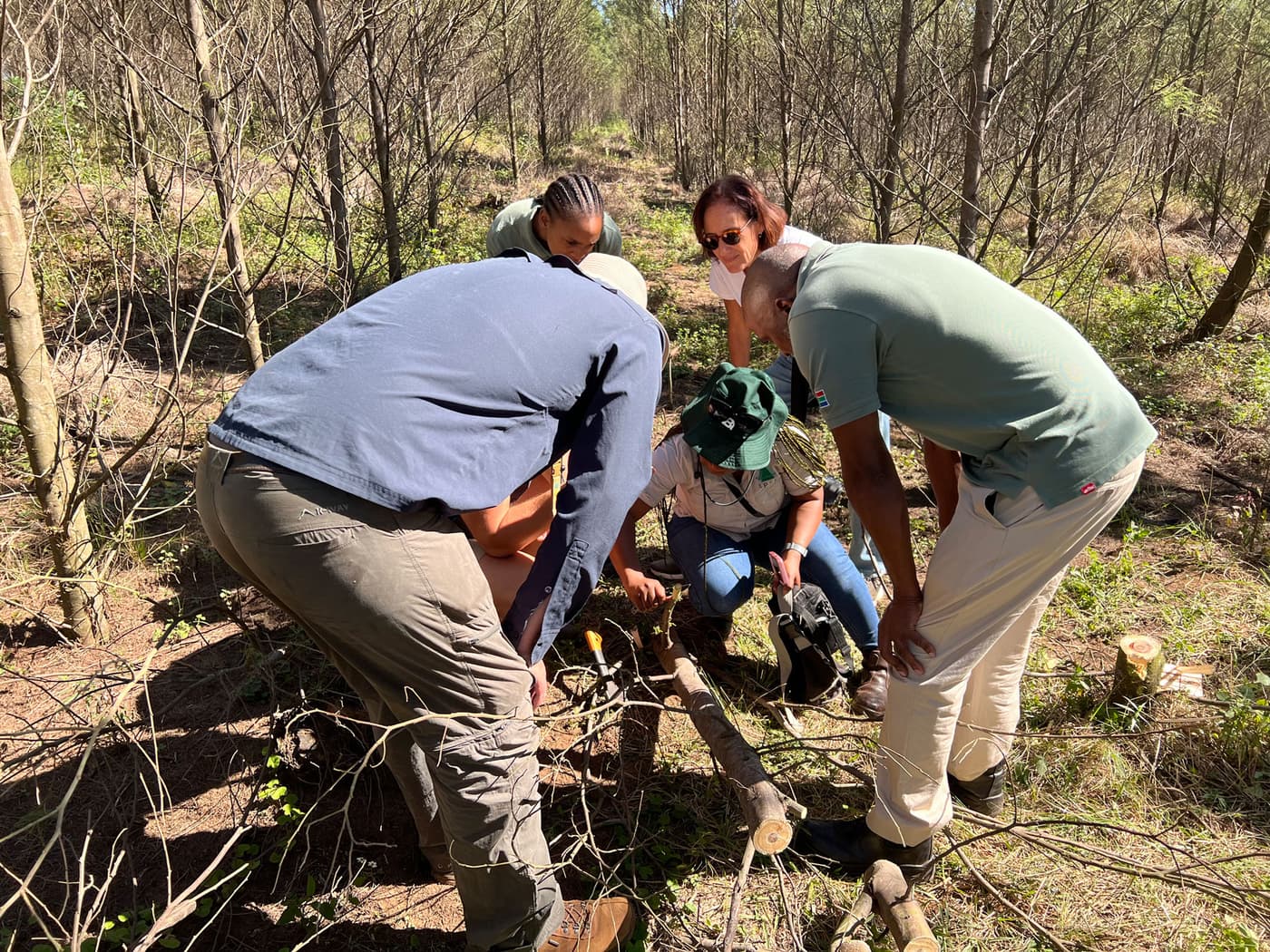
A Mpumalanga pine and eucalyptus plantation on rolling hills, a forester from behind measuring a trunk with a diameter tape (illustration)
01/02
Click to pause
Tree Protection Co-operative Programme
Teratosphearia Leaf Blight / Teratosphearia nubilosa
Teratosphaeria nubilosa (Cooke) Crous & U. Braun
Common NameTeratosphearia Leaf Blight / Teratosphearia nubilosa
Scientific NameTeratosphaeria nubilosa (Cooke) Crous & U. Braun
Pathogen / Pest TypeLeaf spots
SynonymsSphaerella nubilosa Cooke (1891); Mycosphaerella nubilosa (Cooke) Hansf. (1956); Mycosphaerella juvenis Crous & M.J. Wingf. (1996)
OriginNew South Wales, Eastern Australia (Hunter et al. 2009)
Distribution in South AfricaEastern Cape, Gauteng, KwaZulu-Natal, Limpopo, Mpumalanga, Western Cape
Symptoms
Biology
Disease cycle: The disease typically completes several generations during an epidemic cycle. Both ascospores and conidia can initiate disease on leaves. Ascospores, however, act as the primary source of inoculum for the majority, whereas some infect primarily by means of conidia (Park 1988b).
Infection mechanism: Ascospores start to germinate a few hours after landing on leaf surface. A germ tube penetrates through stomata, producing hyphal swellings within the stomatal pores. The germ tube expands along the vascular bundles, grows between cells throughout the spongy mesophyll, colonizes the leaf surface tissue causing chlorosis, and eventually aggregates in the substomatal cavities (Park & Keane 1982). The infection predominantly occurs during the vegetative period of the host during the summer and autumn months. Young leaves are particularly susceptible and mature leaves become more resistant due to the deposition of resistant compounds (Park 1988a).
Favourable conditions: The ability of T. nubilosa to infect Eucalyptus leaves is dependent on the level of moisture in the environment, which also affects the rate of the ascospore discharge. The longer leaves are exposed to wetness, the higher the severity of the disease (Park 1988b). Rainfall is the main stimulus for the release of ascospores from mature ascomata (Park 1988b). Optimal infection occurs between 5 to 7 days of wetness at 15–20˚C (Park 1988a; Park & Keane 1982). Ascospores can be ejected up to a distance of 12–15 mm above the ascomata, which allows the spores to be dispersed by wind (Park & Keane 1982).
Gallery