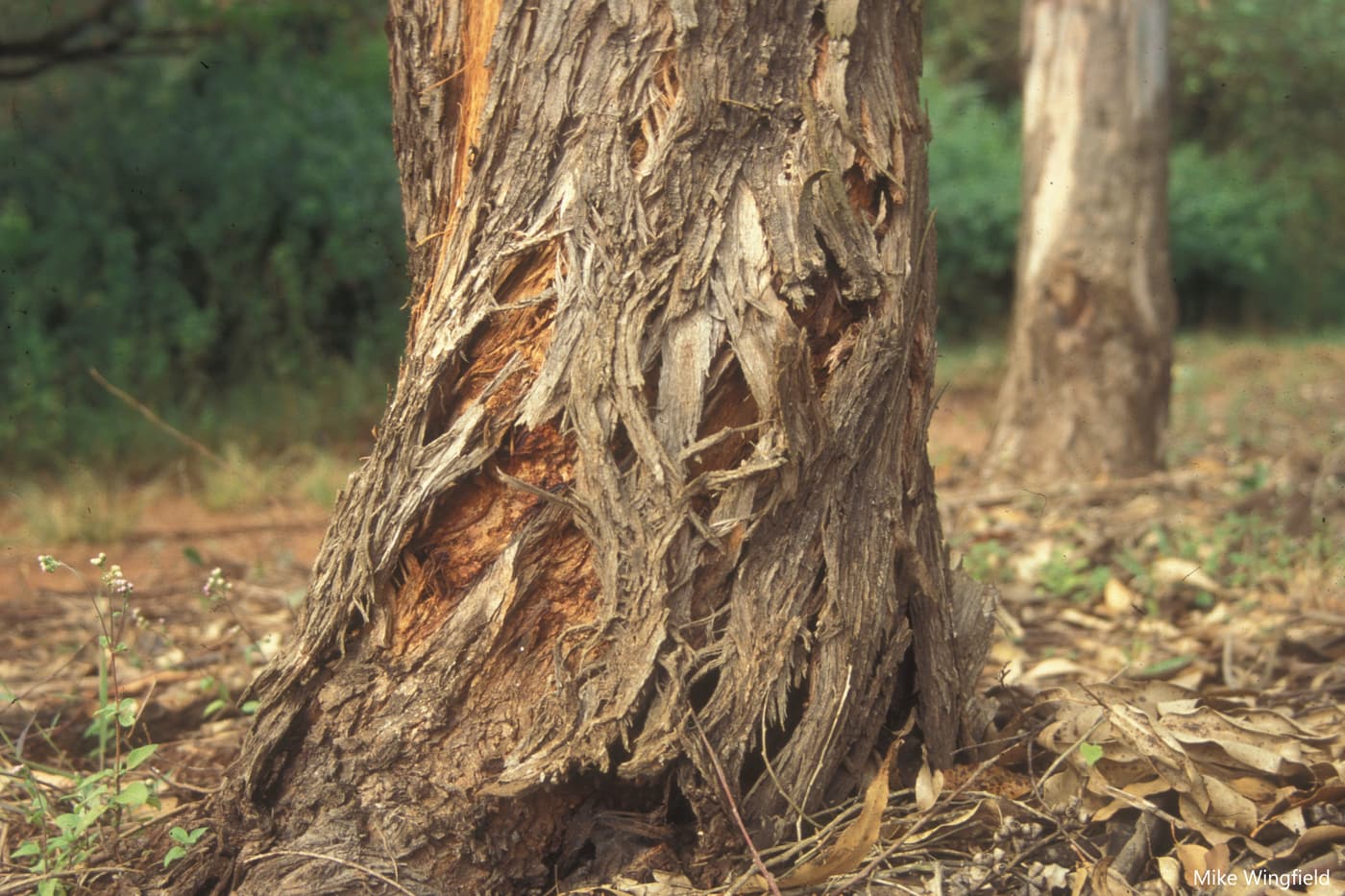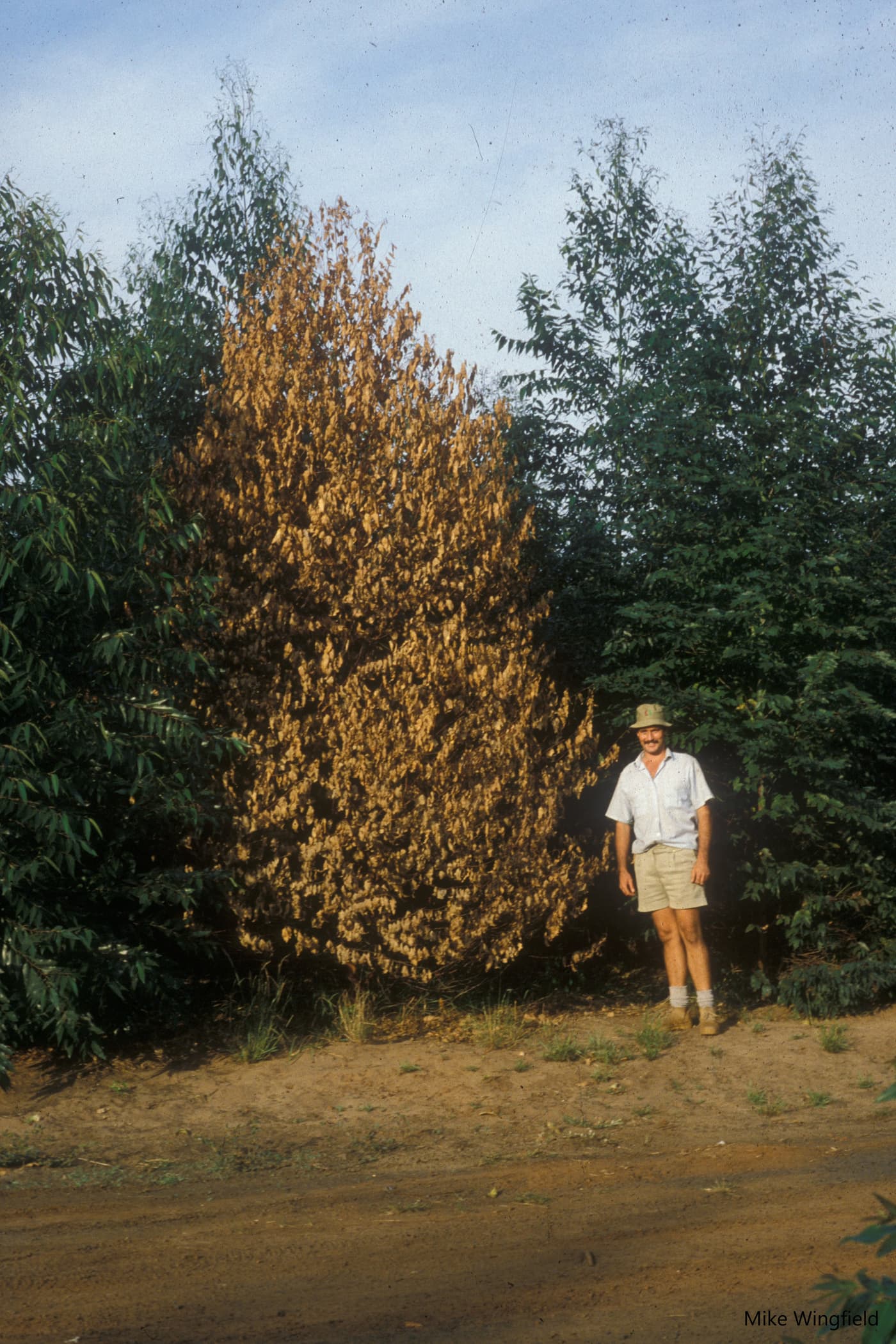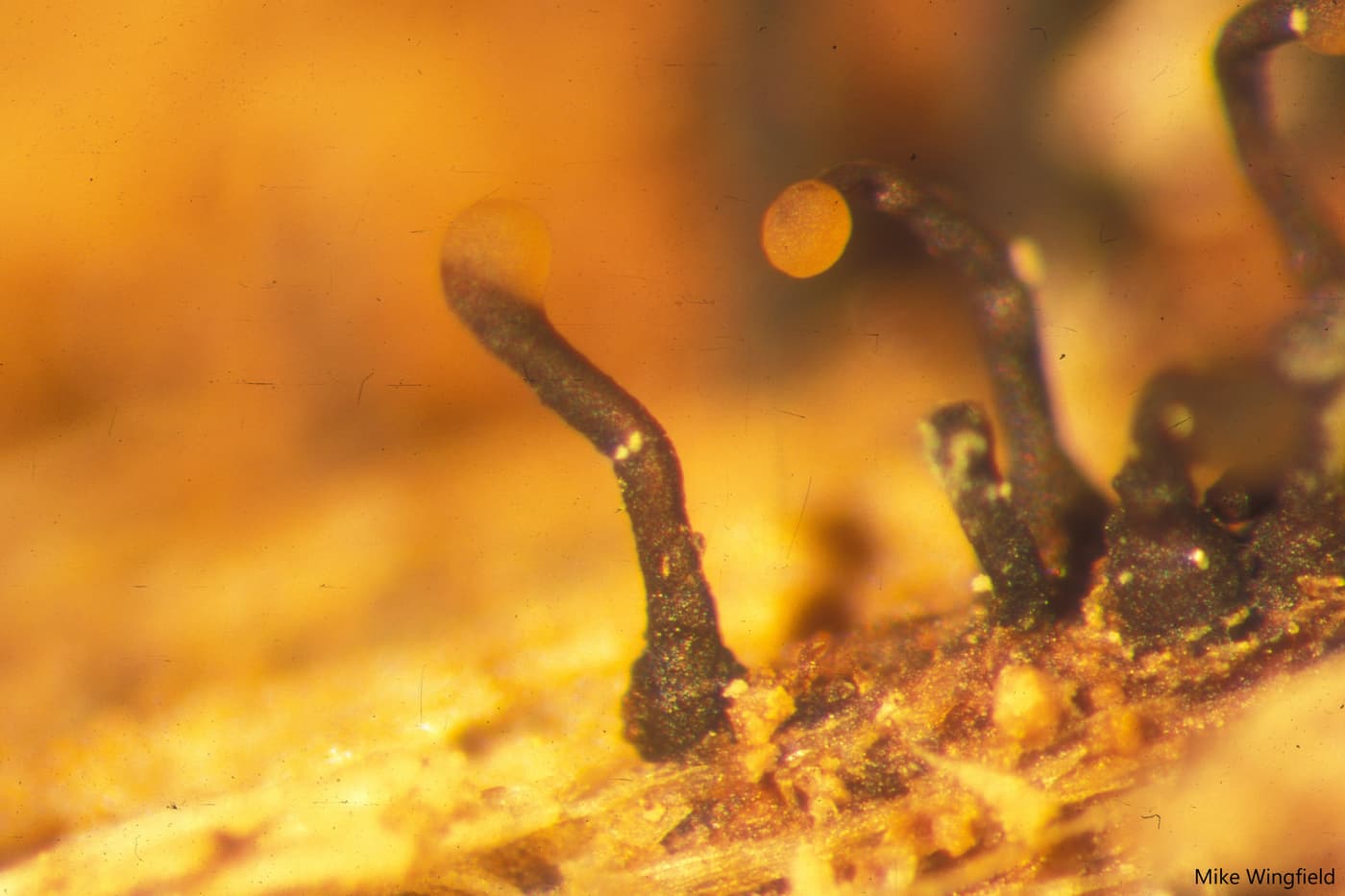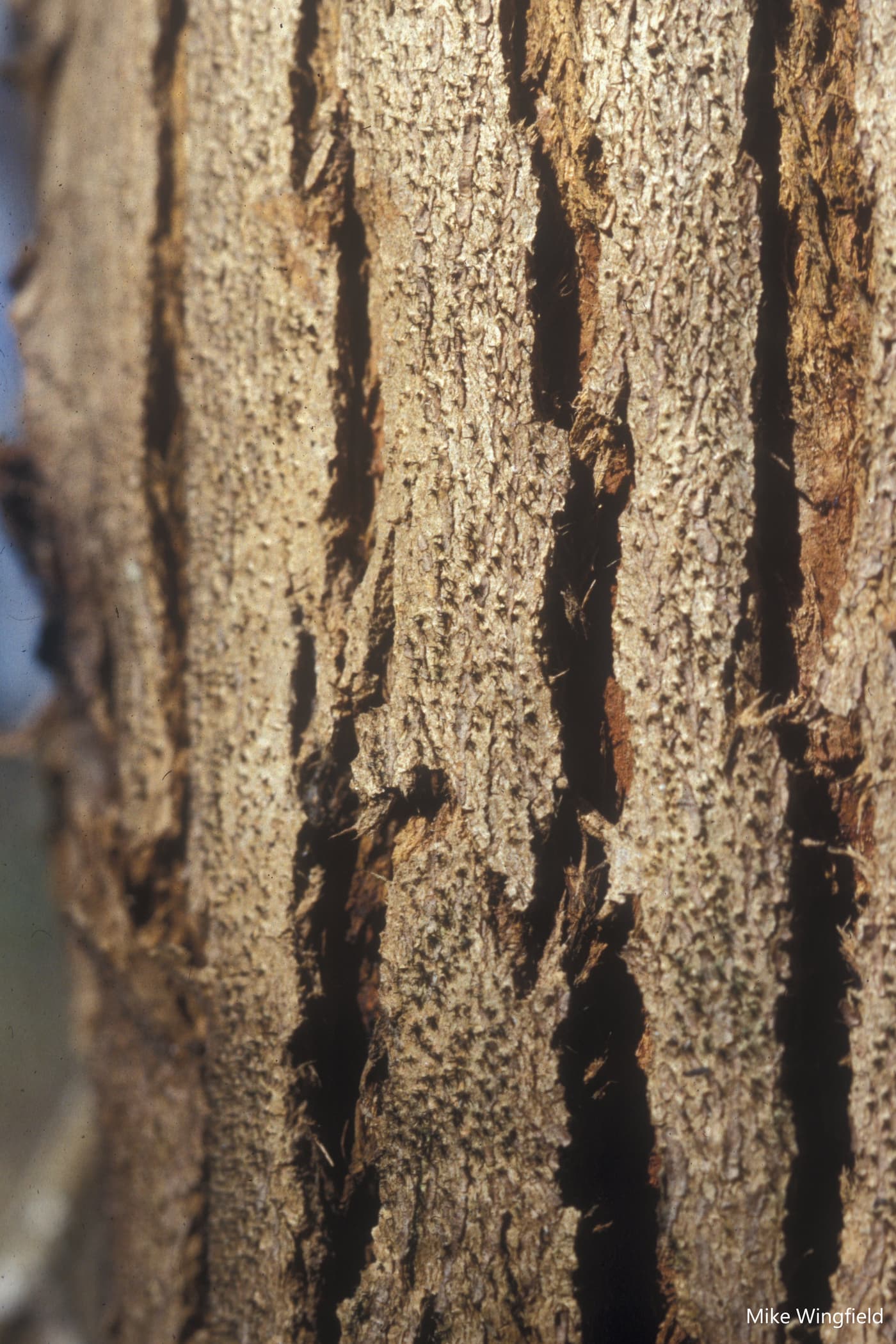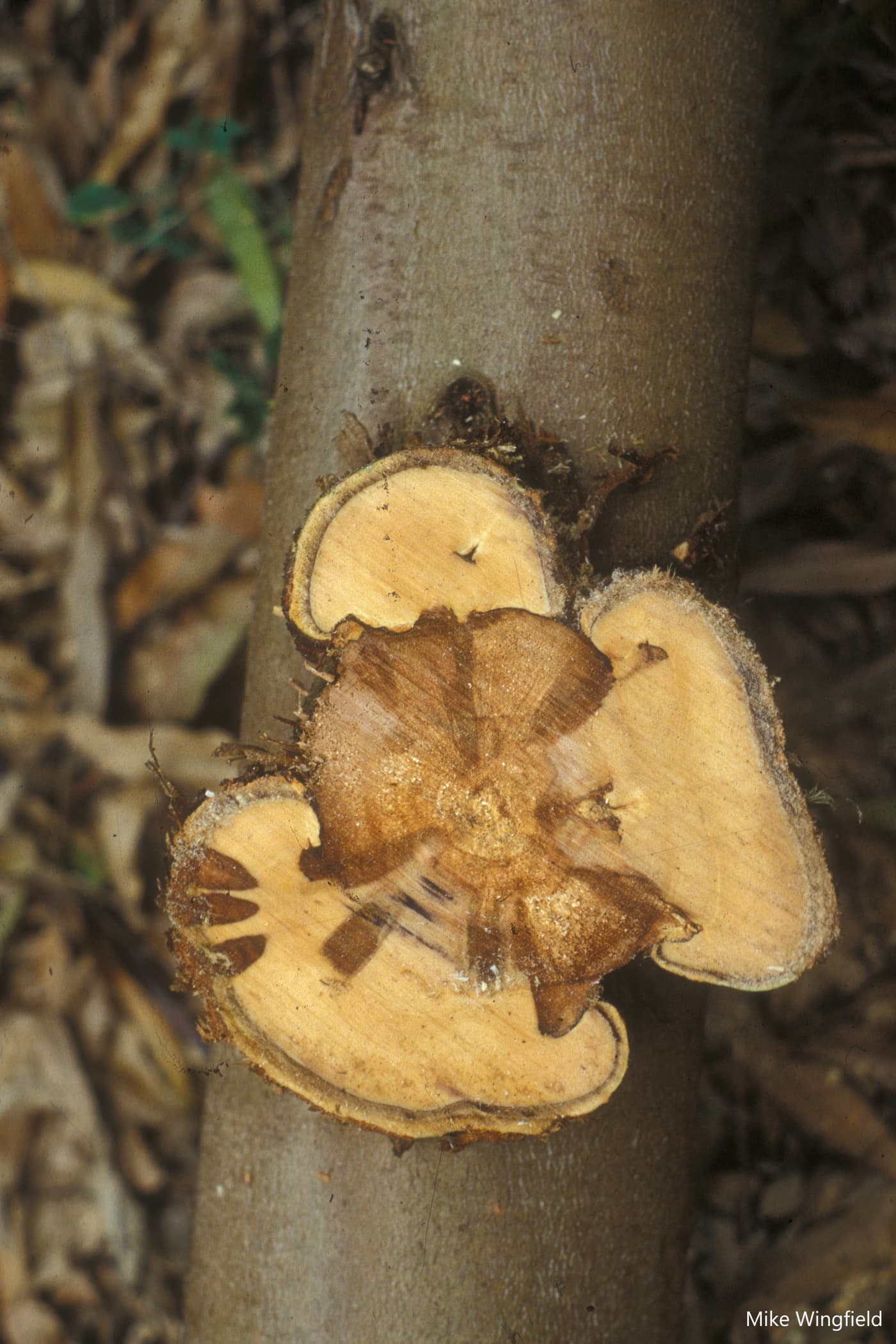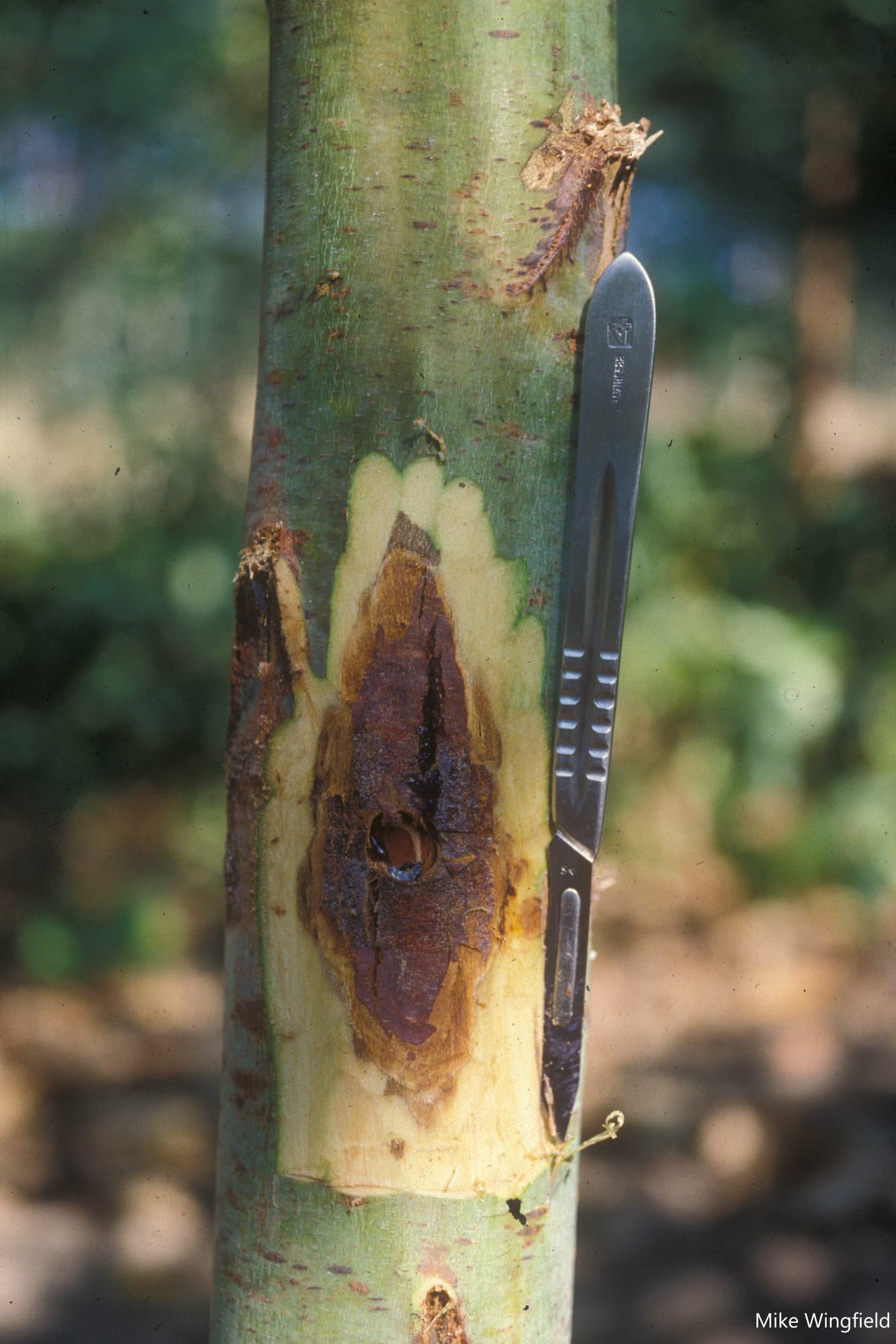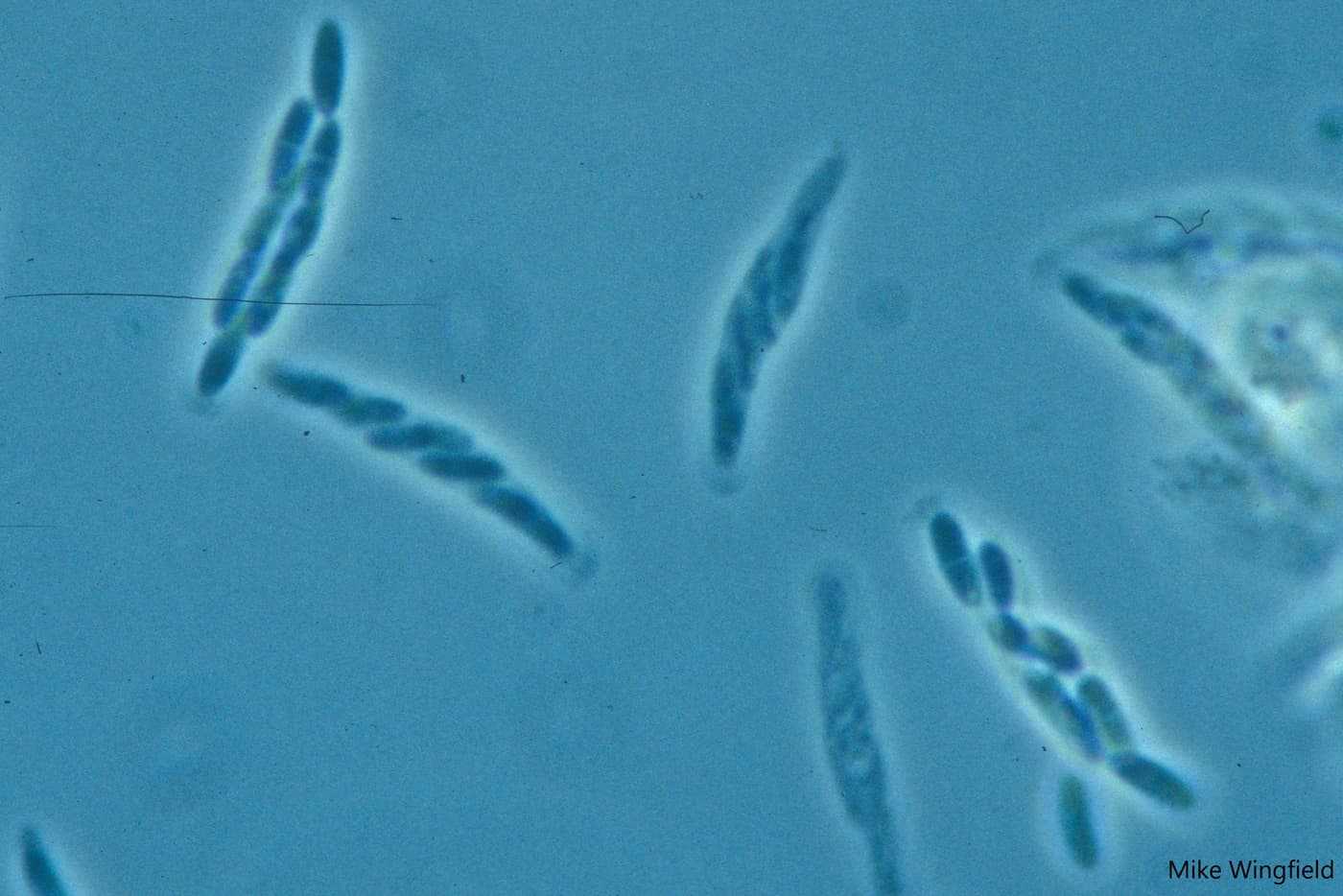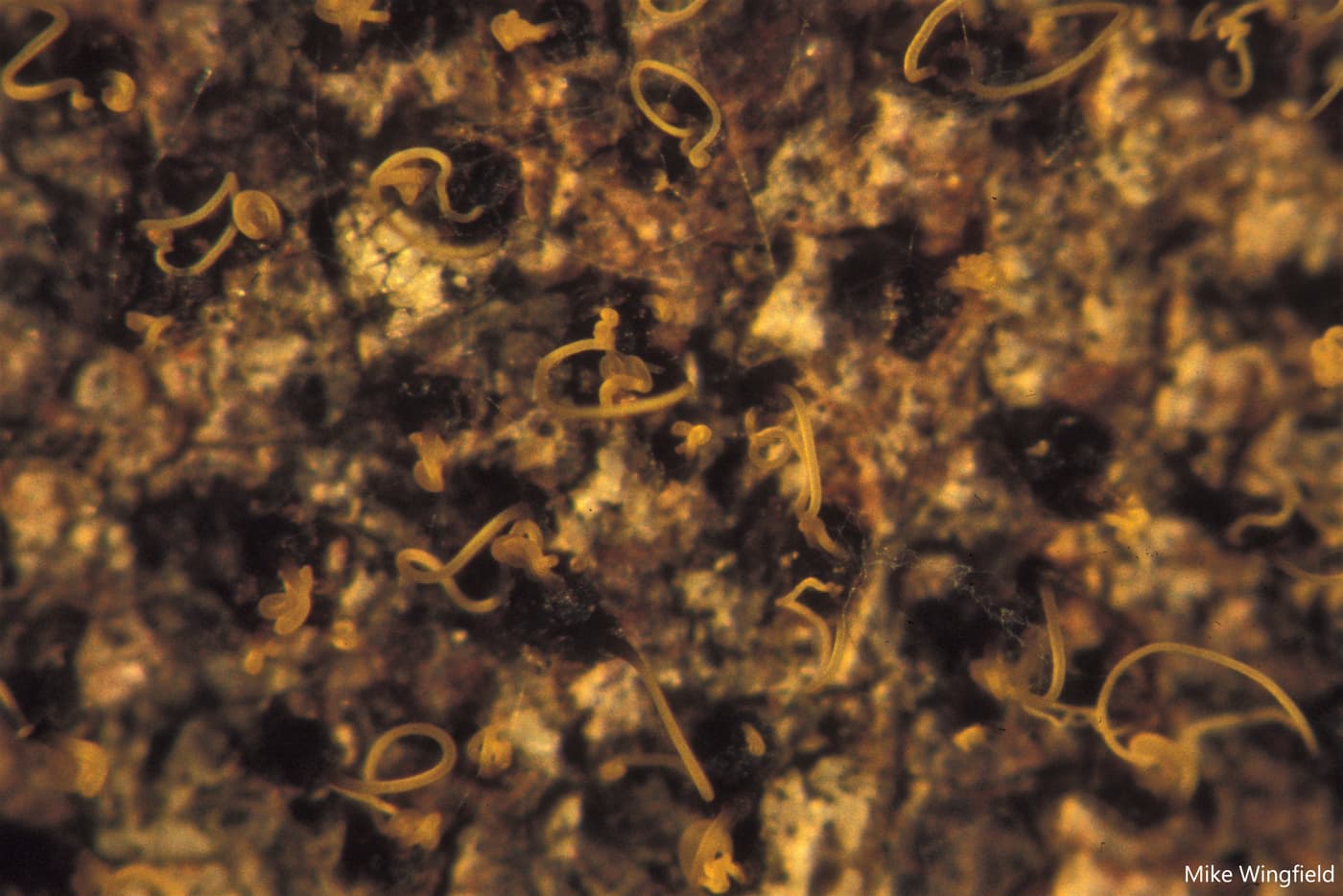
Chrysoporthe austroafricana causes stem cankers on susceptible Eucalyptus spp. (Wingfield et al. 1989; Myburg et al. 2002). In South Africa, initial symptoms include sunken outer bark at the bases of trees (Wingfield et al. 1989). In more advanced stages, the fungus colonizes the cambium rapidly and girdles the stems leading to tree death. Young trees of susceptible species are particularly vulnerable and relatively large numbers can die in the first year of growth (Wingfield 2003). Symptoms on young trees include girdling of the stem at the root collar and apparent rapid death with leaves retained on the trees (Conradie et al. 1990). On older trees, basal cankers are obvious as cracked bark and swelling (Wingfield et al. 1989; Conradie et al. 1990). Fruiting structures of the pathogen (pycnidia) can be seen using a 10x magnification hand lens.
Tree Protection Co-operative Programme
Chrysoporthe canker
Chrysoporthe austroafricana Gryzenh. & M. J. Wingf.
Symptoms
Biology
At the time of its first discovery, the canker disease now known to be caused by Chr. austroafricana was thought to be the well-known Cryphonectria canker of Eucalyptus caused by Cryphonectria cubensis (Wingfield et al. 1989). The fungus originally treated as Cryphonectria cubensis is now known to include numerous species of which Chr. cubensis and Chr. deuterocubensis are mainly found in tropical countries of the world (Wingfield 2003; van der Merwe et al. 2010; van der Merwe et al. 2013). Chrysoporthe austroafricana is native to Southern Africa and has undergone a host-shift from native Myrtaceae such as Syzigium cordatum to infect Eucalyptus spp. (Heath et al. 2006).
Chrysoporthe austroafricana, like other species of Chrysoporthe and the Cryphonectria require wounds to infect. In South African Eucalyptus plantations, these wounds typically occur at the bases of trees during the early years of growth. They are most likely due to natural growth cracks at the soil interface but mechanical damage can also provide sites for infection.
Extensive studies have been conducted on Chr. austroafricana to better understand the importance of the pathogen and its origin (Heath et al. 2006). Screening commercially important clones for tolerance to infection has been successfully conducted using artificial inoculations. These studies have guided forestry companies in selecting clones with high levels of tolerance to infection.
Gallery