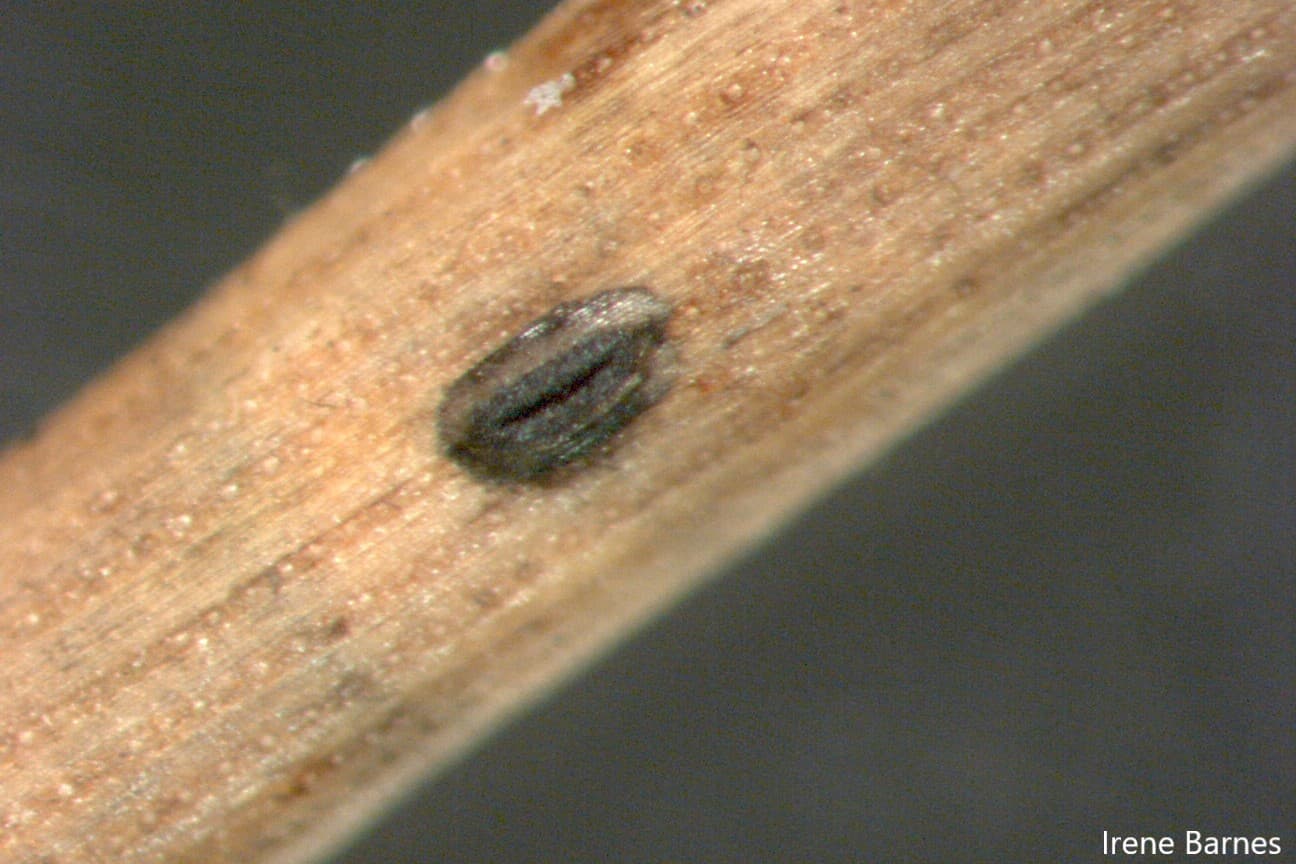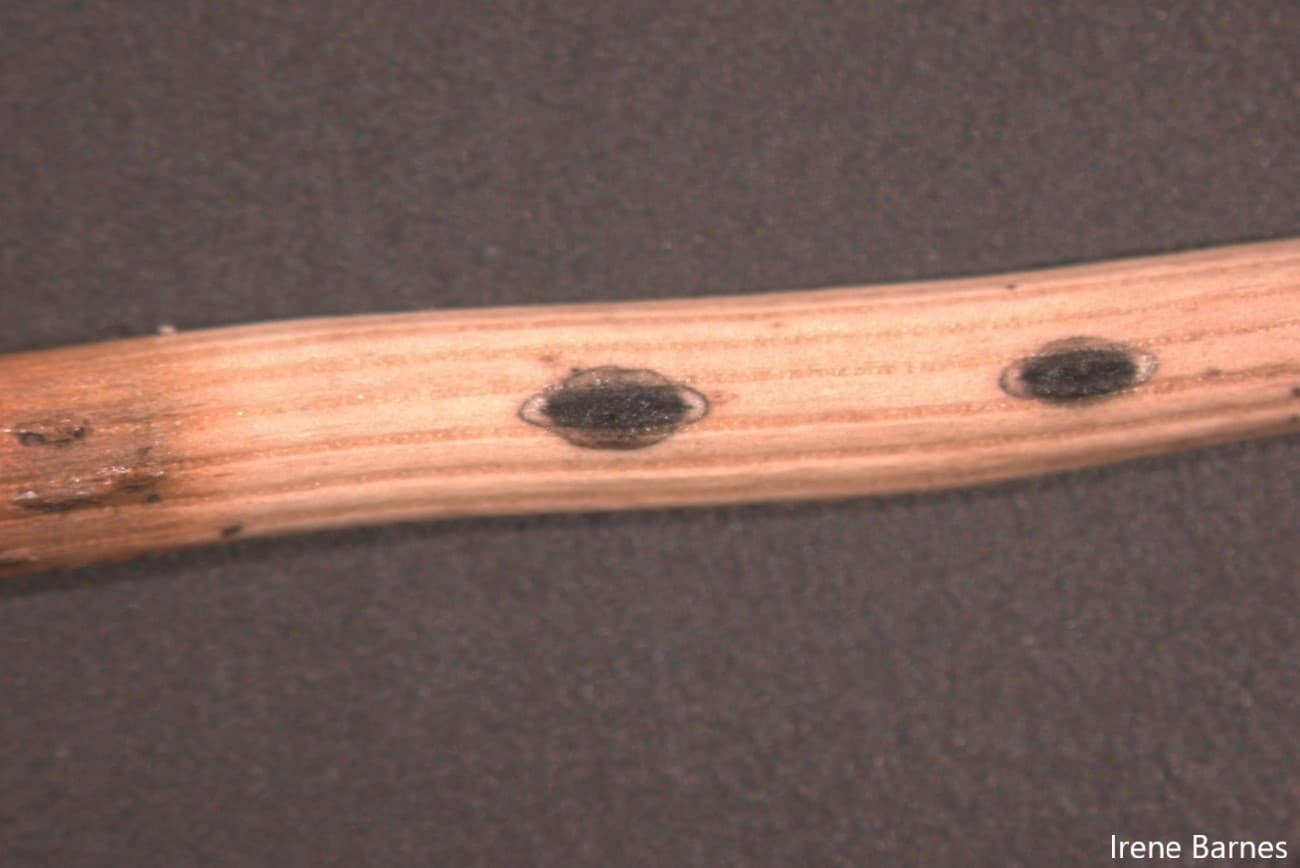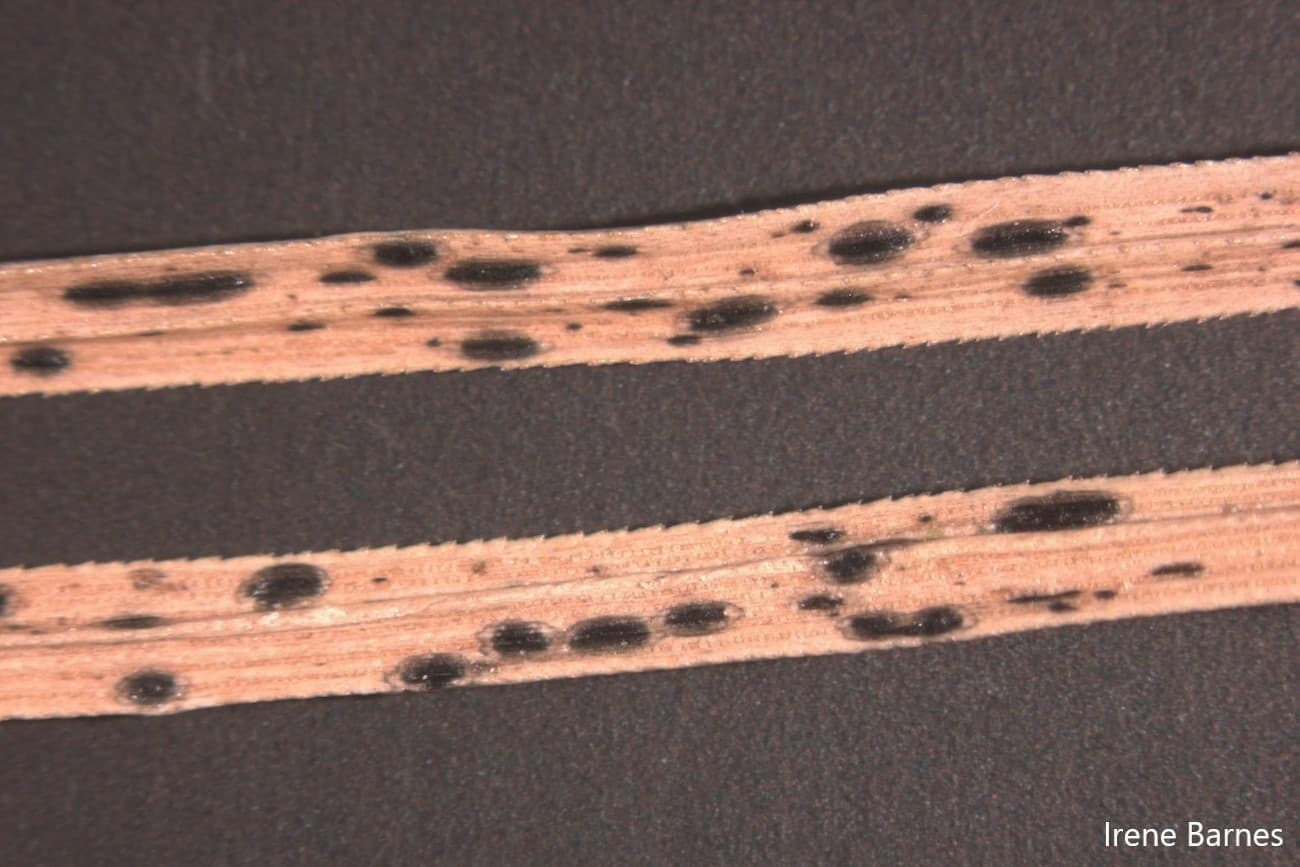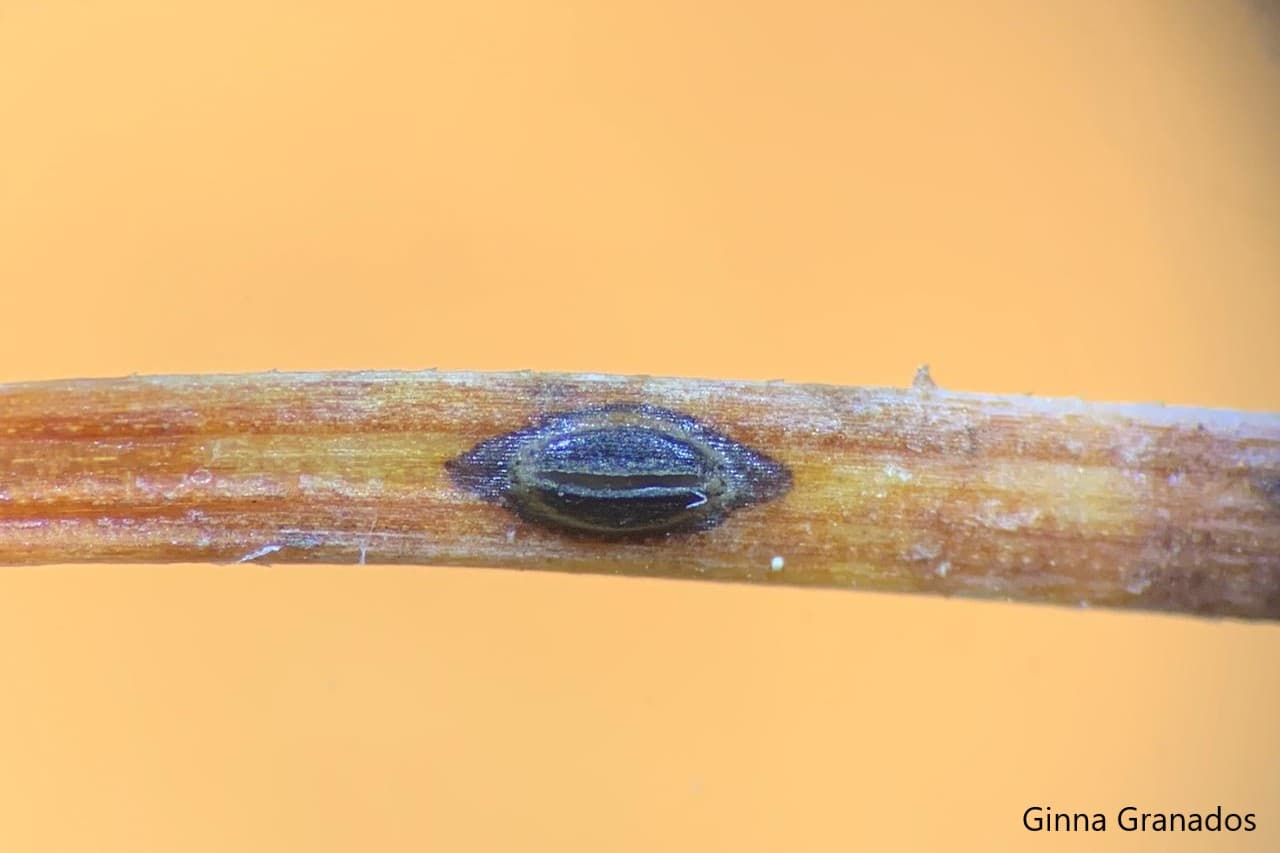
All Lophodermium species have an endophytic lifestyle where the fungi colonise the living tissue of pine needles. Symptoms appear only after needles have died and are cast (Minter & Millar 1980). The exception is Lophodermium seditiosum, a pathogen that colonises the mesophyll cells and vascular system of the needles, which are killed leading to premature defoliation (Diwani & Millar 1986).
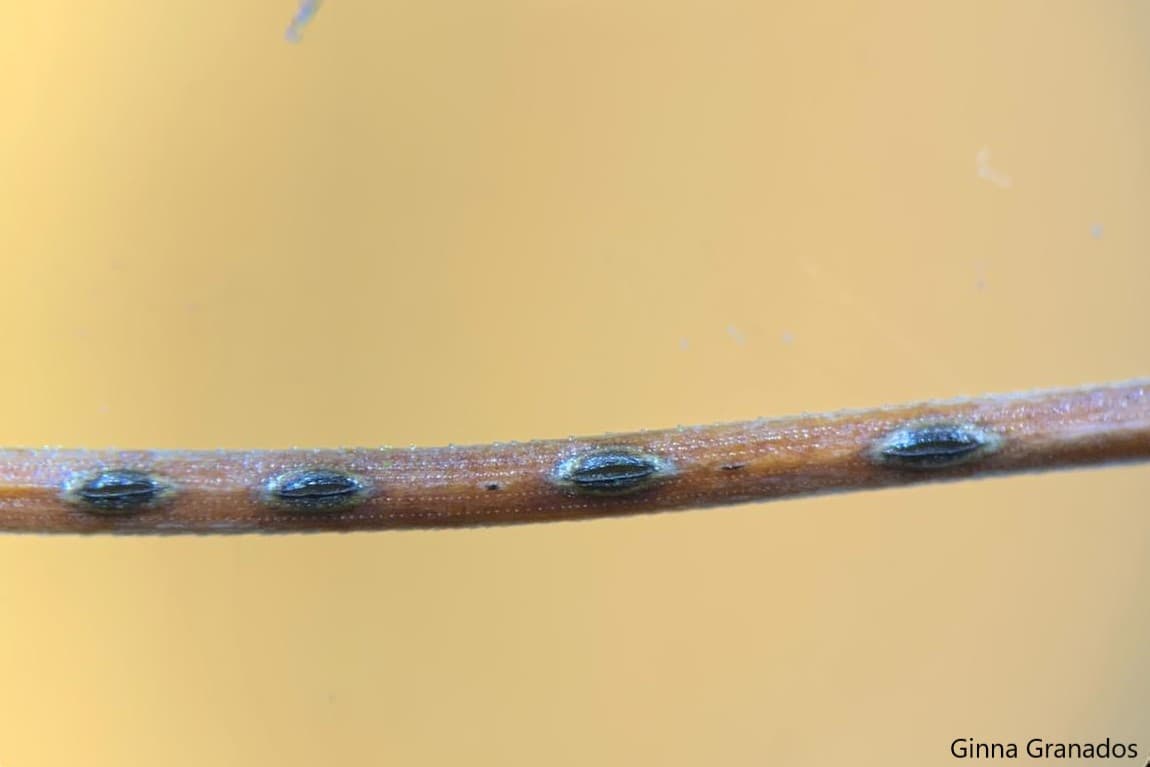
Lophodermium spp. can infect seedlings in nurseries or trees in young plantations. Initial symptoms include small yellow spots at the site of infection (Sinclair & Lyon 2005). These spots later coalesce, turn red-brown and are surrounded by a yellow halo. In advanced stages of disease, the needles turn brown, become dry and are cast. Under favourable conditions, shiny black oval-shaped fruiting structures (ascocarps), develop on the cast needles. Successive defoliation reduces tree vigour and growth. In severe cases, young seedlings may die (Ostry & Nicholls 1989).