
Fabinet Logo
Tree Protection Co-operative Programme research group

Tree Protection Co-operative Programme

Eucalyptus scab and shoot malformation (ESSM)

Download PDF

Elsinoe necatrix N.Q. Pham, Marinc. & M.J. Wingf. and Elsinoe masingae Jol. Roux, N.Q. Pham, Marinc. & M.J. Wingf.

Common NameEucalyptus scab and shoot malformation (ESSM)
Scientific NameElsinoe necatrix N.Q. Pham, Marinc. & M.J. Wingf. and Elsinoe masingae Jol. Roux, N.Q. Pham, Marinc. & M.J. Wingf.
Pathogen / Pest TypeLeaf spots,Shoot blight,
OriginThe origin of Elsinoe necatrix and Elsinoe masingae is unknown, but evidence suggests that this is likely an area where its Eucalyptus species are native (Australia and nearby islands)
Distribution in South AfricaMpumalanga, KwaZulu-Natal

Symptoms

Elsinoe necatrix and E. masingae cause indistinguishable disease symptoms.

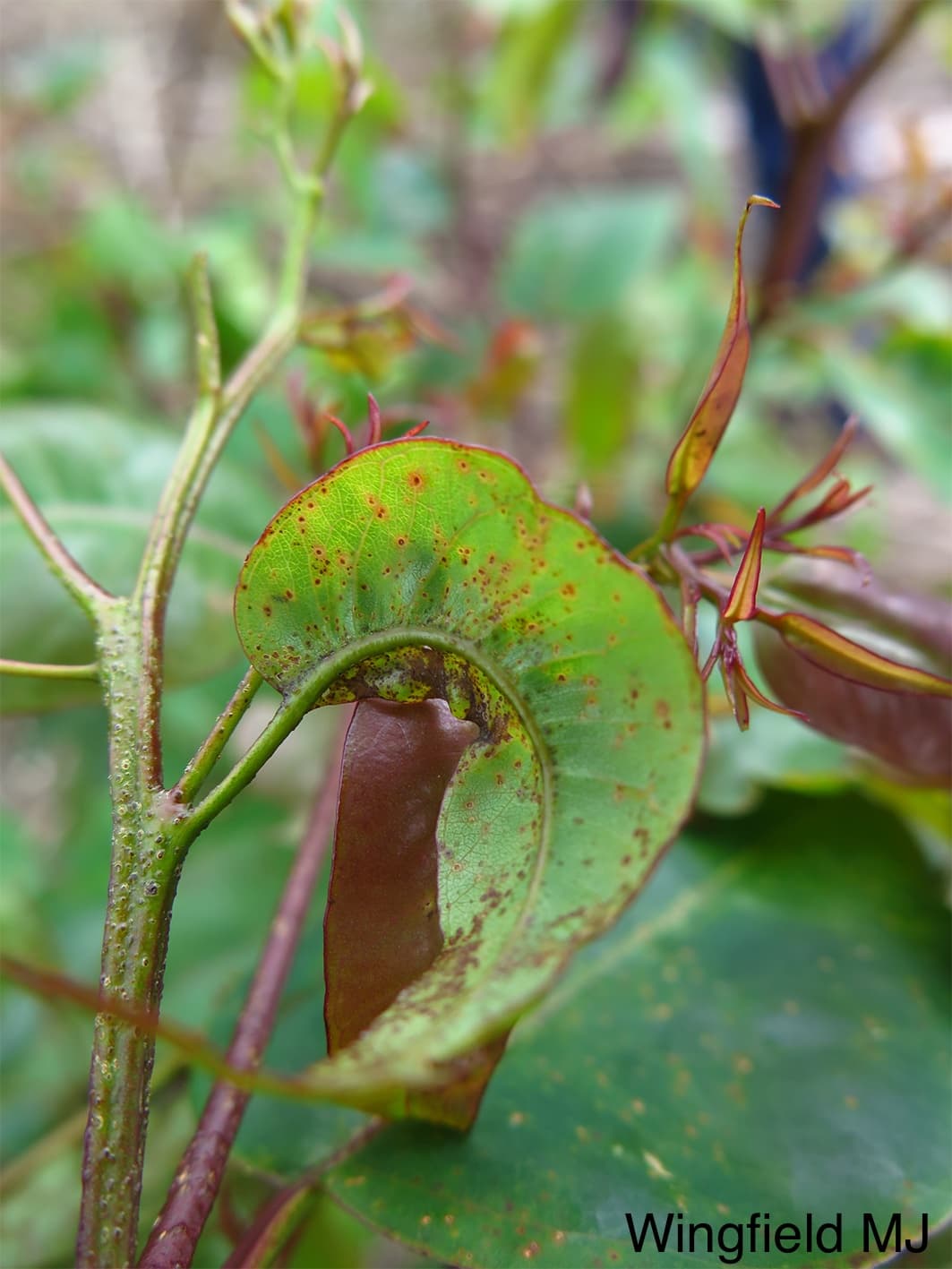
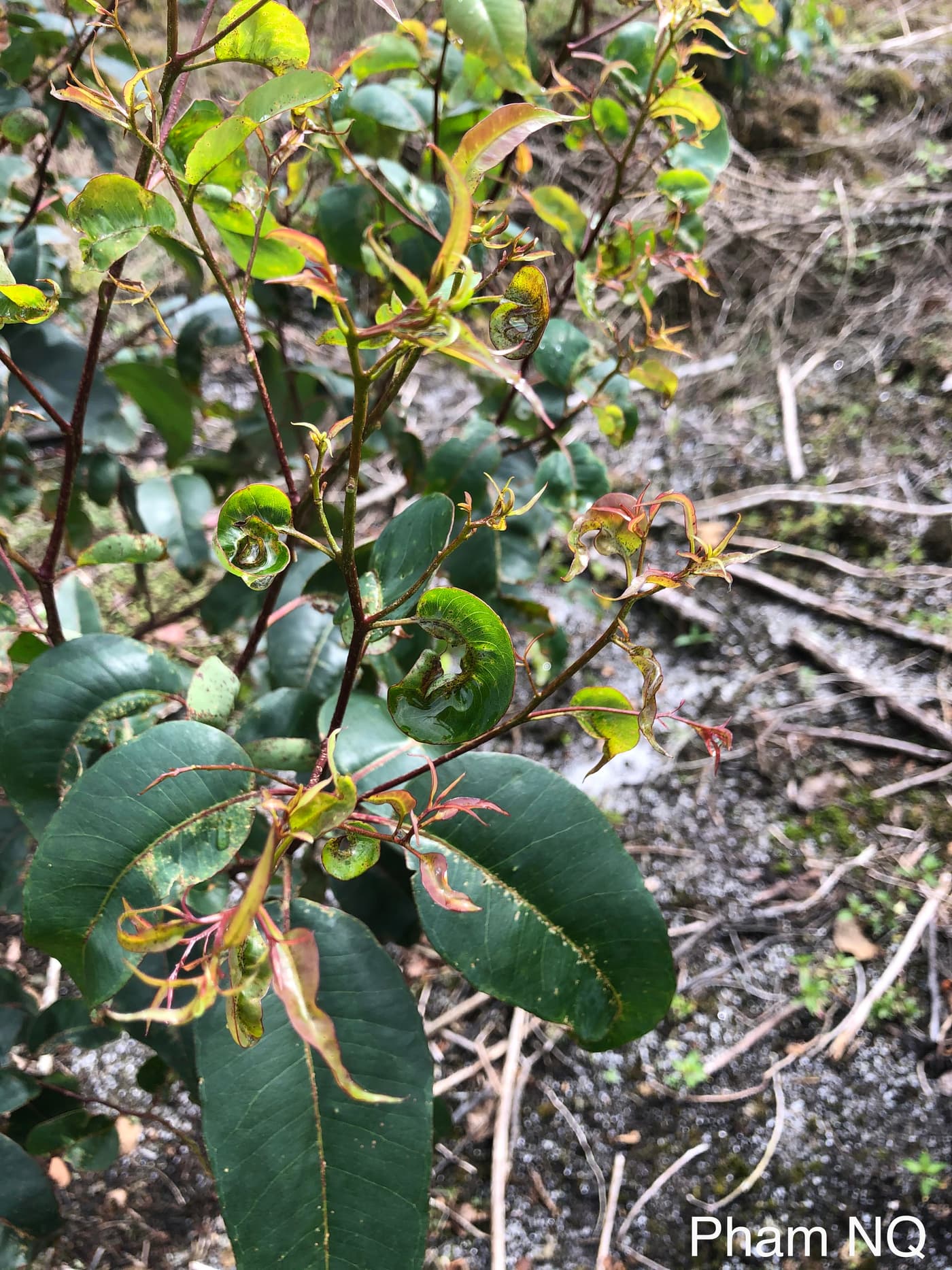
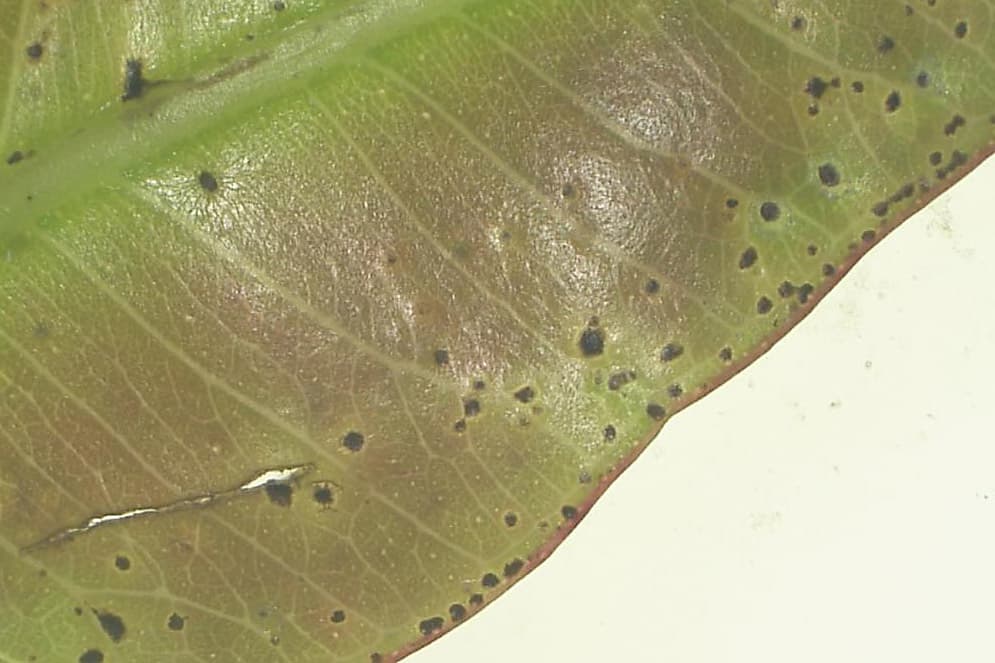
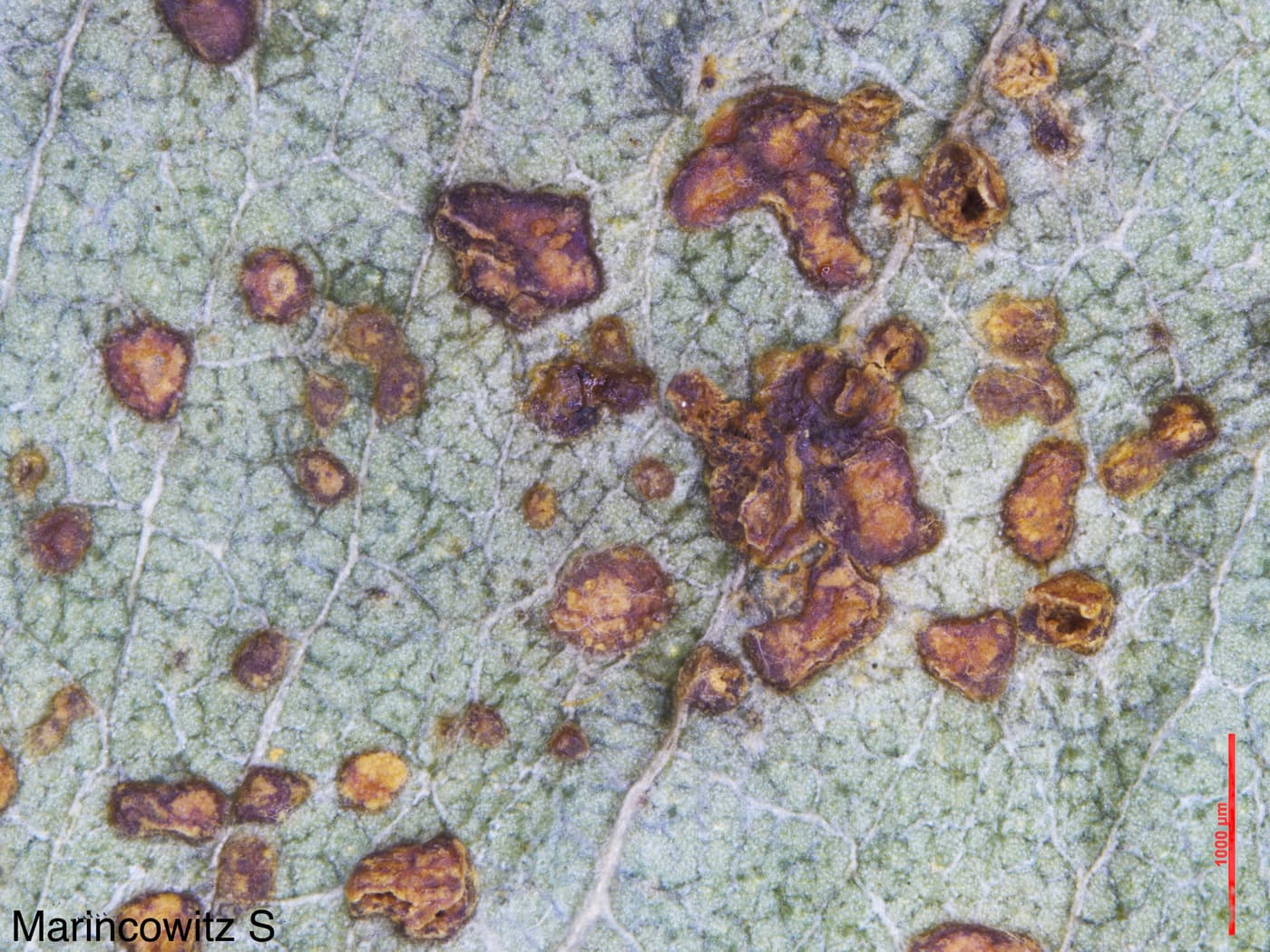
Young leaf and shoot tissues are most severely affected. Small necrotic spots that are up to 1 mm in diameter appear on infected tissues, which are circular or irregular, brown to black in colour and sometimes surrounded by a chlorotic (yellow) halo. As infection develops, the spots become reddish brown to black at their centres with slightly raised, diffuse, tan to grey, scab-like margins. Spots can be scattered or concentrated where rainwater accumulates on the leaf surface. This eventually leads to deformation of the leaves, causing curvature usually on one of the leaf lobes. The scab-like spots commonly dry and drop from the unaffected tissue causing a shot-hole appearance (Pham et al. 2021).

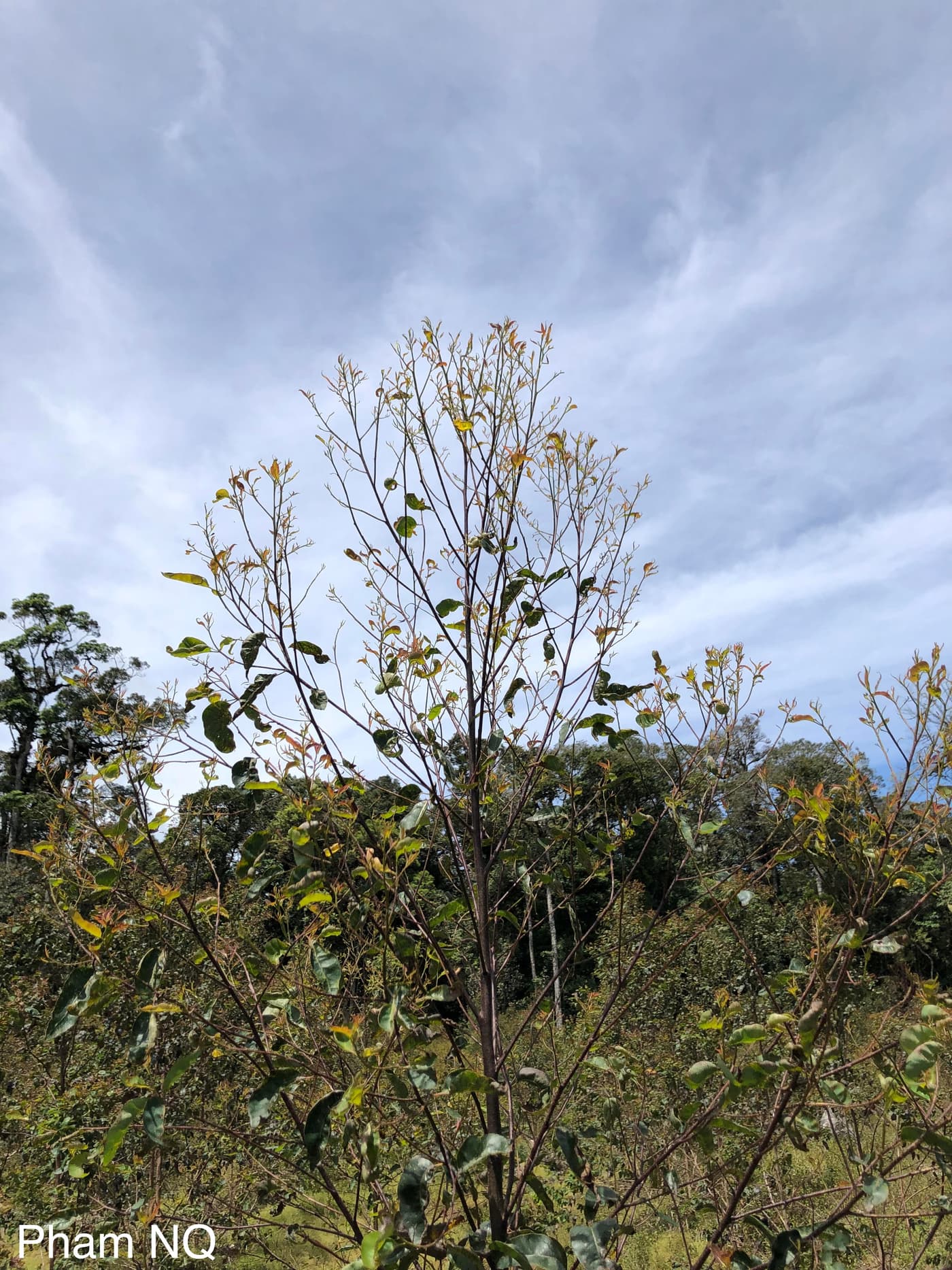
On severely affected trees, lesions can coalesce, leading to girdled, crinkled and distorted shoots and leaves. Once the leaves are infected, the damage to the tissues is permanent, and the infected tissues do not recover. On more susceptible clones, secondary symptoms include a “feathering” effect, resulting in loss of apical dominance; abnormal elongated branches with short internodes, and the production of epicormic shoots. Severely affected clones usually die after a number of successive infection cycles (Pham et al. 2021).
Biology

Very little is known regarding the life cycle of E. necatrix and E. masingae. The disease is most obvious on young trees in the first year or two of growth and infects actively growing young leaves, young shoots and buds. Moisture is crucial for the disease development and spread. Disease symptoms typically appear shortly after the onset of rain and trees begin to recover at the onset of dry periods. Trees growing in cooler (higher altitude) areas are usually most severely affected. Eucalyptus genotypes differ in their susceptibility to infection with some genotypes showing evidence of tolerance.

Gallery

Eucalyptus scab and shoot malformation (ESSM)
Scab-like wounds when the lesions age
Malformation of leaves and shoots
Feathering effect in susceptible clone