Fabinet Logo
Tree Protection Co-operative Programme research group

Tree Protection Co-operative Programme

Botryosphaeria canker and die-back

Download PDF

Botryosphaeria dothidea (Mout. ex FR.) Ces. & De Not., Neofusicoccum sp.

Common NameBotryosphaeria canker and die-back
Scientific NameBotryosphaeria dothidea (Mout. ex FR.) Ces. & De Not., Neofusicoccum sp.
Pathogen / Pest TypeCanker
OriginUnknown
Distribution in South AfricaEastern Cape, Free State, Gauteng, KwaZulu-Natal, Limpopo, Mpumalanga, Northern Cape, North West, Western Cape

Symptoms

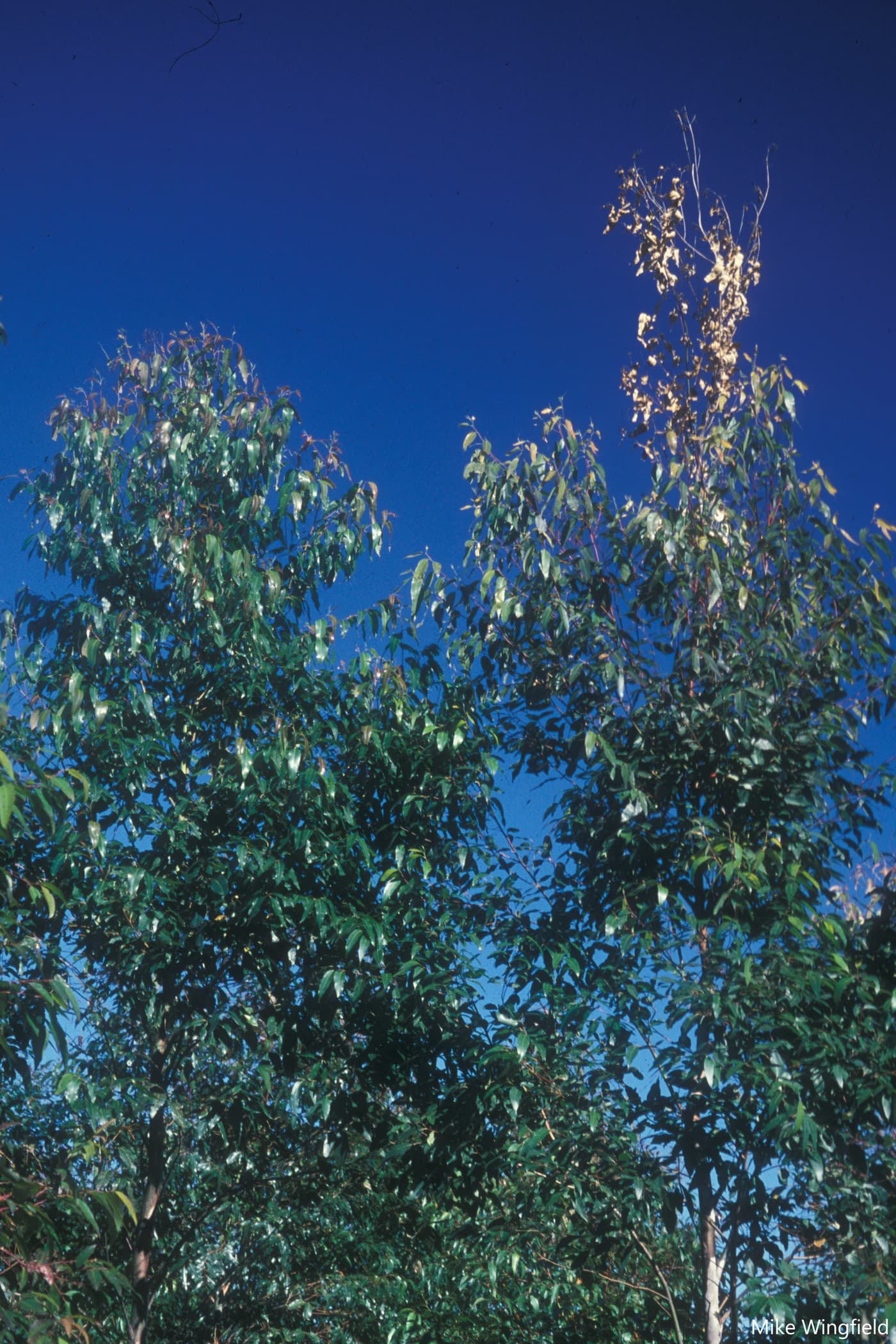
A wide range of symptoms have been associated with Botryosphaeriaceae species on Eucalyptus spp. A common manifestation of infection is the death of tree tops (Fig. 1). This leads to infection of the pith and a core of discoloured wood surrounded by a healthy sheath of outer wood (Fig. 2) that often extends throughout the entire length of the tree. These symptoms are common on E. grandis or clones of this species and often develops after tees have been exposed to hot winds. A similar symptom is known in E. nitens after growing tips of young (one or two year-old) trees have been damaged by late frost. 

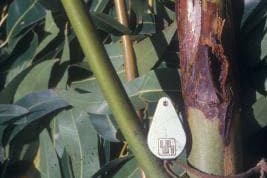
One of the most serious symptoms associated with Botryosphaeriaceae species infection is the development of stem cankers. These cankers are more common on trees stressed by drought and are characterised by stem swelling, bark cracks and exudation of copious amount of black kino. In severe situations, similar symptoms are found on lateral branches and stems often break at the sites of cankers.
Biology

The Botryosphaeriaceae are endophytes that penetrate plants, grow intercellularly and are transmitted horizontally. This group of fungi infect the plants via both natural apertures and wounds. The infection requires high humidity or free water. Conidia can be trapped among bud scales resulting in subsequent infection of the buds. The germ tubes emerge from conidia and grow inside tissues. The natural openings include stomata on leaves and shoots, and lenticels either on fruit or stems, as well as on the inflorescences, pedicels or peduncles of fruit trees which provide avenues for infection. Wounds result from human activities such as pruning, hand-picking of fruit, grafting, or via scars when scales, buds, petioles and fruit abscise. Large numbers of isolates have been obtained from graft unions, suggesting transmission by grafting tools. Other sources of wound infections include those attributed to branch splitting caused by wind, frost and hail damage or wounds naturally formed during root growth can be infected by the presence of inoculum on residual diseased plant material on the ground (Mehl et al. 2013).

Gallery

Botryosphaeria canker and die-back
Dieback of tops of E. grandis after hot wind and cankers caused by Botryosphaeria