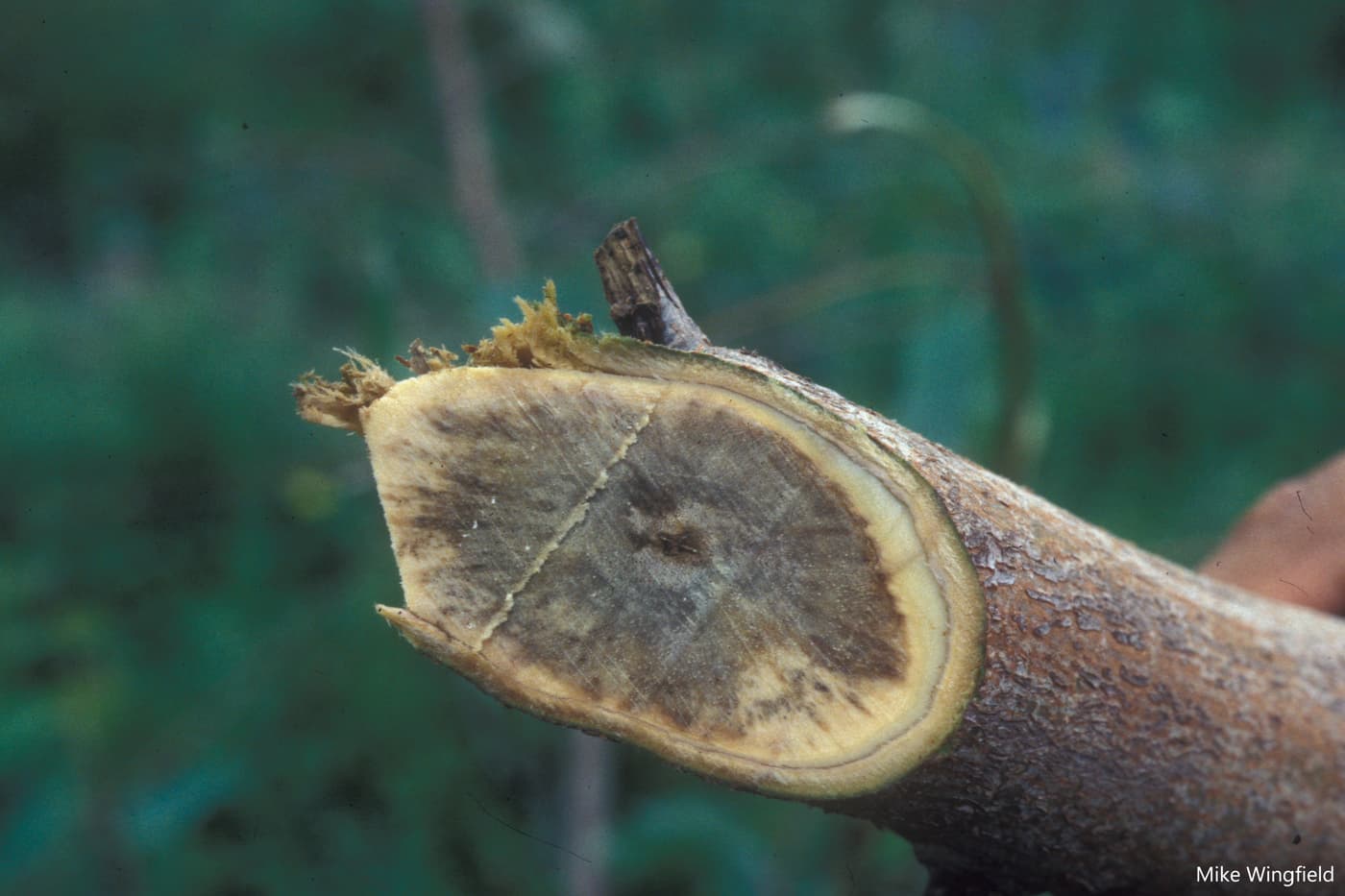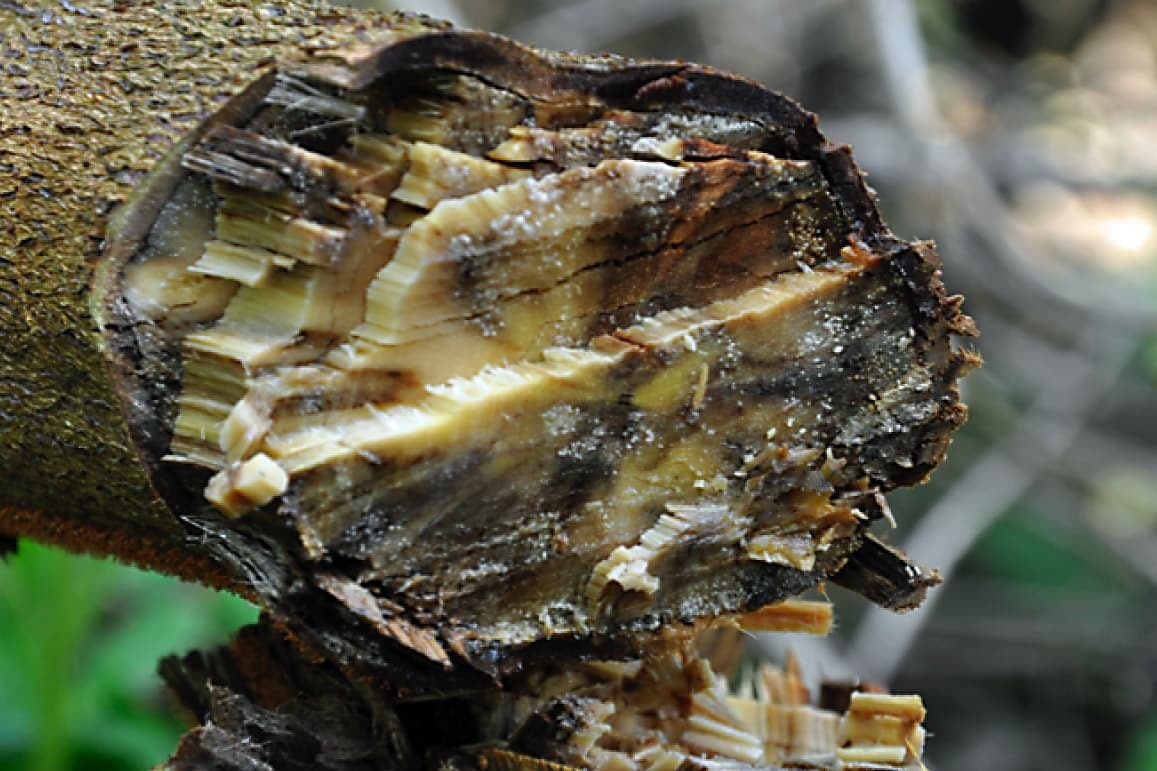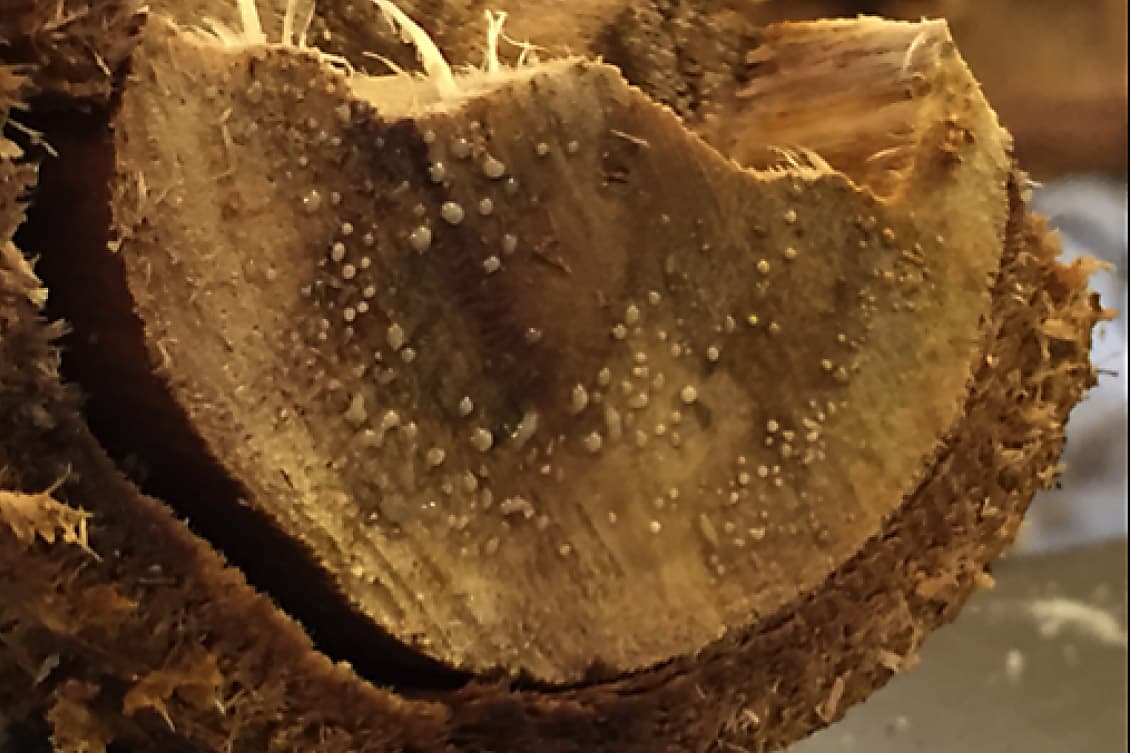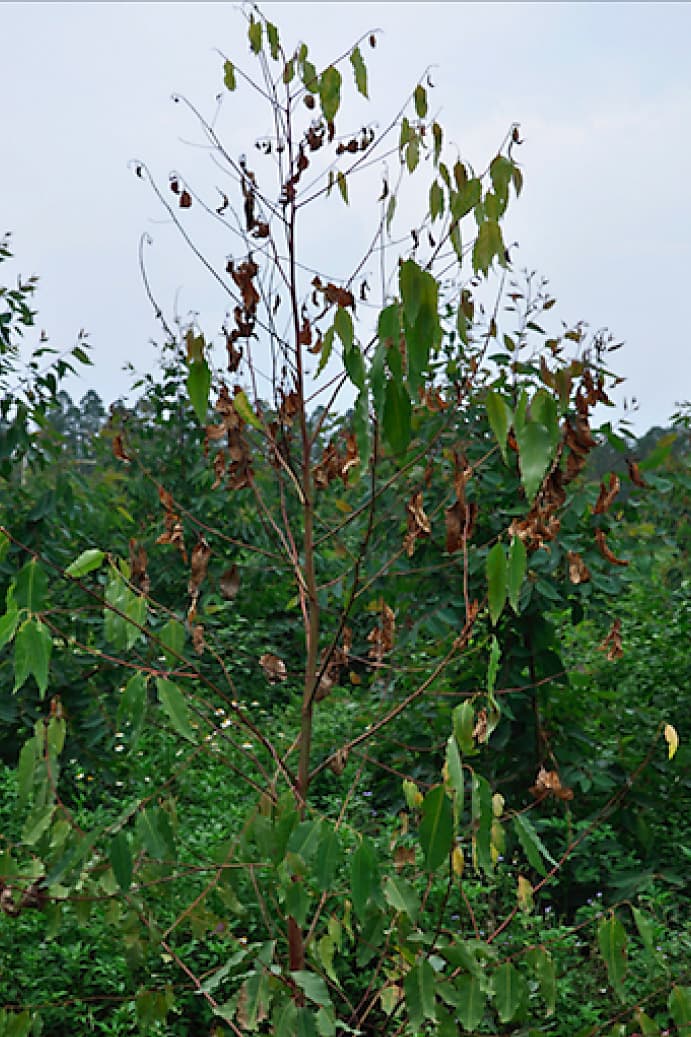
A rapid wilting followed by defoliation, death of stems, reduced growth and dark discolouration of the wood (Coutinho et al. 2010). Trees between 2 and 4 years of age are the most susceptible to infection (Wardlaw et al. 2010). Infected trees usually die within 6 months. In South Africa, bacterial wilt is occasionally responsible for tree death. Outbreaks are usually not widespread. Nursery infections have not been reported locally although this is not the case in Brazil (Alfenas et al. 2006).
A Mpumalanga pine and eucalyptus plantation on rolling hills, a forester from behind measuring a trunk with a diameter tape (illustration)
01/02
Click to pause
Tree Protection Co-operative Programme
Ralstonia bacterial wilt
Ralstonia solanacearum and Ralstonia pseudosolanacearum
Common NameRalstonia bacterial wilt
Scientific NameRalstonia solanacearum and Ralstonia pseudosolanacearum
Pathogen / Pest TypeVascular wilt
SynonymsPseudomonas solanacearum Smith
Distribution in South AfricaKwaZulu-Natal, Limpopo
Symptoms
Biology
Ralstonia spp. are both soil and waterborne and enter the plant roots through wounds or at the site of rootlet emergence. If the infection is successful they rapidly colonize the xylem tissue leading to the death of the host. Once the host has died, the bacteria then return to the environment and survive in soil, water, reservoir (nonhost) plants (Denny et al. 1994) and other potential hosts such as weeds (Pradhanang et al. 2000). In the case of Eucalyptus, latent infections may occur and when the tree is stressed by either abiotic or biotic factors, the disease develops. These stress factors weaken the defence system of the host allowing the pathogen to proliferate (Coutinho & Wingfield, 2017). Currently only two of the plant pathogenic Ralstonia species have been reported to be associated with bacterial wilt of Eucalyptus and these two species are mostly geographically separated with R. solanacearum found in the Americas and R. pseudosolanacearum in Africa and Asia (Carstensen et al. 2017).
Gallery