
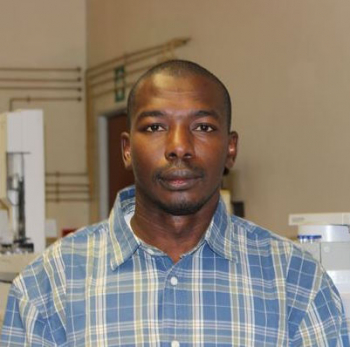
Associate Professor
My general research interests revolves around the study of the behaviour and chemical ecology of social insects. Specifically, I seek to understand pheromone communication and reproductive dominance in bees, ants and termites at the colony, individual and cellular levels. This I do using a wide range of techniques within the fields of analytical chemistry, behavioural and molecular ecology as well as mathematical biology.
Besides my main research interests, I am involved in analytical method development for various model systems (plants, insects, microbes), the use of chemotaxonomy as a complimentary taxonomic tool, as well as research into edible insects and their sustainable use.
I am a core member of the Social Insects Research Group. Click here for more information about the Social Insects Research Group.
Abdullahi Yusuf, Christian Pirk , Anja Buttstedt. (2024) Expression of honey bee (Apis mellifera) sterol homeostasis genes in food jelly producing glands of workers. Journal of Experimental Zoology Part A Ecological and Integrative Physiology 10.1002/jez.2813
Pullock, D.A., Krüger, K., Manrakhan, A., Yusuf, A.A., Weldon, C.W.. (2024) Addition of selected plant-derived semiochemicals to yellow sticky traps does not improve citrus psyllid captures. Journal of Chemical Ecology 10.1007/s10886-024-01491-0
Abdullahi Yusuf, Ayaovi Agbessenou. (2021) Temperature-dependent modelling and spatial prediction reveal suitable geographical areas for deployment of two Metarhizium anisopliae isolates for Tuta absoluta management. Scientific Reports 10.1038/s41598-021-02718-w
Azrag, Abdelmutalab G. A., Pirk, Christian W. W., Yusuf, Abdullahi A., Pinard, Fabrice, Niassy, Saliou, Mosomtai, Gladys, Babin, Régis. (2018) Prediction of insect pest distribution as influenced by elevation: Combining field observations and temperature-dependent development models for the coffee stink bug, Antestiopsis thunbergii (Gmelin). PLOS ONE 10.1371/journal.pone.0199569
Yusuf, A. A., Crewe, R. M., Pirk, C. W. W.. (2013) An effective method for maintaining the African termite-raiding ant Pachycondyla analis in the laboratory. AFRICAN ENTOMOLOGY 10.4001/003.021.0126
Yusuf, Abdullahi A., Christian W. W. Pirk , Crewe, Robin, Njagi, Peter, Gordon, Ian, Torto, Baldwyn. (2010) Nestmate Recognition and the Role of Cuticular Hydrocarbons in the African Termite Raiding Ant Pachycondyla analis. Journal of Chemical Ecology 10.1007/s10886-010-9774-6